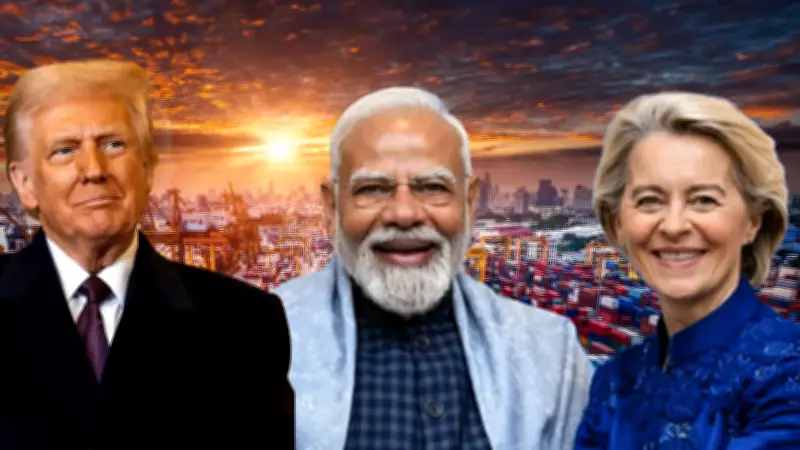
India's Strategic EU Trade Deal Alters Global Economic Landscape
In a significant development that has reshaped international trade dynamics, India's recently concluded free trade agreement with the European Union has created ripple effects across global markets. This strategic move by New Delhi has fundamentally altered the balance of power in ongoing trade negotiations with the United States, leading to unexpected policy shifts from the Trump administration.
The Stalemate in India-US Trade Talks
For several months, trade discussions between India and the United States had reached an impasse, primarily due to Washington's insistence on linking any potential agreement to India's cessation of Russian oil imports. The American position was clear and uncompromising: tariff reductions and trade benefits would only materialize if New Delhi severed its energy ties with Moscow. India, however, maintained a firm stance, refusing to alter its established energy procurement policies despite considerable diplomatic pressure.
This deadlock created a tense atmosphere in bilateral relations, with both nations seemingly unwilling to compromise on their core positions. The situation appeared destined for prolonged stagnation, with neither side showing signs of yielding to the other's demands.

The Game-Changing India-EU Free Trade Agreement
In a masterstroke of economic diplomacy, India pivoted its focus toward strengthening ties with the European Union, culminating in the signing of a comprehensive free trade agreement. This landmark deal instantly enhanced India's position in the global trading system, providing New Delhi with increased market access and diversified economic partnerships.
The immediate market reaction was telling, with financial indicators reflecting renewed confidence in India's economic prospects. More importantly, this development provided India with substantial leverage in its negotiations with the United States, fundamentally altering the power dynamics that had previously favored Washington.
US Response: Unexpected Tariff Reductions
Within days of the India-EU agreement becoming public, the Trump administration announced significant tariff reductions on Indian exports to the United States. President Trump characterized this policy shift as immediate and substantial, specifically highlighting the implementation of an 18 percent tariff rate on key Indian goods.
Prime Minister Narendra Modi welcomed this development as a positive step toward normalized trade relations but notably refrained from endorsing American claims regarding Russian oil imports or committing to complete tariff elimination. This careful diplomatic positioning reveals the continuing divergence between the two nations' strategic priorities.
The Persistent Energy Policy Divide
Despite the apparent breakthrough in trade relations, India has maintained its established energy procurement strategy without modification. The country continues to prioritize stability in its energy supply chain, particularly given ongoing instability in the Gulf region and existing long-term contracts with Russian suppliers.
India's position reflects a pragmatic approach to energy security that places national economic stability above geopolitical considerations. This stance remains fundamentally at odds with American efforts to curb Russia's oil revenue through international pressure on Moscow's trading partners.
Strategic Implications and Future Outlook
Politically, both India and the United States have framed these developments as victories for their respective positions. However, a closer examination of the sequence of events reveals a clear strategic reality: the India-EU agreement fundamentally changed the negotiating equation, allowing New Delhi to maintain its policy positions while still achieving favorable trade concessions from Washington.
The United States' decision to adjust its tariff policy first represents a significant acknowledgment of India's strengthened global trade position. This development underscores how regional trade agreements can influence broader international economic relationships and create unexpected leverage points in multilateral negotiations.

Looking forward, the gap between American expectations regarding Russian oil imports and India's energy security priorities remains unresolved. This continuing divergence suggests that while trade relations may have improved, fundamental strategic differences persist between the two nations' approaches to global energy markets and geopolitical alignments.