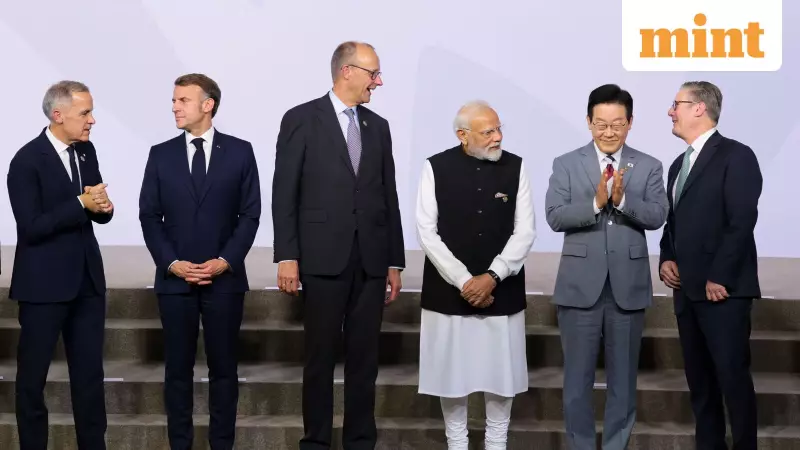
In a significant diplomatic development, India and Canada have agreed to formally resume negotiations on an ambitious Comprehensive Economic Partnership Agreement (CEPA), signaling a major thaw in relations after two years of strained ties. The breakthrough came during a meeting between Prime Minister Narendra Modi and his Canadian counterpart Mark Carney on the sidelines of the G20 Leaders' Summit in Johannesburg on Sunday.
Diplomatic Reset Paves Way for Economic Cooperation
The Modi-Carney meeting marked a pivotal moment in bilateral relations, with Canadian Foreign Minister Anita Anand confirming on Monday that both nations will act swiftly on the trade deal. This development underscores the continuing improvement in relations between the two countries and represents a significant shift from the diplomatic tensions that characterized their relationship in recent years.
The revival of trade talks comes after trade negotiations were suspended in late 2023 following then Canadian Prime Minister Justin Trudeau's allegations regarding possible Indian involvement in the killing of Canada-based Khalistan separatist Hardeep Singh Nijjar - claims that India had rejected as absurd. The two countries have since moved to reset relations following the change of leadership in Ottawa in March this year.

Ambitious Trade Targets and Economic Implications
India has set an ambitious target to increase bilateral trade to $50 billion by 2030, while Canadian officials have expressed even more bullish expectations, aiming for $70 billion within the same timeframe. This gap reflects Canadian businesses' optimistic assessment of the Indian market's potential. According to official numbers from the Consulate General of India in Toronto, bilateral trade between India and Canada in goods and services stood at approximately $22.6 billion in 2024.
Trade experts emphasize that the $50 billion export target represents more than just an economic milestone. Professor Sanjal Shastri from the Faculty of International Studies at FLAME University told LiveMint that this signals a recalibration of trade priorities designed to build resilience and expand high-value sectors.
The renewed diplomatic engagement has already generated positive expectations across industries. Ajay Sahai, director general of the Federation of Indian Export Organisations (FIEO), noted that faster market access and lower tariffs can unlock real opportunities for Indian sectors like textiles, engineering goods, pharmaceuticals, and agricultural products.
Investment Flows and Strategic Partnerships
The easing of diplomatic tensions is expected to significantly improve investor confidence, particularly among Canadian institutional investors. Major Canadian funds including CPPIB, CDPQ, and OTPP have substantial existing investments in Indian infrastructure, real estate, and renewable energy sectors. The diplomatic reset could accelerate pending proposals and trigger new commitments.
Canada, being highly trade-dependent, currently exports over 75% of its goods to the United States. While most US exports are protected under the United States-Mexico-Canada trade agreement (USMCA), this deal is set for review in 2026, creating additional impetus for Canada to diversify its trade partnerships.
In a significant development highlighting the warming relations, the two countries are finalizing a deal to supply New Delhi with uranium, likely worth approximately $2.8 billion with a term of 10 years, according to individuals familiar with the development.
Long-term Stability and Future Prospects
The relationship reset has been building momentum through multiple high-level engagements. Prime Minister Modi met Carney at the G7 summit in June, while the foreign ministers of both countries have met three times this year. Canada's trade minister also visited India earlier this month.
Professor Shastri emphasized that long-term stability in India-Canada relations will hinge on Canada's willingness to take tangible action against anti-India extremist elements that undermine bilateral confidence. He also highlighted higher education as a critical space to watch, noting that student mobility and institutional collaborations represent one of the largest bridges between the two countries.

The renewed engagement could mean stronger capital flows into India through investment in technology, clean energy, and services, complementing India's manufacturing and digital innovation strengths. Canada's positioning as a major player in climate finance could translate into more funds earmarked for renewable energy, battery storage, and green hydrogen projects in India.
It's worth noting that Canada and India initially launched talks for such a trade deal approximately fifteen years ago, but the negotiations were eventually downgraded to a sectoral deal covering only specific industries. The current revival of comprehensive talks represents a significant upgrade in ambition and scope.