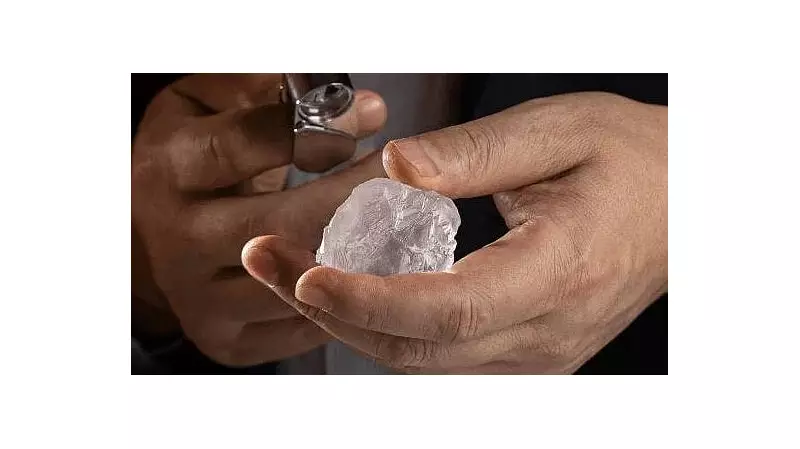
India is poised to take a leading role in the global governance of the diamond trade, as it prepares to assume the chairmanship of the Kimberley Process Certification Scheme (KPCS) for the third time, starting January 1, 2025. This significant diplomatic and economic responsibility underscores India's pivotal position in the international gem and jewellery sector.
A Prestigious Third Term at the Helm
The Kimberley Process is a crucial international initiative established in 2003 to prevent the trade in 'conflict diamonds' – rough diamonds used by rebel movements to finance wars against legitimate governments. India's upcoming chairmanship, which will run throughout the 2025 calendar year, marks its third time leading this 85-member coalition, following previous terms in 2008 and 2019.
Vipul Bansal, Joint Secretary in the Ministry of Commerce and Industry, has been officially designated as the Chair of the Kimberley Process for 2025. The administrative responsibilities for the chairmanship will be supported by the Gem and Jewellery Export Promotion Council (GJEPC), which acts as the nodal agency for the KPCS in India.

India's Strategic Role and Diamond Industry Clout
India's selection for this role is no coincidence. The country is a powerhouse in the global diamond industry, handling a substantial portion of the world's rough diamond manufacturing. Nine out of every ten rough diamonds globally are processed in India, making it the natural leader for a scheme focused on ensuring an ethical and clean diamond pipeline.
During its tenure, India is expected to steer the KP Plenary, intersessional, and working group meetings. The key focus areas will likely include strengthening the implementation of the core certification scheme, promoting greater transparency, and addressing emerging challenges in the diamond supply chain. A major milestone will be hosting the KP Plenary meeting in November 2025.
Building on a Legacy of Leadership
India's previous chairmanships in 2008 and 2019 were noted for driving consensus and introducing forward-looking reforms. The upcoming term is seen as an opportunity to build on that legacy. Industry bodies like the GJEPC have expressed strong support, highlighting that India's leadership reinforces its commitment to a sustainable and conflict-free diamond industry.
This chairmanship comes at a critical time for the global diamond trade, which faces evolving geopolitical and economic pressures. India's role will be instrumental in guiding collaborative efforts among producing, trading, and consuming nations to maintain consumer confidence in diamonds as a symbol of love and commitment, not conflict.
Implications for Global Trade and Indian Diplomacy
Assuming the KP chair elevates India's diplomatic standing in multilateral forums focused on trade and natural resources. It provides a platform to shape global norms and standards in a sector where India holds dominant manufacturing capabilities. The chairmanship also aligns with India's broader foreign policy goals of taking greater responsibility in global governance structures.
For the domestic industry, it reinforces India's reputation as a responsible and ethical trading partner. It assures international buyers that diamonds processed in India adhere to the highest standards of certification and due diligence, potentially opening doors for enhanced trade relationships.
As January 1, 2025 approaches, the eyes of the global diamond community will be on India, anticipating its agenda and leadership in steering the Kimberley Process towards a more robust and future-ready framework.