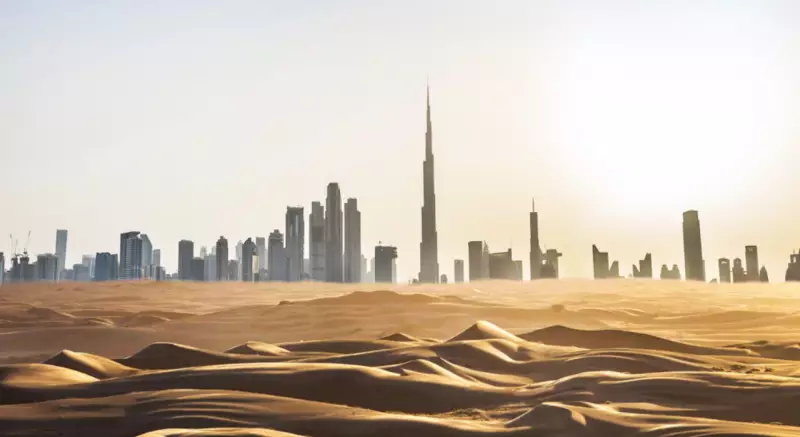
In a striking modern paradox, wealthy Gulf nations sitting atop endless deserts are spending millions to import sand from across the globe. Countries like Saudi Arabia and the United Arab Emirates (UAE), known for their arid landscapes, are turning to exporters like Australia, China, and Belgium to meet a critical construction need. This surprising trade, valued at hundreds of millions of dollars, underscores a fundamental mismatch between the sand they have and the sand their futuristic cities require.
The Science Behind the Sand: Why Desert Grains Fail
The vast dunes of Saudi Arabia or the UAE are not made of the right stuff for building. While abundant, desert sand grains are too round and smooth, polished by wind over millennia. For making strong concrete, the essential binder of modern construction, angular and coarse grains with rough edges are vital. These jagged particles lock together tightly when mixed with cement and water, forming a durable matrix.
Concrete requires a specific aggregate blend, where sand can constitute up to 45% of the volume. The ideal sand comes from riverbeds, lakes, or seabeds, where water erosion creates the necessary angularity. As investigative journalist Vince Beiser aptly put it, using desert sand for concrete is like “trying to build something out of a stack of marbles instead of a stack of little bricks.” This technical detail forces a global trade, with the UN estimating worldwide sand consumption at a staggering 50 billion tonnes annually.

Gulf Mega-Projects Drive Reliance on Imports
This import dependency is directly fueled by historic urban development plans. Saudi Arabia's Vision 2030 blueprint, featuring the $500 billion NEOM, The Line, and Qiddiya, demands colossal amounts of high-specification concrete. Similarly, the UAE's iconic skyline, crowned by the 828-meter Burj Khalifa, relied on imported sand. That project alone used 330 million litres of concrete, requiring sand that local deserts could not supply.
Trade data highlights the scale. In 2023, Australia exported $273 million worth of sand, ranking as the world's second-largest exporter. Saudi Arabia imported about $140,000 worth of natural construction-grade sand from Australia that year. The UAE's Palm Jumeirah artificial islands consumed a mind-boggling 186.5 million cubic metres of marine sand, depleting local sources and cementing the need for imports.
A Looming Global Sand Crisis and Sustainable Solutions
The Gulf's situation is a microcosm of a wider planetary issue flagged by the United Nations Environment Programme (UNEP): a global sand crisis. Unsustainable extraction is causing riverbed erosion, habitat loss, and biodiversity decline worldwide. In response, the search for alternatives is gaining momentum.
Innovations like Manufactured Sand (M-Sand), produced by crushing rocks, and using recycled construction waste are being explored to reduce pressure on natural river and marine sand. While Saudi Arabia and its neighbours currently depend on imports to realise their visionary projects, the future may see a shift towards these more sustainable, locally produced materials to build the cities of tomorrow.