German industry is pushing for a rapid conclusion of the long-pending Free Trade Agreement (FTA) between India and the European Union, according to Germany's top diplomat in New Delhi. The statement comes just ahead of an important official visit by a senior German political leader.
German Ambassador Voices Business Community's Impatience
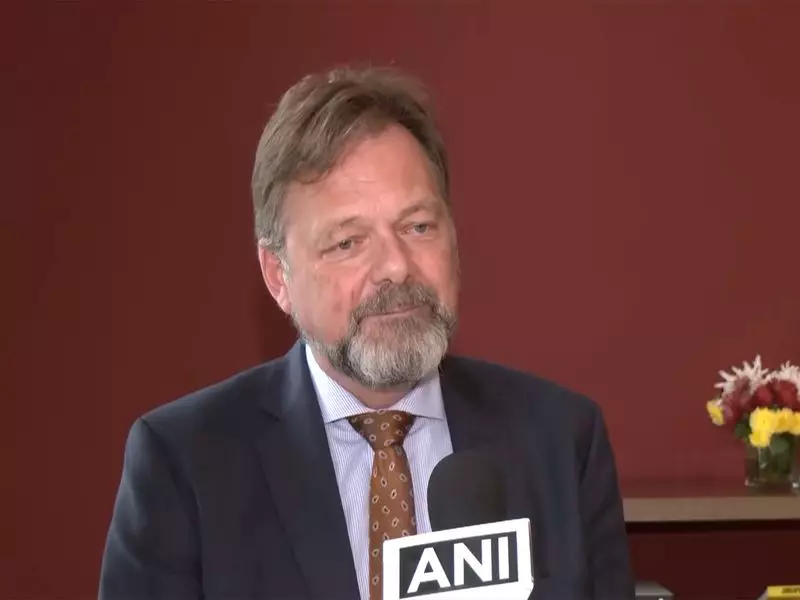
In a recent interaction, the German Ambassador to India, Philipp Ackermann, highlighted the strong desire within the German corporate sector to see the trade deal finalized. He pointed out that while the negotiations have been complex, there is a clear and present demand from businesses on both sides to break the deadlock and secure an agreement.
The India-EU FTA negotiations began in 2007 but were stalled for several years before being resumed in 2021. Since the restart, multiple rounds of talks have been held, with both parties aiming to resolve key sticking points related to market access, tariffs, and sustainable trade practices.

Friedrich Merz's Official Visit to India
The ambassador's comments set the stage for the upcoming official visit of Friedrich Merz, the leader of Germany's Christian Democratic Union (CDU) party. Merz is scheduled to visit India from February 25 to 29. His itinerary includes high-level meetings in New Delhi and a trip to the financial capital, Mumbai.
During his visit, Merz is expected to engage with Indian business leaders and policymakers. The FTA is anticipated to be a central topic of discussion, reflecting its strategic importance for bilateral economic relations. The visit underscores the political will in Germany to deepen ties with India, a key partner in the Indo-Pacific region.
Strategic Importance and Broader Context
An India-EU FTA is seen as a cornerstone for enhancing trade and investment flows between two of the world's largest economic blocs. For Germany, which is India's largest trading partner in Europe, the agreement holds particular significance. It promises to:
- Reduce or eliminate tariffs on a wide range of goods.
- Improve market access for services and investments.
- Create a more predictable and transparent trading environment.
- Strengthen supply chain resilience.
Ambassador Ackermann also touched upon the broader geopolitical context, noting the European Union's keen interest in diversifying its economic partnerships and reducing dependencies. India, with its large and growing market, is viewed as an ideal partner in this strategy.
The push from German business leaders adds considerable weight to the negotiations. With high-level political visits like that of Friedrich Merz, the momentum for concluding a mutually beneficial agreement is expected to build, potentially leading to a breakthrough in the near future.