

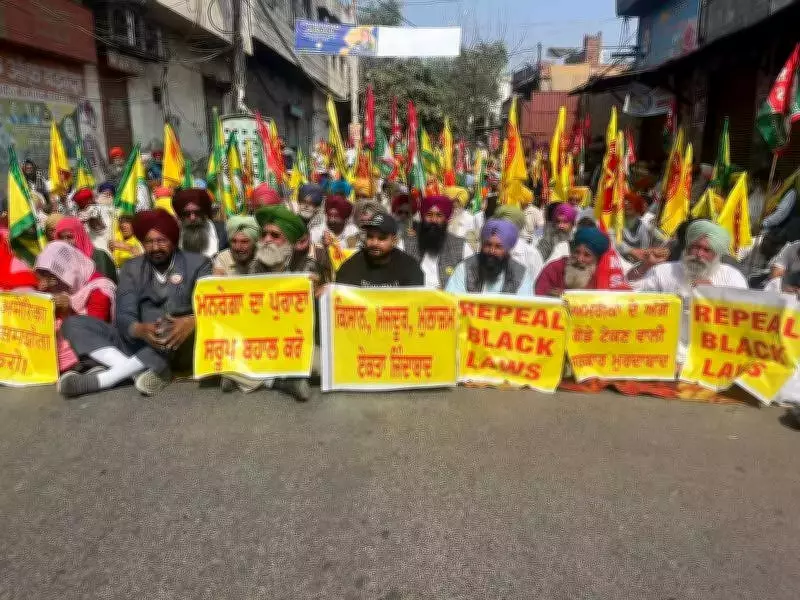
Amritsar Farmers Stage Major Protest Against India-US Trade Agreement
In a significant demonstration on Sunday, farmers in Amritsar gathered outside the office of BJP national secretary Tarun Chugh to voice strong opposition to the India-US agreement. The protest saw a large turnout, with numerous farmers, laborers, employees, and women participating actively in the event.
Key Demands and Concerns Raised by Protesters
The protesters outlined several critical demands, including the withdrawal of the Electricity Amendment Bill, the Seed Act, and the labour codes. Additionally, they called for the restoration of the original form of the Mahatma Gandhi National Rural Employment Guarantee Act (MGNREGA) and advocated for an Indo-Pak trade treaty to foster regional economic cooperation.
During the protest, farmer leader Satnam Singh Ajnala expressed deep concerns about the tax-free agreement being negotiated by the Government of India with the United States and other European countries. He emphasized that this agreement, signed under pressure, could have dangerous consequences for the nation. Ajnala highlighted that Prime Minister Narendra Modi is entering into this pact under heavy external pressure, while the government has failed to adequately inform the public about its specifics. He noted that all statements regarding the agreement are currently emanating from the United States, raising transparency issues.

Allegations of Sectoral Inclusion and Market Access
Another prominent farmer leader, Rattan Singh Randhawa, alleged that under duress, the government has agreed to include sensitive sectors such as agriculture, dairy farming, and fisheries into the tax-free arrangement. These areas have historically been excluded from such deals to protect domestic interests. Randhawa warned that this move would grant the American agricultural sector full access to the Indian market, potentially undermining local farmers and industries.
The protest underscores growing unrest among agricultural communities regarding international trade policies and domestic legislative changes. Participants stressed the need for greater government accountability and protection of indigenous sectors from foreign competition.






