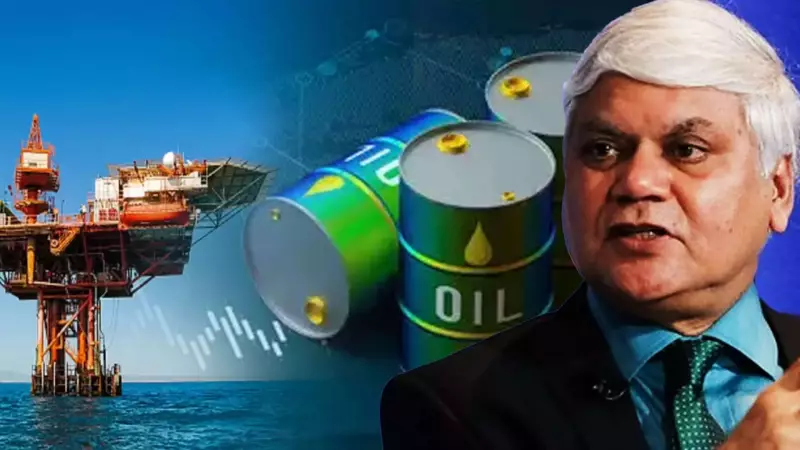
An energy policy expert has highlighted a significant commercial opportunity for Indian oil companies in Venezuela, pointing to their unique refining experience as a key advantage. This comes amid discussions about the potential lifting of international sanctions on the South American nation.
Vast Reserves, Limited Market Clout
Speaking recently, noted energy expert Narendra Taneja clarified Venezuela's current position in the global energy landscape. He stated that despite possessing some of the world's largest oil reserves, the country's influence on the international oil market remains minimal. The primary reason is its constrained production capacity.
Venezuela currently produces less than a million barrels of oil per day, Taneja explained. This output level makes it a marginal supplier in the global context, unable to leverage its resource potential for immediate geopolitical or economic weight.

Indian Refineries Hold the Technical Key
A critical factor in this equation is the nature of Venezuelan crude. Taneja pointed out that it is predominantly heavy oil, a grade that many refineries across the globe are not equipped to process efficiently. This characteristic limits its marketability.
However, this is where India holds a distinct edge. Indian refineries have developed long-standing experience in handling heavy and complex crude oils, including varieties similar to those from Venezuela. This technical capability positions Indian oil companies favorably for future engagements.
Sanctions Lift Could Unlock New Supply
Taneja emphasized that the recent geopolitical maneuvers involving Venezuela are unlikely to cause any immediate ripple in global oil prices due to the current production constraints. The real shift, he suggested, would come from a change in sanctions policy.
If international sanctions on Venezuela are eased or lifted, the country could ramp up its oil production significantly in the relatively near term. Such an increase would inject more barrels into the worldwide supply, potentially stabilizing markets.
More importantly for India, it would open fresh commercial avenues for Indian oil firms to resume imports and forge new energy partnerships. This would allow India to diversify its oil import sources further, leveraging its existing refining expertise to secure advantageous deals for heavier crude.
Conclusion: A Strategic Patience Game
The analysis underscores a scenario of strategic patience for India. While Venezuela's current output is too low to impact global dynamics, its future potential is enormous. Indian companies, with their proven capability to process challenging crude, are well-placed to become key partners when Venezuela's oil sector is ready for a full-scale revival. The opportunity hinges on geopolitical decisions, but India's technical readiness gives it a front-row seat.