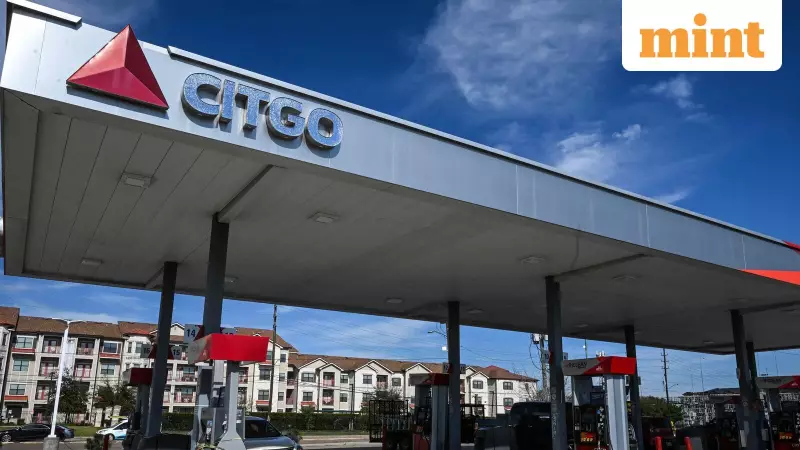
The landscape for one of the most contentious energy deals in recent history has shifted dramatically. Activist hedge fund Elliott Investment Management is now in a stronger position to close its proposed acquisition of Citgo Petroleum, the prized US refining arm of Venezuela's state oil company, following the dramatic political changes in Caracas.
A Deal Forged in Court, Accelerated by Politics
In November 2025, a US judge backed a bid worth roughly $6 billion from Elliott for Citgo. This was part of a forced sale to satisfy creditors of the bankrupt Venezuelan government. Citgo, headquartered in Houston, is a crown jewel asset, owning a significant network of refineries, pipelines, and terminals across the United States. Analysts have previously valued this network between $11 billion and $13 billion.
The deal faced fierce opposition from the government of Nicolás Maduro, which labelled it fraudulent. The US-recognised board overseeing Petróleos de Venezuela's (PdVSA) foreign assets also vowed to fight to retain Venezuelan control. However, less than two months after the judicial endorsement, the scenario changed. With Maduro detained in a New York jail and the new US administration under President Trump sidelining the opposition and promising strong American involvement in Venezuela's oil sector, Elliott's path has cleared considerably.

"Maduro is out, so a lot of the threat is out," said Jay Auslander, a litigator representing sovereign interests. "It looks like a potentially quite good deal that remains high risk."
High Stakes and a History of High-Risk Plays
Elliott is no stranger to lucrative bets in turbulent environments. The hedge fund famously held out against Argentina after its 2001 sovereign debt default, eventually securing a $2 billion payout after a global legal and lobbying campaign. The Citgo play follows a similar pattern of targeting distressed assets with high upside potential.
The fund still requires final approval from the US Treasury Department to conclude the Citgo transaction. Furthermore, PdVSA and Venezuela have appealed the court-ordered sale. People familiar with the matter indicate the appeal will likely be decided in the first half of 2026, after which the sale could close if Treasury greenlights it. Elliott believes its bid aligns with the White House's goal of securing repayment for US companies affected by Venezuela's past asset seizures.
The political dimension has drawn scrutiny. Republican congressman Thomas Massie, a critic of Trump, highlighted on social media that Elliott's billionaire founder, Paul Singer, "stands to make billions of dollars on his distressed Citgo investment" following the administration's actions in Venezuela. Singer, a major GOP donor, contributed approximately $8 million to Trump's re-election efforts.
Citgo's Strategic Value and Venezuela's Oil Future
For Venezuela, losing Citgo represents a significant strategic blow. PdVSA first bought a stake in the 1980s and acquired it fully in 1990. Under Maduro, Citgo's three US refineries, with a combined capacity of 807,000 barrels per day, became a vital source of petrodollar revenue until US sanctions severed that lifeline in 2019.
Experts argue that a change in Venezuela's regime could unlock the country's vast oil production, which has been crippled by mismanagement. This would directly benefit Citgo's Gulf Coast refineries, which are specifically designed to process heavy sour Venezuelan crude. Since sanctions, they have been using substitutes from Canada, Brazil, and Ecuador.
"You want the cheapest, nastiest crude others can't run," said Charles Kemp, a former Citgo engineer now at Baker & O'Brien. "It's definitely going to help them." Increased Venezuelan production would provide cheap feedstock, boosting Citgo's profitability and value.
Francisco Monaldi of Rice University's Baker Institute noted that selling Citgo means Venezuela loses a guaranteed gateway for its heavy oil into the US market. "It would be a good strategic asset to have," he said, suggesting Caracas might instead seek long-term supply contracts with American refiners.

Elliott, through its affiliate Amber Energy, leads a consortium providing about one-third of the equity for the bid, with Apollo Global Management leading debt financing. The hedge fund views Citgo as a long-term holding that can increase gasoline production and align with US goals of stabilising fuel prices. The final chapter of this high-stakes energy saga now hinges on a Washington courtroom and a government office's approval.