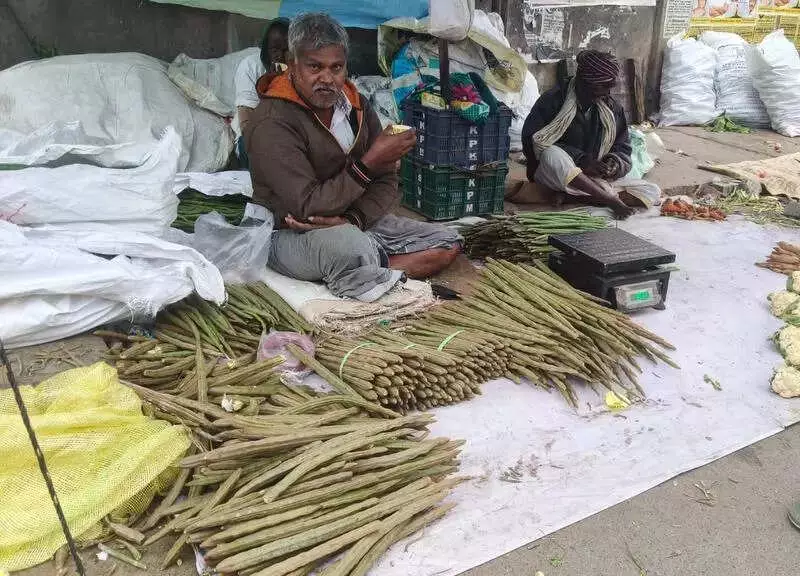
Residents and businesses in Krishnagiri district are facing a severe pinch in their kitchens as the price of drumsticks, a staple vegetable in South Indian cuisine, has skyrocketed to unprecedented levels. The humble 'Moringa' pods are now being sold for a staggering ₹500 per kilogram, with individual pieces costing around ₹40.
What's Causing the Drumstick Price Surge?
The primary reason behind this dramatic price hike is a classic mismatch between supply and demand. According to local farmers, the regular harvest season for drumsticks in the region spans from January to August. With that season now concluded, fresh local supply has dwindled significantly, creating a shortage in the market.
Farmer M Sasi Kumar from Anchetty provided detailed insight. He explained that just a few weeks ago, drumsticks were available at a reasonable ₹100 to ₹200 per kg. The current price of ₹500/kg represents a massive jump. He attributed the shortage to multiple factors: increased demand due to the wedding season and the Sabarimala pilgrimage period, and significant damage to drumstick flowers caused by untimely rains, which drastically reduced the overall yield.

Krishnagiri's Agricultural Landscape and External Supply
The cool climate in several parts of Krishnagiri district, including areas like Rayakottai, Shoolagiri, Kelamangalam, Thally, and Anchetty, is ideally suited for cultivating a variety of vegetables. Alongside drumsticks, farmers here successfully grow beans, carrots, beetroots, potatoes, cabbages, tomatoes, bitter gourds, and sorghum.
To bridge the local supply gap, drumsticks are being sourced from as far as Gujarat and sold in the Krishnagiri market. Interestingly, these out-of-state drumsticks arriving via the Bengaluru vegetable market are being sold at an even higher premium, fetching up to ₹700 per kg, and are still finding buyers among local traders.
Impact on Consumers and the Food Industry
The exorbitant price has had a direct and immediate impact on consumption. Hotels, canteens, and caterers preparing food for special events are reportedly cutting back on the use of drumsticks, a key ingredient for preparing sambar and other dishes. This reduction in commercial use highlights how the price spike is altering menus and increasing operational costs for the food service industry.
However, there is a glimmer of hope for consumers waiting for relief. Farmers indicate that prices are expected to gradually decrease starting in January, when the next harvest season begins and fresh produce starts flowing back into the markets, potentially restoring balance between supply and demand.