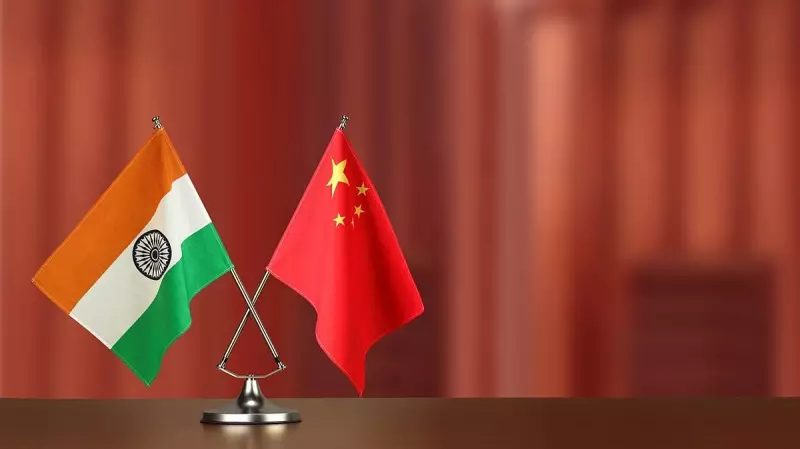
In a significant escalation of bilateral trade tensions, China has formally launched a dispute against India at the World Trade Organization (WTO). The complaint challenges India's imposition of import duties on a range of products, primarily focusing on solar cells and certain information technology goods.
The Core of China's WTO Complaint
The dispute, officially filed by China, questions the legal validity of duties levied by India on imports of solar cells and modules. This action directly impacts a sector crucial to India's ambitious renewable energy targets. Additionally, the complaint extends to cover duties imposed on a variety of IT hardware and components, a sector where both nations are major global players.
According to the notification submitted to the WTO, China contends that these Indian measures appear to be inconsistent with established global trade rules. The specific legal arguments revolve around the principles of the General Agreement on Tariffs and Trade (GATT) and the WTO's Agreement on Safeguards. China's move initiates a formal process of consultations, which is the first mandatory step in the WTO's dispute settlement mechanism.

Background: India's Protective Measures
India's imposition of duties on solar equipment is not a new development. For years, the Indian government has implemented various measures, including safeguard duties and later basic customs duties, on solar cell and module imports. The primary objective has been to protect and nurture the domestic manufacturing industry, a key pillar of the 'Make in India' and 'Atmanirbhar Bharat' (self-reliant India) initiatives.
The government has argued that these duties are essential to counter the influx of cheaper imports, particularly from China, which dominates the global solar manufacturing supply chain. By making imported cells and modules more expensive, the policy aims to create a competitive space for local manufacturers. Similarly, duties on certain IT goods have been part of a broader strategy to boost domestic electronics production.
Implications and Potential Fallout
This dispute carries substantial implications for both nations. For India, a ruling against its duties could force a policy reversal, potentially making imported solar components cheaper again. While this might lower costs for solar project developers in the short term, it could deal a severe blow to the budding domestic manufacturing ecosystem that the duties were designed to foster.
The timing is critical as India aggressively pursues its goal of achieving 500 GW of renewable energy capacity by 2030. Any disruption in the supply chain or cost structure for solar panels could have ripple effects on these targets. For China, the WTO challenge is a strategic move to protect its exporters' access to one of the world's fastest-growing renewable energy markets.
If the mandatory 60-day consultation period between the two countries fails to resolve the issue, China can request the WTO to establish a dispute settlement panel. This would lead to a protracted legal battle, potentially lasting years, and could further strain the already complex India-China economic relationship, which is still recovering from border tensions.
This case underscores the delicate balance nations must strike between protecting domestic industries and adhering to international trade commitments. The outcome will be closely watched by other countries with similar protective tariffs and by global investors in the renewable energy sector.