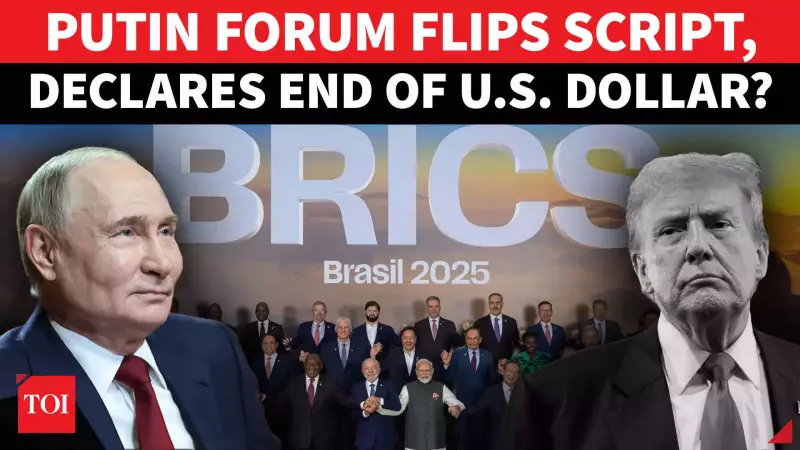
The BRICS alliance, comprising major emerging economies, is making a concerted push to establish a new international payment mechanism designed to function independently of the US dollar. This initiative marks a significant strategic step that analysts say could challenge the long-standing financial dominance of the United States.
Groundwork Laid, Momentum Building
According to Brazil's ambassador to Russia, Sergio Rodrigues dos Santos, the creation of this BRICS-centric payment system is not just theoretical but a realistic and achievable goal. In an interview with Russia's state news agency TASS, the ambassador emphasized that this project ranks among the bloc's most critical strategic priorities for the future.
The foundational work for this ambitious financial infrastructure was reportedly initiated during Russia's presidency of BRICS in 2024. The baton has now been passed, with discussions and planning continuing under Brazil's leadership of the group in 2025. This continuity suggests a sustained, high-level commitment to the project from the member nations.

A Strategic Response to Financial Dominance
The move is widely seen as a direct effort to reduce the bloc's dependency on the US dollar for cross-border trade and financial transactions. For years, the dollar's supremacy has given the United States considerable influence over the global financial system, including the ability to enforce sanctions. A successful BRICS payment system would offer member countries an alternative channel, potentially insulating their economies from Western financial policies.
This development has naturally raised fresh concerns in Washington, where policymakers are watching the consolidation of economic power among these nations. The potential erosion of dollar dominance could have far-reaching implications for American economic and geopolitical leverage.
Implications for Global Trade and Politics
If realized, a functional BRICS payment system would represent one of the most concrete steps towards de-dollarization in the international arena. It would empower the bloc's members—Brazil, Russia, India, China, and South Africa, along with new entrants—to settle trades in their own currencies or a potential new common unit, bypassing traditional dollar-based systems like SWIFT.
While the technical and political hurdles are substantial, the clear commitment from key diplomats indicates the proposal is moving beyond mere rhetoric. The success of such a system would not only reshape financial flows but also signal a profound shift in the architecture of global economic power, potentially creating a more multipolar financial world.