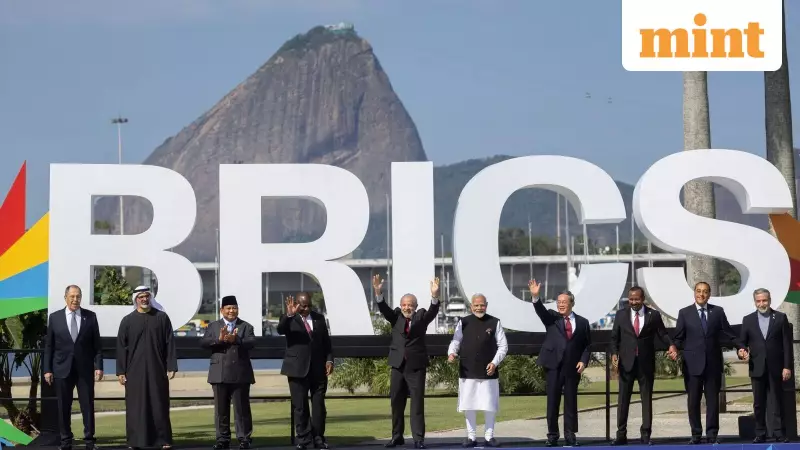
The BRICS economic bloc, comprising Brazil, Russia, India, China, and South Africa, is executing a significant strategic pivot. The alliance is accelerating its move away from the US dollar by aggressively accumulating physical gold, thereby reshaping global reserve dynamics.
The Gold Accumulation Strategy in Numbers
While BRICS nations officially hold about 20% of the world's gold reserves, their collective influence is far greater. Together with strategically allied non-member states, they now control approximately 50% of global gold production. This provides them with immense influence over future supply.
Leading this charge are Russia and China. In 2024, China produced 380 tonnes of gold, with Russia close behind at 340 tonnes. Following their lead, Brazil made a notable move in September 2025, purchasing 16 tonnes of gold—its first such acquisition since 2021.

Anuj Gupta, Director at Ya Wealth, explained the dual approach: "BRICS countries are simultaneously producing more gold, selling less, and buying more from international markets. Between 2020 and 2024, their central banks purchased over 50% of the world's gold."
Decoding the Motive: A Quest for Financial Sovereignty
Sachin Jasuja, Head of Equities and Founding Partner at Centricity WealthTech, identifies the core driver. "The growing gold control by BRICS is a clear signal of stress within the US Dollar-dominated order. Its supremacy is being gradually questioned," he states.
The trigger for this shift was stark. Jasuja highlights the Russia-Ukraine war, after which Western governments froze a large part of Russia's forex reserves. "This event changed how nations view reserve safety. It proved that dollar-denominated assets held abroad are vulnerable to geopolitical risk," he adds. Consequently, the focus has shifted to assets that are politically neutral, physically held, and immune to external control—like gold.
BRICS central banks have been voracious buyers, with China, Russia, and India now ranking among the world's top official gold holders. This has increased gold's share in their forex reserves while reducing exposure to dollar assets.
Beyond Gold: A Multipolar Financial System Emerges
The gold strategy is part of a broader de-dollarization playbook. "BRICS nations have been actively reducing dollar use in trade," notes Jasuja. Roughly one-third of intra-BRICS trade now bypasses the dollar, using local currencies in deals like India-Russia and China-Brazil trade. This cuts transaction costs and sanctions risk.
Ponmudi R, CEO of Enrich Money, clarifies that controlling future gold supply offers strategic flexibility but doesn't mean immediate monetary dominance. "The recent acceleration in gold purchases is primarily a risk-management and diversification strategy. Gold is sanction-resistant," he explains.
The real contest, however, is broader. "It involves the petrodollar system, trade realignments, and tariffs. China's push for electric vehicles and renewable energy aims to reduce dependence on dollar-linked commodity pricing," Ponmudi R adds.
In conclusion, Sachin Jasuja frames the shift: "BRICS' gold accumulation doesn't spell the dollar's end. It marks a credible move toward a more diversified, multipolar global financial system, where gold is quietly reclaiming its role as the ultimate anchor of monetary trust."