

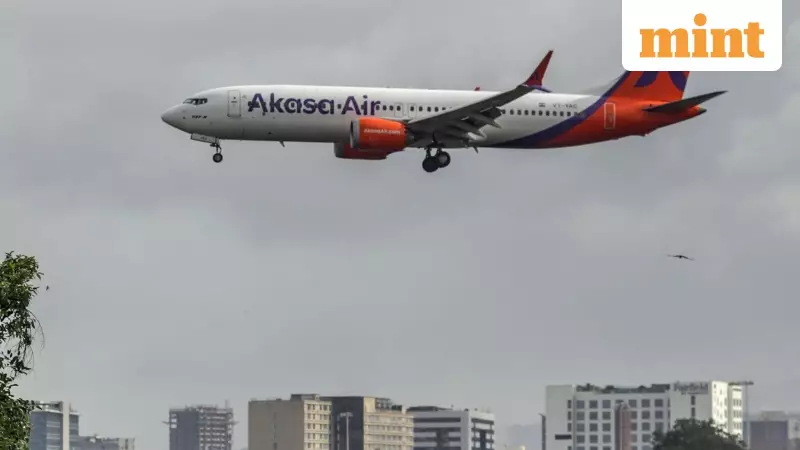
Akasa Air's Global Ambitions Temporarily Grounded
India's youngest budget airline, Akasa Air, finds its ambitious international expansion plans, including new routes to China and Africa, stuck in a holding pattern. The primary reason for this delay is the slower-than-expected supply of aircraft from its manufacturer, Boeing. Despite having the necessary flying rights to several new destinations, the airline's current fleet of just 30 aircraft is constraining its growth.
Owned by SNV Aviation, Akasa Air commenced operations in August 2022 and has quickly captured a 5% market share in India's competitive aviation sector. The carrier has secured bilateral flying rights to at least seven international destinations, such as Uzbekistan, Tashkent, Hanoi, Sri Lanka, the Maldives, Indonesia, and Singapore. It is also eyeing routes to China and Nairobi in Africa.
The Aircraft Supply Bottleneck
Praveen Iyer, the airline's Co-founder and Chief Commercial Officer, confirmed that the international ramp-up is entirely dependent on new aircraft arrivals. "We have bilaterals. And we hope to be ready in time to deploy the aircraft and grow profitably internationally," Iyer stated. "International ramp-up will happen as and when more aircraft come."

The delays have forced the privately-held airline to stop providing public guidance on its future fleet size. Akasa Air expects aircraft deliveries to normalize only by mid-2026 and is aligning its hiring plans with this revised timeline. The carrier last took delivery of a new plane in June-July 2025.
For now, Akasa's international network is limited to:
- Five routes in West Asia: Doha, Abu Dhabi, Jeddah, Riyadh, and Kuwait.
- One route to Phuket, Thailand.
- Flights to Sharjah are expected to commence soon.
A Long-Term Fleet Strategy
Akasa Air has a massive order book of 226 Boeing aircraft, all arranged under a sale-and-leaseback model. In this arrangement, the airline buys planes at a discount, sells them to lessors at cost, and immediately leases them back. This strategy helps manage capital expenditure.
The deliveries are spread over the next seven years, through 2032. The plan is to induct 196 aircraft over 86 months, averaging two planes per month. This rate is half that of larger competitors like IndiGo and Air India, which are adding four aircraft monthly.
The airline is banking on Boeing's production ramp-up, recently approved by the US Federal Aviation Administration (FAA). Effective October 2025, Boeing can increase its output from 38 to 42 aircraft per month, which Akasa hopes will accelerate its own delivery schedule. Iyer remarked that minor delays of one to two months would not significantly impact their long-term strategy.
Akasa is strategically focusing on any market within a 5.5-hour flight radius from India. A key driver for its international push is to hedge against foreign currency volatility. Since aircraft transactions are in US dollars, earning more revenue in dollars from overseas operations will help balance this exposure.
Internal projections filed with the Ministry of Corporate Affairs reveal a bold vision: Akasa aims to nearly triple the share of its international capacity from 13% to about 40% in the coming years.
Financial Performance and Future Outlook
The airline's financials for fiscal 2025 underscore the challenges of the Indian aviation market. Akasa reported revenues of ₹4,582.72 crore alongside significant losses of ₹1,983.42 crore, reflecting a high-cost structure and intense competition.
To fuel its expansion, the carrier recently secured ₹1,200 crore (approximately $125 million) in fresh funding. New investors, including Premji Invest, 360 One Asset, and Claypond Capital, participated in the round, alongside additional capital from its founding backer, the Jhunjhunwala family. These funds are earmarked for fleet expansion, technology upgrades, and network growth.

Analyst Gagan Dixit from Elara Capital noted, "More than international expansion, getting the aircraft is important. The airline has seen delivery delays by Boeing; and lease rental going up among other factors. As deliveries happen, more fuel-efficient aircraft will be inducted. Operating costs will go down."
By avoiding short-term, costly fixes like wet or damp leases, Akasa Air is betting on a disciplined, long-term approach to become a major internationally-focused player from its current domestic-oriented standing.





