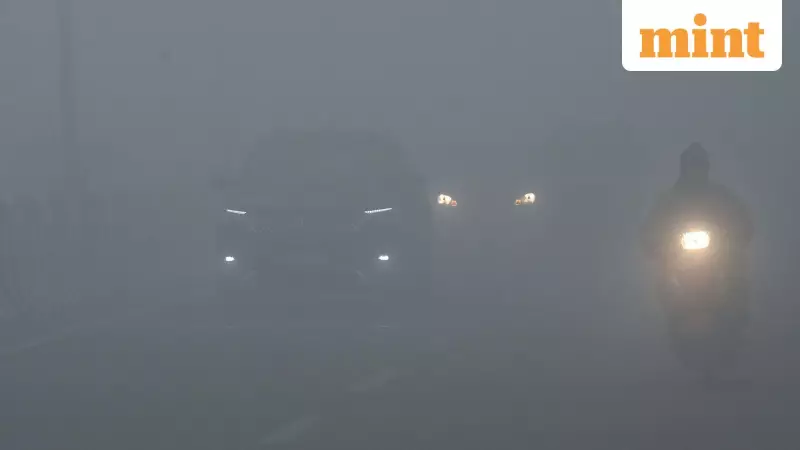
As a thick, persistent fog blanket continues to engulf vast stretches of North India, turning routine commutes into hazardous journeys, drivers are grappling with severely reduced visibility. This annual winter phenomenon, marked by dense fog and cold waves, significantly disrupts driving activities and, alarmingly, often leads to fatal accidents causing deaths and critical injuries. With the situation repeating this year, navigating these low-visibility conditions demands heightened caution and specific knowledge.
Mastering Visibility: Lights and Signals
The first and most critical rule is managing your vehicle's lights correctly. You must never use high beams in foggy weather. The powerful light reflects off the suspended moisture particles, creating a blinding glare that dramatically worsens visibility for you and others. Instead, rely on your vehicle's low beam headlights and dedicated fog lights. These are designed to project light downwards, illuminating the road directly in front of your car without causing a reflective wall of light.
An often-overlooked detail is the colour of the light. Traditional yellow or amber fog lights are more effective in cutting through fog compared to the modern bright white lights, which tend to scatter more and increase glare. Furthermore, use your horn and turn indicators thoughtfully. They serve as essential audio and visual alerts for other road users. However, avoid using hazard lights while the vehicle is in motion, as this can confuse others about your intentions and disables your turn signals.

Controlling Your Pace and Position
When visibility drops, your speed must drop accordingly. Driving at a reduced pace is non-negotiable. Obstacles like stalled vehicles, animals, or pedestrians can emerge suddenly from the gloom. It is advised to limit your speed to around 30 kmph in heavy fog. High speed drastically reduces your reaction time in an emergency. Alongside slowing down, significantly increase the following distance from the vehicle ahead. Maintain a gap of at least five seconds to allow ample time for safe braking if the leading vehicle stops abruptly.
To stay in your lane, avoid the instinct to follow the tail lights of the car ahead or stare into the foggy centre of the road. The best technique is to use the solid white line marking the right edge of your lane as a guide. This helps prevent unintentional drifting into oncoming traffic, especially on narrow roads. If the fog becomes so dense that seeing even a few meters ahead is impossible, the safest action is to find a secure location like a parking lot or rest area, pull over completely, and then turn on your hazard lights.
Engaging All Your Senses for Safety
Since fog impairs sight but not hearing, use your ears as a secondary safety system. Roll down your windows slightly and turn off the music or radio. This allows you to listen for crucial auditory cues like the sound of approaching vehicles, horns, or emergency sirens long before you can see their source. This added layer of awareness can provide vital extra seconds to react.
The recurring fog season in North India is a serious challenge for all road users. By adopting these five lifesaving practices—using appropriate lights, driving slowly, increasing distance, following road markings, and listening attentively—drivers can significantly minimise risks. Proactive and cautious driving is the key to ensuring that journeys during this frosty, opaque season conclude safely.