Indian Equity Markets Witness Sharp Sell-Off Post Budget 2026-27 Announcements
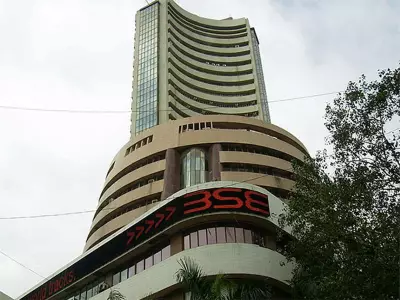
India's benchmark stock indices experienced a significant intraday decline of approximately 3% on Sunday, as investors reacted negatively to key proposals in Finance Minister Nirmala Sitharaman's Union Budget for the financial year 2026-27. The primary triggers for the market downturn were the unexpected increase in securities transaction tax on futures and options trades and higher-than-anticipated government borrowing plans.
Budget Proposals Trigger Widespread Market Anxiety
During her budget speech, Sitharaman announced substantial hikes in securities transaction tax rates across various derivatives segments. The STT on futures contracts will rise to 0.05% from the current 0.02%, while the tax on options premium and exercise of options will increase to 0.15% from existing rates of 0.1% and 0.125% respectively. The finance minister stated these measures were intended to provide "reasonable course correction" in the F&O segment while generating additional government revenues.
Simultaneously, the government's borrowing plans created additional concerns among market participants. Sitharaman proposed gross borrowings of ₹17.2 trillion for 2026-27, exceeding most market estimates that had ranged between ₹16 trillion to ₹17.5 trillion. This higher borrowing could potentially spike interest costs for businesses and make sovereign debt instruments more attractive relative to equities.

Market Performance Reflects Widespread Disappointment
The BSE Sensex closed 1.9% lower at 80,722.94 points, while the Nifty 50 index fell 2% to settle at 24,825.45. The broader markets witnessed even steeper declines, with both the Nifty Smallcap 250 and Nifty Midcap 100 indices dropping over 2% each. Market volatility surged dramatically, with India's volatility index jumping as much as 18% before settling 6% higher for the session.
Brokerage stocks bore the brunt of the selling pressure, with Angel One shares tumbling 11% following the STT announcement. Motilal Oswal Financial Services and Anand Rathi shares each declined 4%. Sectorally, Nifty PSU Bank and Nifty Midsmall Financial Services indices emerged as the biggest laggards, falling 5.6% and 3.7% respectively.
Industry Experts Express Mixed Reactions
Market analysts and investment professionals offered varied perspectives on the budget announcements. Vikas Khemani, founder and chief investment officer of Carnelian Asset Management & Advisors, noted that while the budget continued past policies with positive focus areas like manufacturing, textiles, electronic manufacturing services, semiconductors, and bio-pharma, the STT hike represented "an avoidable surprise."
Feroze Azeez, joint chief executive officer of Anand Rathi Wealth, highlighted that "the increase in STT on F&O significantly raises transaction costs for derivatives traders, particularly impacting high-frequency traders, arbitragers and hedgers." He warned this could lead to lower derivative volumes and near-term market volatility, potentially pressuring brokerage earnings.
Ashish Gupta, chief investment officer at Axis Mutual Fund, observed that "the hike in STT clearly does little to lift investor sentiment" while noting the absence of sector-specific stimulus measures. However, he found comfort in the government's emphasis on capacity building and long-term growth drivers.
Select Sectors Find Favor Amid Broad Market Weakness
Despite the overall market decline, certain sectors received positive impetus from budget announcements. Pharmaceutical and healthcare stocks gained approximately 2% each after Sitharaman's proposal to position India as a bio-pharma development hub. Textile companies rallied 3-7% following plans to establish mega textile parks, though many gave up gains toward session close.
Railway-linked and shipping stocks also witnessed initial strength after proposals for seven high-speed rail corridors and incentives for seaplanes and ship-repair ecosystems. However, most of these stocks eventually ended in negative territory as selling pressure intensified across the broader market.

Long-Term Implications and Market Outlook
Nirav Karkera, head of research at Fisdom, noted that "equity capital market participation now comes with a higher price tag" and observed that most budget measures focused on longer-term resilience while causing near-term disappointment. He suggested the STT hike might cool speculative F&O participation but questioned whether benefits would outweigh costs.
Khemani pointed to another gap in the budget—the absence of incentives for bank deposits despite sluggish deposit growth in the financial system. Looking ahead, he expressed optimism that markets are unlikely to fall sharply on Monday following Sunday's post-budget sell-off, suggesting the initial reaction might have been excessive.
The budget's emphasis on fiscal discipline, with conservative yet credible projections for tax revenues and GDP growth, received acknowledgment from market participants. However, the absence of expected measures like easing taxation on debt funds contributed to the overall weak investor sentiment that characterized Sunday's trading session.