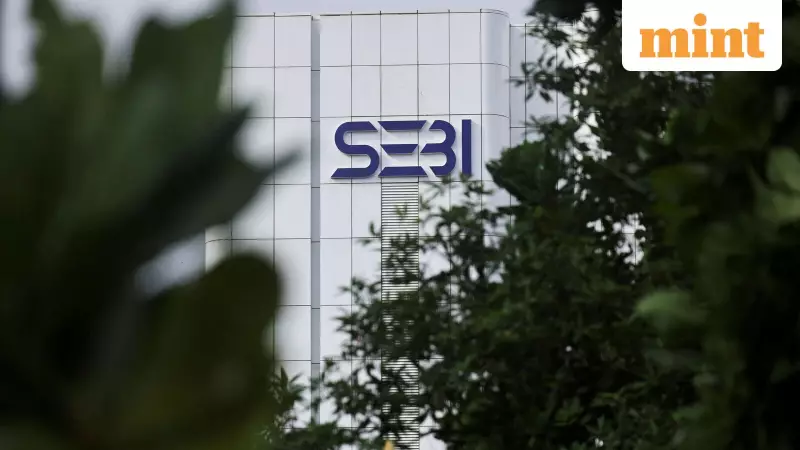
India's capital markets regulator, the Securities and Exchange Board of India (Sebi), has put forward a new proposal to standardise the time lag for using live market data in educational content. The move aims to resolve confusion stemming from two earlier circulars with conflicting timelines.
The Regulatory Confusion and Its Origin
The issue came to a head during proceedings at the Securities Appellate Tribunal (SAT) concerning the Avadhut Sathe case. In a December ex parte interim order, Sebi had barred Avadhut Sathe and his institute, the Avadhut Sathe Trading Academy (ASTA), from the securities market. The regulator also directed the impounding of ₹546.16 crore, alleging that Sathe was running unregistered investment advisory and research analyst services disguised as stock market education.
Sebi presented evidence showing Sathe used market data to give stock recommendations. It claimed the academy collected an "astronomical" ₹601.37 crore from more than 337,000 investors since 2015. During the SAT hearing, the appellants pointed to a "regulatory vacuum" caused by Sebi's own conflicting circulars.

Clarifying the Two Circulars
In May 2024, Sebi had issued a circular preventing Market Infrastructure Institutions (MIIs) and intermediaries, including stock exchanges, from sharing price data with a lag of less than one day for educational purposes. However, a separate circular in 2025 stated that the time lag for using price data in investor education and awareness activities should be three months.
In a consultation paper released recently, Sebi clarified that these two circulars can coexist. The one-day lag is a minimum technical buffer for data sharing by MIIs, while the three-month requirement is a content-based threshold for educators. Despite this explanation, stakeholders found the rules inconsistent in practical application.
The New Proposed Balance: A 30-Day Lag
Sebi has now proposed a 30-day lag as a middle ground. The regulator stated it received feedback that a one-day gap is too short and open to misuse, while internal discussions found a three-month gap renders educational material less effective and irrelevant.
"A 30-day lag could strike a balance by keeping content relevant without enabling educators to analyze near-real-time data in a way that resembles stock tips or recommendations," Sebi noted in its paper. Legal expert Akshaya Bhansali, managing partner at Mindspright Legal, commented, "A 30-day lag will help control the data. Earlier, teaching with three-month-old data did not make sense. But a change in the timeline does not make a difference in the misuse of data. Sebi needs to build a mechanism to tackle data being used in the wrong ways."
Other Safeguards and Next Steps
Other prohibitions outlined in a January 2026 circular, which ban activities resembling advisory or research functions, will remain unchanged. Sebi has invited public comments on this new proposal until 27 January. This step is seen as crucial for creating a clearer regulatory framework for the growing field of financial market education in India, ensuring it serves genuine learning without crossing into unauthorized advisory services.