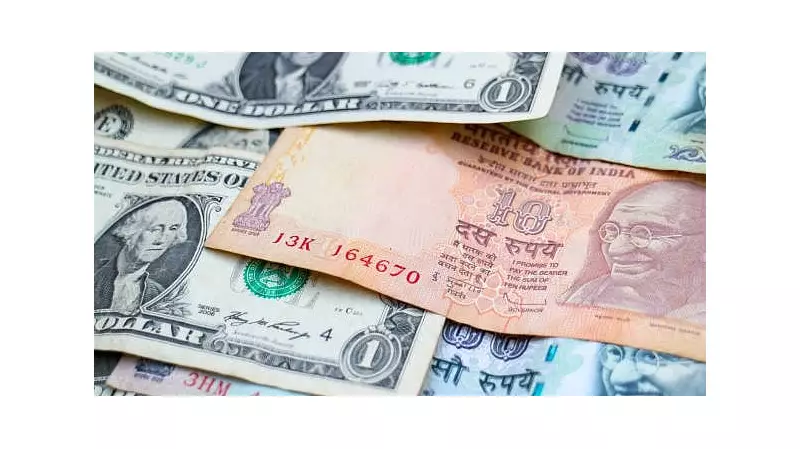
The Indian rupee commenced Tuesday's trading session on a weaker note, shedding 3 paise against the US dollar. The domestic currency opened at 89.90 against the greenback, a slight decline from its previous close of 89.87.
Factors Driving the Rupee's Movement
Forex traders pointed to a combination of domestic and global factors pressuring the local unit. A primary headwind was the strengthening of the American currency in international markets. Simultaneously, sustained foreign capital outflows from Indian equities added to the downward pressure on the rupee. Market sentiment was also tempered as participants adopted a wait-and-watch approach ahead of the release of crucial US inflation data later in the day.
Market Dynamics and Trader Sentiment
The rupee's initial range-bound movement reflected the cautious stance of traders. While the US dollar's broad-based strength acted as a drag, a modest rise in domestic equity markets provided some cushion, preventing a steeper fall. Analysts noted that the currency market is currently highly sensitive to global cues and foreign investor activity. The direction of crude oil prices, a key import for India, also remains a critical factor influencing the rupee's trajectory.

On the previous trading day, Monday, the rupee had settled 7 paise lower at 89.87 against the US dollar. This continued weakness highlights the persistent challenges faced by the currency in the current financial climate.
Broader Economic Context and Outlook
The rupee's performance is being closely monitored against the backdrop of global monetary policy trends and domestic economic indicators. The strength of the US dollar, driven by expectations surrounding the Federal Reserve's interest rate decisions, continues to be a dominant force for emerging market currencies like the rupee. Investors and traders are keenly awaiting the US Consumer Price Index (CPI) data, which could provide further direction for the dollar and, consequently, the rupee.
In the interim, the Reserve Bank of India (RBI) is expected to intervene in the forex market to curb excessive volatility and ensure orderly movement of the currency. The central bank's actions, along with global risk appetite and crude oil price movements, will dictate the rupee's near-term path against the US dollar.