Global markets experienced dramatic volatility on Thursday as blockbuster results from AI giant Nvidia failed to sustain an early rally, culminating in one of the most significant market reversals since April's tariff-fueled turmoil.
Market Rollercoaster: From Rally to Collapse
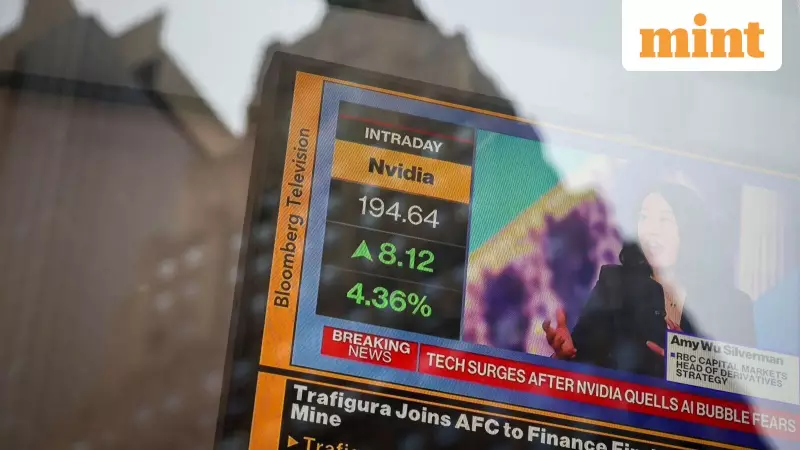
The trading session began with tremendous optimism as Nvidia, considered the bellwether for artificial intelligence investments, reported impressive quarterly results. The chipmaker disclosed a 62% increase in sales of AI data centre chips and raised its guidance for the current quarter, sparking a furious rally across global markets from Tokyo to New York.
The Nasdaq composite initially surged as much as 2.6% in early trading, while Nvidia shares climbed up to 5%. However, the optimism proved short-lived as investor concerns about swollen valuations and aggressive AI spending plans triggered a massive selloff.

By the closing bell, the situation had completely reversed. The Nasdaq composite finished with a 2.2% decline, while Nvidia shares ended the session down 3%. The S&P 500 closed 1.6% lower after initially jumping 1.9%, and the Dow Jones Industrial Average swung more than 1,000 points, surrendering a 700-point gain to close 387 points lower.
Economic Uncertainty and Fed Policy Concerns
Adding to market nervousness was the release of the delayed September jobs report, which showed the U.S. economy added 119,000 positions, beating consensus forecasts. However, the unemployment rate unexpectedly ticked up to 4.4%, creating contradictory signals about the labor market's health.
The mixed data provided little clarity on the potential for a long-debated December interest-rate cut from the Federal Reserve. Interest-rate futures suggested investors now see a nearly 40% chance that Fed officials will cut rates in December, according to CME data. This represents an increase from 30% on Wednesday but a dramatic decline from around 99% a month ago.
Tony Roth, chief investment officer at Wilmington Trust Investment Advisors, noted the puzzling nature of the market movement. "What stands out to me is the lack of any substantial shift in narrative to cause such a big shift. There's just not a lot of confidence in the market right now."
Broader Market Impact and AI Sector Concerns
The market turmoil extended beyond major indices to other risk assets. Bitcoin slumped to its lowest 4 p.m. level since April, trading at $86,337, down more than 30% from its October 6 peak above $126,000. The Cboe Volatility Index, Wall Street's fear gauge, rose around 12%.
Other AI-related stocks suffered significant losses. Micron Technology dropped 11%, extending its weekly loss to 18%. Western Digital slid 8.9%, and Advanced Micro Devices retreated 7.8%.
Investors have grown increasingly concerned that technology companies are spending too much on data centers, chips, and other AI infrastructure with limited near-term prospects for recouping their investments. The credit markets are also showing signs of stress, with the cost of swaps protecting against default in bonds issued by Oracle jumping by nearly 50% since mid-October.
Omar Aguilar, chief investment officer at Schwab Asset Management, highlighted the broader risks: "Nvidia is a leader in the market but the AI ecosystem is beyond Nvidia. The credit market seems to be providing a barometer that there may be risks on the horizon."
Amid the widespread decline, Walmart emerged as a rare bright spot, rising 6.5% after the largest U.S. retailer reported robust earnings and raised its annual outlook.
With the corporate earnings season concluding and no major economic data expected before the Fed's next meeting, market participants face continued uncertainty. Retail investors showed declining confidence, becoming net sellers of single stocks this week with about $728 million in outflows, the lowest level in four months.
As Roth of Wilmington Trust summarized, "The market was priced for perfection and now the concerns about AI and a pause in Fed rate cutting are spreading cracks through the edifice of perfection."