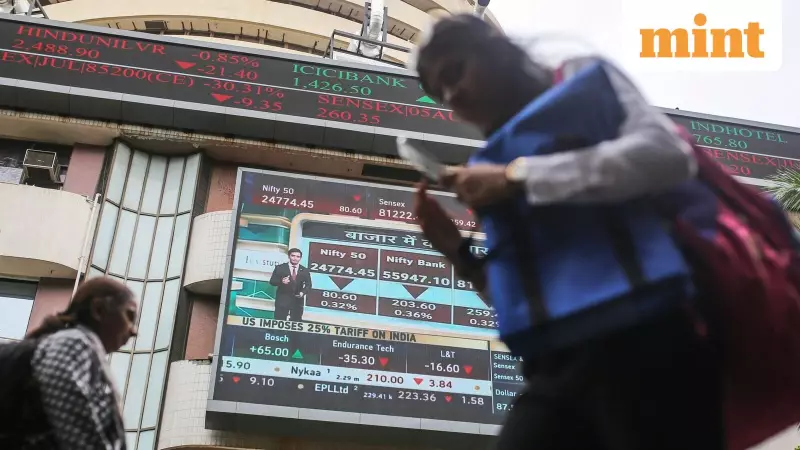
As India steps into the year 2026, its equity markets stand at a critical turning point. The phase dominated primarily by domestic liquidity is receding, making way for a new era where stock returns will be driven by corporate earnings execution, coherent policy frameworks, and overall macroeconomic stability. This fundamental shift sets the tone for investors in the coming period.
Market Performance and Economic Backdrop
The year 2025 presented a mixed bag for Indian equities. The benchmark Nifty 50 index soared to a historic peak of 26,326 points on December 1, ultimately registering an annual gain of 10.2%. Its counterpart, the Sensex, managed to climb approximately 8% over the same one-year span.
On the economic front, inflation witnessed a slight uptick in November after touching a record low the previous month. However, it continues to stay well under the Reserve Bank of India's (RBI) 4% target. This comfortable position provided the central bank with the leeway to implement a 25 basis points reduction in the repo rate recently. The RBI has signaled its readiness for further monetary policy easing, citing subdued price pressures. Its projections indicate a potential rise in the Consumer Price Index (CPI) starting January, averaging around 2.9% for the quarter ending March 2026.

Key Drivers Shaping the Market in 2026
Brokerage firm Axis Direct highlights a cyclical recovery unfolding in Indian equities, synchronized with a turn in the corporate earnings cycle and a broadening of economic growth. This combination of cyclical upturn and structural strengths positions India uniquely among major global markets.
Corporate Earnings Revival
Consensus estimates point towards a significant inflection in corporate profitability. Earnings growth is anticipated to accelerate to 12–15% year-on-year over FY26 and FY27. This rebound, supported by resilient GDP expansion, a demand revival, and a supportive policy environment, is expected to be the principal engine for the Nifty's upward journey.
Robust GDP Growth Trajectory
India's growth momentum remains firm as it enters 2026. Forecasts for the first half of FY27 have been revised upward to 6.7–6.8% from earlier estimates of 6.4%. The RBI itself has upgraded its GDP growth projection for FY25-26 to 7.3% from 6.8%, following a robust second-quarter performance. This optimism stems from sustained domestic demand, ongoing reforms, and stable macroeconomic conditions.
Currency Dynamics and External Factors
The Indian rupee experienced sharp depreciation, breaching the crucial ₹90 per US dollar mark, influenced by foreign institutional investor (FII) outflows and uncertainties surrounding India-US trade relations. While a weaker rupee increases imported input costs, it simultaneously benefits export-oriented sectors by boosting their rupee revenues. Analysts expect a potential rebound, with the USD/INR pair possibly moving back below the ₹90 level.
The outcome of the elevated tariffs imposed by the US on Indian exports remains a pivotal factor. Any rollback or partial easing of these duties could significantly boost FII confidence and support growth in export-driven industries.
Expert Outlook for the Year Ahead
Nitin Rao, CEO of InCred Wealth, observes that the market narrative is evolving from caution to cautious optimism. He believes 2026 will likely see a transition from valuation-driven returns to earnings growth-driven returns. Rao emphasizes that the year will be defined by steady progress, where patience, balanced asset allocation, and discipline will be crucial for investment success.
Motilal Oswal Financial Services anticipates steady market growth in Calendar Year 2026, underpinned by the earnings recovery and a gradual pick-up in private sector investments. The firm notes that CY2025 was a year of consolidation that helped reset valuations. The upcoming Union Budget for 2026 will be a key event to watch, as it will set the fiscal direction for FY2026-27.
Disclaimer: This analysis is for educational purposes only. Investors are advised to consult with a certified investment advisor before making any financial decisions.