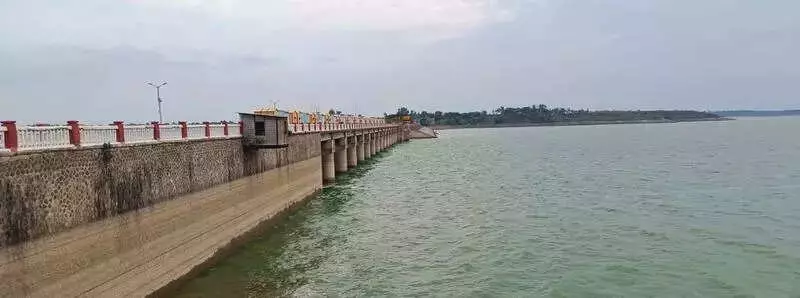
The Water Resources Department (WRD) in Nashik has taken a decisive step towards alleviating water scarcity in the region by officially releasing tenders for the monumental first phase of the Nar-Par Girna river linking project. This ambitious initiative, valued at a staggering Rs 7,100 crore, is designed to strategically redirect 10.6 TMC (thousand million cubic feet) of water from the west-flowing Nar and Par rivers towards the parched eastern areas of Nashik and Jalgaon districts.
Phase One: Laying the Foundational Infrastructure
According to a senior official from the Nashik WRD, the initial phase encompasses a wide array of critical activities. "The first phase of the tender encompasses a comprehensive scope of work, including land acquisition, resident rehabilitation, and the technical design and construction of the site," the official stated. The core engineering feat of this stage involves the construction of nine dams at pre-identified strategic locations. These dams will form the essential backbone of the entire water diversion network.
The sophisticated plan involves lifting water from these new reservoirs and channeling it into the Girna River. This will be achieved through an integrated system of tunnels, channels, and supplementary dams. The estimated budget for this foundational first phase is Rs 4,116 crore.

The Engineering Marvel: How Water Will Flow Uphill
The project taps into a innovative combination of lifting and gravity-based flow. Water will be sourced from four west-flowing rivers—Nar, Par, Auranga, and Ambika—which originate in Maharashtra and currently drain into the Arabian Sea. The scheme involves capturing surplus water in the nine proposed dams and two sumps at Mankhed and Salbhoya.
"Water will be lifted to various heights and then passed across the mountain ridge through tunnels of about 37 km in length to reach the desired dams by using gravity," explained the official. This complex inter-basin transfer is the heart of the project's engineering design.
Transformative Impact on Irrigation and Drinking Water
The primary goal of the Nar-Par Girna project is to provide a permanent solution to the chronic irrigation and drinking water deficits in the Girna sub-basin. Of the total 10.6 TMC water harnessed, 9.5 TMC will be allocated for the benefit of Nashik and Jalgaon districts. The remaining volume will be reserved for local communities residing near the project sites.
The anticipated agricultural benefits are substantial. The project aims to bring a total of 49,516 hectares of land under cultivation. This includes 25,318 hectares in Nashik district, 17,024 hectares in Jalgaon district, and 7,174 hectares in the vicinity of the dams themselves.
Looking Ahead: Phase Two and Final Distribution
While Phase One focuses on the dams and primary diversion infrastructure, a subsequent second phase will handle the final distribution. A tender for this phase will be floated in due course. It will involve the construction of a canal network, a piped distribution system, and other components required to deliver the water to the Chankapur Dam in the Girna sub-basin. The financial outlay for Phase Two is estimated at Rs 2,984 crore.
This river-linking project stands as one of Maharashtra's most significant water management endeavors, promising to reshape the agricultural and socio-economic landscape of Nashik and Jalgaon by turning water scarcity into water security.