Indian Stock Markets Zoom 4.5% Powered by India-US Trade Deal Announcement
The Indian stock market witnessed a spectacular rally early in Tuesday's trading session following the announcement of a landmark trade deal between India and the United States. The breakthrough came after months of uncertainty that had weighed heavily on investor sentiment and market performance.
Market Performance and Key Indices
US President Donald Trump revealed that the agreement would significantly reduce tariffs on Indian imports to the United States, bringing them down to 18% from the previous 50%. This dramatic reduction immediately sparked optimism across trading floors.
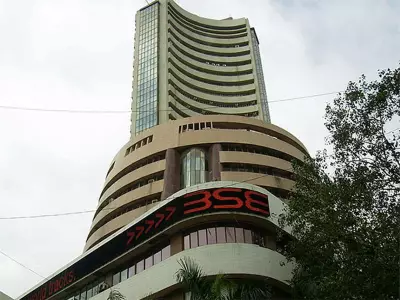
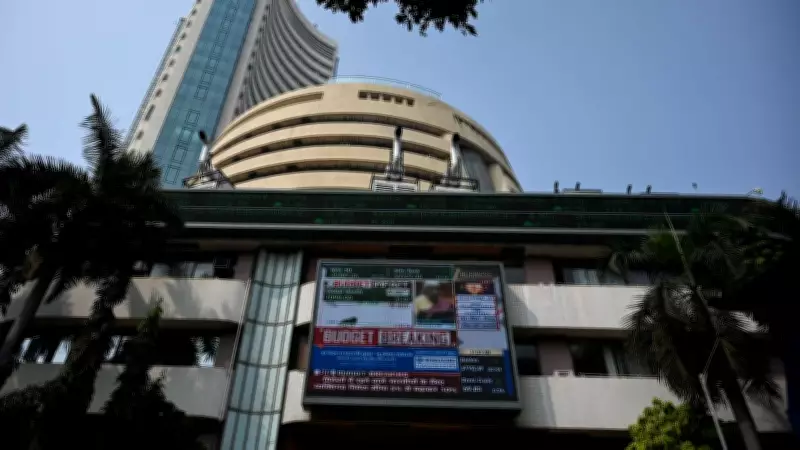
The Bombay Stock Exchange's benchmark Sensex index opened the session with an impressive 4.5% surge. By approximately 9:20 AM, the index had gained 2,344.94 points, reaching 84,011 points, representing a 2.9% increase. Meanwhile, the National Stock Exchange's Nifty 50 index climbed to 26,308.05 points, rising by 708 points or 2.8%.

Recovery from Previous Setbacks
This remarkable market jump comes as a welcome reversal following recent turbulence. Both major indices had experienced nearly 2% declines after the Union Budget FY27 introduced a hike in securities transaction tax for the futures and options segment, which had unsettled investors.
The markets had already recovered more than half of those losses during Monday's trading session. With Tuesday's substantial gains, the indices have now completely recovered from the post-Budget downturn, demonstrating the powerful impact of the trade deal announcement.
Ending Months of Market Overhang
The prolonged delay in finalizing the trade agreement between the two economic powers had created significant pressure on Indian stock markets over recent months. The uncertainty had particularly affected the Indian rupee, which faced mounting pressure due to increasing costs for Indian exporters who rely heavily on the US market.
This currency weakness, combined with other concerns including modest earnings growth and elevated valuations, had kept foreign institutional investors (FIIs) away from Indian equities for an extended period. Since August 2025, when the US imposed additional 25% tariffs bringing the effective rate to 50%, FIIs have withdrawn nearly $12 billion on a net basis from Indian stock markets.
Expert Analysis and Market Outlook
Market experts expressed optimism about the deal's implications. Nilesh Shah, Managing Director of Kotak Asset Management Company, commented: "India-US trade deal has gone through ups and downs like a roller coaster. While devil is in the details, it removes a hanging sword over rupee, equity, and rates market. Let us hope that it is a win-win deal for both countries as they have a lot to gain through cooperation."
VK Vijaykumar, Chief Investment Strategist at Geojit Financial Services, identified the trade deal delay as the primary factor restraining market performance. He outlined multiple benefits:
- India's growth rate could accelerate to approximately 7.5% in FY27, supported by increased exports to the United States
- Corporate earnings, already showing revival signs in FY27, might accelerate to between 16% and 18%
- The Indian rupee could strengthen significantly
Vijaykumar added: "The stock market, anticipating and discounting these developments, will boom."
Sector-Specific Impact and Performance
The trade deal announcement triggered particularly strong gains in specific sectors. Textile companies, many of which depend heavily on the US market, emerged as some of the biggest early gainers. Several textile stocks hit their upper circuit limits after surging as much as 20%.
Similarly, shares of shrimp exporters, who face comparable market dynamics, also reached upper circuit levels. The tariff reduction to 18% now positions India more competitively against key export rivals including Vietnam, Malaysia, Cambodia, Thailand, Bangladesh, Indonesia (all maintaining 19-20% rates), and China (at 37%).
During the period of trade uncertainty, the Sensex had gained just over 1% (prior to Tuesday's rally), underperforming most other global markets. The new agreement is expected to reverse this trend and attract renewed foreign investment interest in Indian equities.