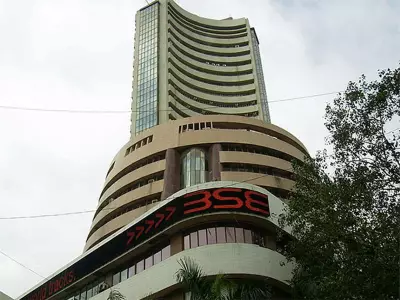
Indian Stock Market Witnesses Historic Rally as Trade Deal Boosts Investor Confidence
In a remarkable trading session on Tuesday, Indian stock market investors saw their wealth increase by a staggering Rs 12.10 lakh crore as benchmark equity indices staged a powerful rally. This surge was primarily fueled by widespread optimism surrounding the newly announced India–US trade agreement, which has significantly reduced tariff-related uncertainties and injected positive sentiment into both global and domestic markets.
Record-Breaking Gains Across Major Indices
The 30-share BSE Sensex closed at an impressive 83,739.13, registering a substantial gain of 2,072.67 points or 2.54 per cent. Similarly, the NSE Nifty climbed 639.15 points or 2.55 per cent to settle at 25,727.55. This broad-based rally was reflected in the total market capitalisation of BSE-listed companies, which jumped by Rs 12,10,877.45 crore to reach Rs 4,67,14,754.77 crore (approximately USD 5.16 trillion).
Trade Deal Removes Key Market Overhang
Market participants widely attributed this exceptional performance to the India–US trade agreement, which reduces reciprocal tariffs on Indian goods to 18 per cent, thereby eliminating a major concern for investors. A Balasubramanian, Managing Director and CEO of Aditya Birla Sun Life AMC Ltd, commented, "The India-US trade deal is a decisive win for certainty, removing a key overhang for Indian markets. Coming on the heels of a strong Budget, it materially improves visibility on capital flows, the rupee, and manufacturing investment."

Sectoral Performance and Stock Highlights
Among Sensex constituents, Adani Ports emerged as the top gainer, soaring by 9.12 per cent. Other significant gainers included:
- Bajaj Finance
- InterGlobe Aviation
- Power Grid
- Sun Pharma
- Bajaj Finserv
- Reliance Industries
Only Tech Mahindra and Bharat Electronics ended the session as laggards within the 30-share index. The rally extended beyond frontline stocks, with the trade deal sparking robust buying interest in export-oriented sectors such as:
- Textiles
- Leather
- Gems and jewellery
- Auto ancillaries
- Marine exports
- Specialty chemicals
Analysts Hail One of the Biggest Single-Day Gains
Siddhartha Khemka, Head of Research, Wealth Management at Motilal Oswal Financial Services Ltd, highlighted the magnitude of the move, stating, "Indian equities witnessed one of the biggest single-day gains on Tuesday after India and US announced a long-awaited trade deal, easing tariff-related concerns that have weighed on Indian markets since April 2025." He further identified key beneficiaries, including auto ancillaries, defence, textiles, EMS, consumer durables, IT services, and utilities, while noting that financials could see second-order gains through improved growth visibility.
Broad-Based Sectoral Rally and Currency Impact
Sectorally, all indices closed in positive territory, with the services index leading the charge with a 4.86 per cent gain, followed by:
- Realty (4.79 per cent)
- Power (4.79 per cent)
- Utilities (3.92 per cent)
- Capital goods (3.71 per cent)
- Industrials (3.44 per cent)
- Consumer discretionary (3.06 per cent)
- Metal (2.85 per cent)
- Healthcare (2.83 per cent)
- Financial services (2.83 per cent)
The positive momentum extended to the currency market, with the rupee appreciating sharply to a three-week high of 90.25 against the US dollar. Jateen Trivedi, VP, Research Analyst (Commodity and Currency) at LKP Securities, explained, "Rupee traded sharply stronger, appreciating by Rs 1.28 or nearly 1.40% following the US-India trade deal announcement. The agreement has significantly improved sentiment, as expectations of stronger trade flows and potential FII inflows have boosted confidence in the domestic currency."

Macroeconomic Implications and Future Outlook
Vinod Nair, Head of Research at Geojit Investments Limited, elaborated on the broader macroeconomic impact, noting that the rally was driven by both trade optimism and currency strength. He said, "Indian equities experienced a significant rally today, driven by the long-anticipated India–US trade deal and a strengthening rupee, which boosted expectations of renewed FII inflows." He further emphasized, "The reduction of US tariffs on Indian goods from 50% to 18% enhances India’s competitive position among emerging markets and bolsters the outlook for export-oriented sectors with high US exposure, such as textiles, aquaculture, gems and pharmaceuticals, which were supported in the 2026 Union Budget."
Market breadth remained overwhelmingly positive, with 3,304 stocks advancing on the BSE, while 981 declined and 137 remained unchanged. Looking ahead, analysts believe investor focus will shift towards corporate earnings. Vinod Nair added, "Overall market sentiment has turned decisively positive, with global trade risks easing and moderation in the US-Iran conflict. Going forward the markets could focus more on the ongoing Q3 corporate results with a positive bias, because of potential future earnings upgrades led by reduction in tariff risk."