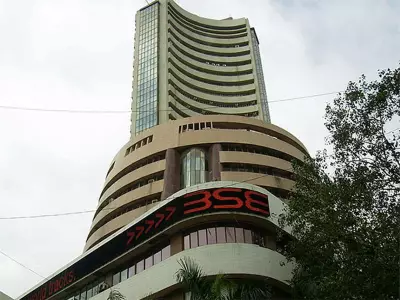
India-US Trade Deal Ignites Stock Market Rally, May Reverse Foreign Investor Exodus
The Indian stock market erupted in celebration on Tuesday, February 3, as the long-anticipated India-US trade deal was finally announced. Investors greeted the agreement with overwhelming optimism, viewing it not merely as a short-term boost but as a profound structural catalyst for equities, export-focused industries, and a potential magnet for reviving foreign capital inflows into the country.
Markets Soar on Trade Deal Euphoria
Buoyed by the landmark announcement, Indian equity benchmarks opened with a powerful gap-up. The Nifty 50 index commenced trading at 26,308 and swiftly ascended to an intraday high of 26,341, registering a remarkable surge of 1,253 points in the initial minutes. Simultaneously, the BSE Sensex opened robustly at 85,323 and catapulted to an early peak of 85,871, marking an impressive intraday leap of 4,205 points. This dramatic upward movement reflected the market's collective relief and renewed confidence.
Axis Securities underscored the deal's significance, stating, "The trade deal is structurally positive for India’s medium-term growth and external stability. Improved market access and tariff certainty are likely to boost exports, support manufacturing investment, and strengthen inflows of foreign direct investment (FDI)."

The Persistent Challenge of FII Outflows
This rally arrives against a backdrop of sustained selling pressure from Foreign Institutional Investors (FIIs). FIIs have been relentless net sellers over recent months, a trend that began in 2025 and extended into the current calendar year. Data from the National Securities Depository Limited (NSDL) reveals a stark picture: FIIs have withdrawn a net ₹106,606 crore from Indian equity markets since early August 2025. This period includes a substantial pullout of ₹35,962 crore in January alone.
The selling pressure intensified after the US imposed an additional 25% tariff on India in August 2025, raising the effective rate to 50%. For the entirety of 2025, FIIs set a record by extracting a staggering ₹166,286 crore net from Indian equities. This exodus, combined with factors like an earnings slowdown, has kept the Indian market range-bound and caused it to significantly underperform other global markets over the past twelve months.
Motilal Oswal Financial Services (MOSL) noted that strained Indo-US relations since April 2024 had soured the FII outlook, as India was perceived to have limited leverage. Consequently, India's market performance lagged behind its peers by approximately 40% over the past year.
Domestic Investors: The Stabilizing Force
In the absence of steady foreign inflows, the market's performance would have suffered a more severe downturn. Domestic Institutional Investors (DIIs) emerged as a powerful counter-cyclical force, providing crucial support during periods of heavy FII selling. According to an MOSL report, DII equity inflows reached an all-time high of $90 billion in 2025, a substantial increase from $62.9 billion in 2024.
The brokerage highlighted that with only one year of outflows since 2015, DIIs have cumulatively invested $255.8 billion over the last decade (CY16-CY25), demonstrating their role as stable, long-term buyers.
Can the Trade Deal Trigger an FII Reversal?
Market experts are increasingly optimistic that the trade deal could be the turning point needed to attract FIIs back to Indian shores. They cite improving valuations and robust fundamentals as key draws.
Divam Sharma, Co-Founder and Fund Manager at Green Portfolio PMS, expressed bullish sentiment: "A large chunk of US FII capital will likely shift here, viewing India as the premier strategic play among emerging markets. The current high pessimism? It’ll get trapped in a sharp rally fueled by short covering. DIIs and retail will pile in, amplifying flows from all sides—get ready for the upside!"

Seema Srivastava, Senior Equity Research Analyst at SMC Global Securities, believes the agreement signals policy stability, growth revival, and improved sectoral prospects, which collectively enhance investor confidence. "Export-oriented sectors are likely to see valuation rerating, attracting equity inflows, while a stronger rupee outlook could make Indian debt more appealing to bond investors. Overall, the deal reduces geopolitical and trade risks, a key determinant in FPI allocation decisions," she stated.
Srivastava added that while execution risks and global demand conditions remain variables, the agreement is widely perceived as a structural positive that will re-anchor Foreign Portfolio Investors (FPIs) to India's growth narrative.
Echoing this view, domestic brokerage MOSL stated that with the fog of uncertainty now lifted, multiple positives will accrue, including the reversal of FII outflows.
Dr VK Vijayakumar, Chief Investment Strategist at Geojit Investment, expects large-cap stocks to be the primary beneficiaries of returning FII buying. "The rally will be widespread across market caps, but the largecaps which are fairly valued, have the potential to outperform, aided by FII inflows," he opined. He predicted that FII favorites in the large-cap space, such as leading banking stocks, non-banking financial companies, and other blue-chips in telecom, capital goods, and IT sectors, are poised for significant surges.
Notably, there are early signs of a shift. The intensity of FII selling sharply declined in the first two days of February, with FIIs becoming net buyers to the tune of ₹1,906 crore, offering a glimpse of potential trend reversal.
Disclaimer: This story is for educational purposes only. The views and recommendations above are those of individual analysts or broking companies. We advise investors to consult with certified experts before making any investment decisions.