The global oil market is displaying a remarkable resilience to geopolitical storms that once would have sent prices soaring. Despite the dramatic arrest of Venezuelan President Nicolás Maduro by U.S. forces over the weekend of January 3-4, 2026, and violent anti-government protests in Iran, crude prices remain subdued. This marks an unprecedented third consecutive year of falling prices, underscoring a fundamental shift in the industry's dynamics.
The Ghost of Crises Past: Why Old Rules No Longer Apply
The current events starkly contrast with historical precedents. Nearly 23 years ago, a similar threat to Venezuela's regime under Hugo Chávez saw oil prices surge nearly 40% in months. Back then, Venezuela was a heavyweight, producing over 3% of the world's oil during a period of tight supply. Today, its output has dwindled to about 900,000 barrels per day, accounting for less than 1% of global supply, and it operates within a market flooded with excess crude.
The situation echoes the 1979 Islamic Revolution in Iran, which wiped out 7% of global supply and triggered a 150% price increase. While both Iran and Venezuela remain founding OPEC members, their collective clout has diminished in the face of a massive supply glut, exacerbated as OPEC begins to unwind its voluntary production cuts.

The Twin Markets: Transparency vs. Shadow Trade
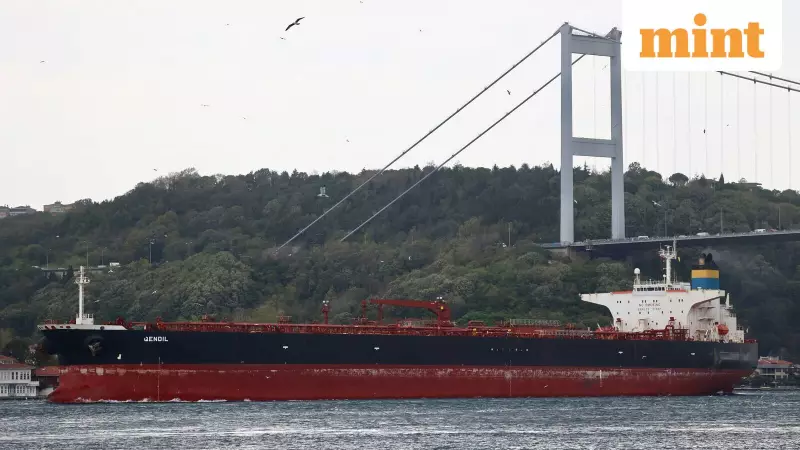
A critical factor reshaping the landscape is the emergence of two parallel oil markets. Alongside the transparent market exists a vast "don't ask, don't tell" network. Countries like Russia, Iran, and Venezuela, operating under international sanctions, move their oil via shadow tankers through convoluted routes. This sanctioned crude is often snapped up at bargain prices by major importers like Turkey, India, and China, adding a constant, discounted supply stream that dampens price volatility.
Paradoxically, regime change in these troubled nations might now be bearish for prices. A normalization of trade could make global oil flows more efficient. For instance, the U.S. remains both a major exporter and importer because its refineries are calibrated for heavier Venezuelan crude, not the lighter shale oil produced domestically. Easing sanctions could streamline this costly and inefficient process.
The Fracking Revolution: America's Game-Changing Role
The most transformative change since the crises of 1979 and 2003 originated in the United States. The fracking boom catapulted the U.S. to the position of the world's top oil producer. This shale-driven supply is uniquely responsive to price signals, allowing producers to ramp up or down much faster than traditional projects. This agility acts as a permanent shock absorber for the global market.
As Helima Croft, head of global commodity strategy at RBC Capital Markets, notes, reviving Venezuelan production with American involvement remains a "tall order" due to steep costs, legal hurdles, and security issues, despite former President Trump's confidence. The calculus for investment has changed: why fix rusting wells in an unstable country when domestic shale can respond quicker?
Fracking has also altered Washington's political calculus. Military actions, like Maduro's arrest or the bombing of Iran's nuclear bunkers in June 2025, now have little to no effect on U.S. pump prices and an even smaller impact on the broader American economy. The era where a crisis in a petro-state could trigger a global economic shock is, for now, over. This is decisively not your father's oil market.