The Indian stock market has delivered relatively modest returns compared to major domestic and emerging markets over the past year, primarily due to elevated valuations, subdued corporate earnings, foreign capital outflows, and limited artificial intelligence exposure. While the Nifty 50 index managed only a 6 percent gain during this period, the S&P 500 surged more than 12 percent in comparison.
Market Consolidation Phase Nearing End
However, this extended consolidation phase appears to be approaching its conclusion as India's stable second-quarter earnings and optimistic management commentary have sparked hopes for an earnings recovery. This anticipated revival could potentially drive key market indices to record levels in the coming months, though global uncertainties continue to pose significant challenges.
The ongoing India-US trade negotiations remain among the crucial factors that will influence market direction moving forward. Given the combination of both headwinds and tailwinds, current market conditions present an attractive opportunity to invest in quality stocks for the long term, as many companies now trade at significantly reduced valuations offering substantial value.

Top 10 Long-Term Value Picks
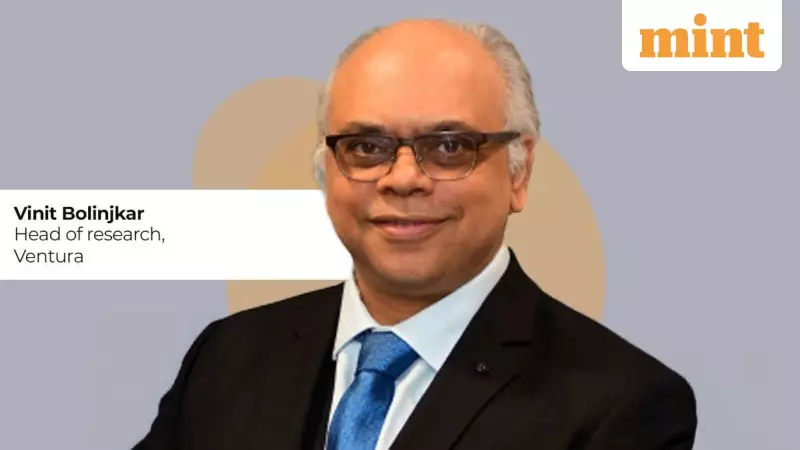
Vinit Bolinjkar, Head of Research at Ventura Securities, has identified ten value stocks that present compelling long-term investment opportunities:
Hindustan Aeronautics (HAL)
Bolinjkar considers HAL an attractive long-term investment due to its strong financial performance and strategic growth initiatives. In fiscal year 2025, the company reported revenue of ₹30,100 crore with profit after tax increasing by 10 percent to ₹8,317 crore. HAL maintains a robust order book of ₹2.2 lakh crore, supported by major contracts for 97 Tejas Mk1A jets and 156 Prachand light combat helicopters.
The company's diversification into civil aviation through Airbus partnerships, combined with annual research and development investments of ₹2,500 crore and advancements in indigenous defense technology, positions it well for sustained growth and innovation.
State Bank of India (SBI)
SBI continues to represent a solid long-term investment proposition due to its resilient financial performance and expanding market presence. During the second quarter of fiscal year 2026, the bank reported a standalone net profit of ₹20,160 crore, marking a 10 percent year-over-year increase, supported by strategic stake sales and steady credit growth.
The bank's loan portfolio crossed ₹43 lakh crore, driven by consistent credit demand recovery. Asset quality showed improvement with the gross non-performing assets ratio declining to 1.73 percent. SBI's dominant market position, government backing, and aggressive digital transformation initiatives make it well-positioned for sustained growth.
Adani Green Energy
Adani Green Energy, India's largest renewable energy company, has achieved 17 GW in operational capacity, with 75 percent originating from the Khavda project in Gujarat. Company management confirmed that infrastructure at the Khavda site is complete, enabling faster capacity additions.
The company targets 50 GW of capacity by 2030, with 30 GW expected from Khavda. Recent promoter group infusion of ₹9,350 crore through warrant conversion has increased promoter holding to 62.43 percent, strengthening the company's financial position for future expansion.
Adani Power
Adani Power presents a compelling long-term investment case based on its strong operational and financial track record. Despite an 11.9 percent decline in second-quarter fiscal year 2026 net profit to ₹2,906 crore, the company is aggressively expanding capacity with a target of reaching 42 GW by fiscal year 2032.
The company secured 4.5 GW of long-term power purchase agreements under the SHAKTI scheme, ensuring stable revenue streams. With a plant load factor of 70.5 percent in fiscal year 2025 and robust liquidity, Adani Power's growth strategy emphasizes capital and cost efficiencies.

One97 Communications (Paytm)
Paytm has significantly strengthened its business position, achieving profitability and robust revenue growth through operational and strategic enhancements. The company turned post-ESOP EBITDA positive in the first quarter of fiscal year 2026, a trend expected to continue.
Monthly transacting users are projected to increase from 74 million to 95 million by fiscal year 2028, while payment gross merchandise value could grow from ₹18.7 lakh crore to ₹33.9 lakh crore during the same period.
Ambuja Cement
Ambuja Cement currently operates with a production capacity of 107 MTPA and maintains an EBITDA margin of ₹1,060 per ton. Management aims to expand capacity to 118 MTPA by fiscal year 2026 end and 155 MTPA by fiscal year 2028 end.
The company's profitability improvement strategy includes power cost optimization through renewable energy adoption and freight savings via waterways utilization. Consolidated sales volume, revenue, EBITDA, and net profit are projected to grow at compound annual growth rates of 18.8 percent, 19.6 percent, 39.4 percent, and 22.8 percent respectively over fiscal years 2025 to 2028.
Royal Orchid Hotels
Royal Orchid Hotels, an Indian hospitality brand, plans to expand its portfolio from 115 hotels to 345 hotels by 2030, adopting an asset-light model through franchisee properties with minimal initial capital expenditure.
The company maintains a structured brand portfolio targeting all traveler segments, with particular focus on upscale and budget options. Revenue, EBITDA, and net earnings are projected to grow at compound annual growth rates of 24.8 percent, 26.2 percent, and 23.8 percent respectively over fiscal years 2025 to 2028.
V-Mart Retail
India's retail apparel market is expected to expand from ₹6,84,600 crore in 2024 to ₹10,68,200 crore by 2027, driven by GST reductions, income tax cuts, and favorable monsoon conditions.
V-Mart Retail, among India's top ten apparel retailers, plans to grow its store network from 510 stores to 660 stores by fiscal year 2028, with capital expenditure of ₹350 crore. Revenue is projected to grow at a compound annual growth rate of 16.1 percent, reaching ₹5,094 crore by fiscal year 2028.
Titagarh Rail Systems
Titagarh Rail Systems secured a massive ₹24,000 crore contract to manufacture and maintain 80 Vande Bharat sleeper trainsets over 35 years, representing one of the largest Make in India rail orders.
The company holds the largest market share in India's wagon market, targeting production of 1,500 units per month by fiscal year 2026, with a wagon order book exceeding 10,000 units. Its naval shipbuilding division is currently delivering five Diving Support Crafts to the Indian Navy.
Transformers and Rectifiers India
India aims to double its power generation capacity from 485 GW to over 900 GW within the next five years. With 40 GVA capacity expansion and complete backward integration, Transformers and Rectifiers India stands well-positioned to capitalize on this growth opportunity.
Management targets revenue of $1 billion (approximately ₹8,600 crore) by fiscal year 2028, increasing from ₹2,017 crore in fiscal year 2025. The company expects to become net debt-free within 18 to 24 months as margin improvements and working capital savings accumulate.
Investment Outlook and Considerations
The current market environment presents a strategic opportunity for long-term investors to build positions in fundamentally strong companies at attractive valuations. While global uncertainties persist, India's stable earnings trajectory and growth initiatives across multiple sectors provide a solid foundation for future market performance.
Investors should conduct thorough due diligence and consider their risk tolerance and investment horizon before making any investment decisions, as market conditions can change rapidly and individual circumstances may vary significantly.