

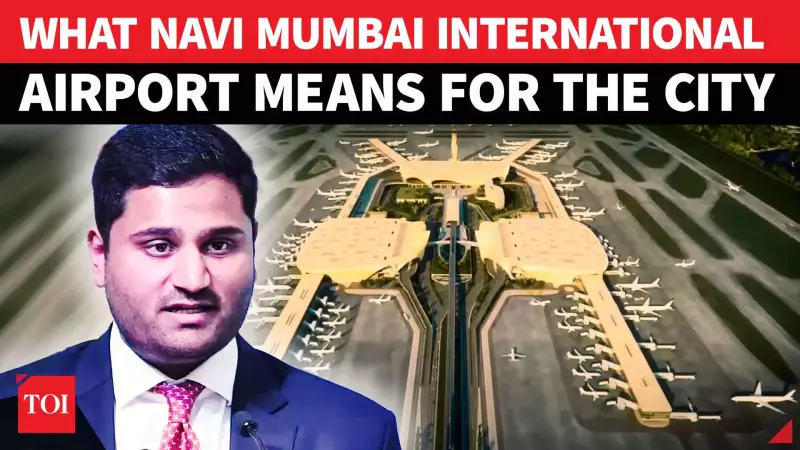
The much-anticipated Navi Mumbai International Airport (NMIA) is set to commence operations on December 25, 2025, marking a new chapter for air travel in the Mumbai Metropolitan Region. However, passengers choosing to fly from the new gateway will initially face higher costs compared to the existing Chhatrapati Shivaji Maharaj International Airport (CSMIA).
Higher User Fees at Launch, Unified Tariff in the Works
In an exclusive interview, Jeet Adani of the Adani Group confirmed that a significantly higher User Development Fee (UDF) will be levied on both domestic and international tickets at NMIA in its initial phase. This means flyers can expect to pay several hundred rupees more per ticket when using the new facility.
Adani was quick to clarify that this price differential is intended to be a short-term measure. He revealed that work is already underway to establish a unified tariff structure for both Mumbai and Navi Mumbai airports, and the proposal has received in-principle approval from the relevant regulator. This move aims to create a seamless and equitable cost environment for passengers across the twin airport system in the future.

Shifting Peak-Hour Flights to Ease Congestion
A key operational strategy to decongest the capacity-constrained, single-runway CSMIA involves shifting a select number of peak-hour flights to the new Navi Mumbai airport. This step is expected to alleviate the chronic air traffic pressure in Mumbai and improve overall on-time performance for the region.
The NMIA will begin with limited operations, scaling up to 24/7 functionality by February 2026. International flight services are slated to commence from the new airport in March 2026, gradually expanding its connectivity.
Long-Term Vision for Aviation Infrastructure
The opening of NMIA is just the first step in a larger aviation infrastructure roadmap outlined by the Adani Group. The long-term plans are ambitious and include:
- Significant expansion of the Navi Mumbai International Airport itself.
- A major reconstruction of Mumbai's existing Terminal 1, scheduled to begin after 2030.
- Heavy investments in airports and hotel properties across India to bolster the nation's aviation and tourism ecosystem.
The launch of NMIA represents a critical infrastructural upgrade for India's financial capital, promising to enhance capacity, reduce congestion, and support the region's growing air travel demands for decades to come.






