

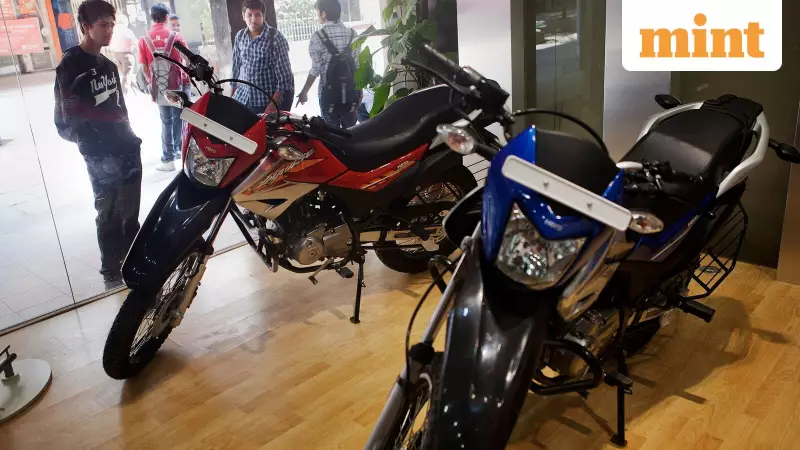
India's massive two-wheeler industry, which sold a record over 20 million units in the past year, is facing a new regulatory crossroads. The government's proposal to mandate Anti-lock Braking Systems (ABS) on all new two-wheelers with an engine capacity below 125 cc, effective from 1 January, has created uncertainty. As manufacturers await a formal notification, a fierce debate over safety, cost, and practicality is underway.
The Safety Imperative Behind the Braking Rule
The push for advanced braking systems stems from India's grim road safety record. As the world's largest two-wheeler market by volume, the country also witnesses a disproportionately high number of accidents involving bikes and scooters. Data from the National Crime Records Bureau (NCRB) paints a concerning picture: road accidents rose from about 422,000 in 2021 to over 464,000 in 2023. Fatalities in these accidents increased from nearly 173,000 to about 198,000 in the same period.
Rating agency Icra highlighted in a June 2025 note that two-wheeler accidents have higher fatality rates. The government views ABS, which prevents wheels from locking during hard braking, especially on slippery surfaces, as a critical safety intervention. This mandate follows a series of other safety regulations for the sector implemented over the past decade.

Cost Implications and Industry's Alternative Proposal
The potential price increase is at the heart of the industry's resistance. In India's highly price-sensitive market, fitting ABS could raise vehicle costs by ₹3,000 to ₹5,000. This is significant for entry-level, sub-125cc vehicles. An analysis by Kotak Institutional Equities in August 2025 noted that while recent GST rationalization could lead to an 8% price cut, the ABS mandate would reduce that benefit to only 5%.
Major manufacturers would be impacted unevenly. Hero MotoCorp and TVS Motors would feel the most significant effect, with 94% and 64% of their respective volumes facing the price hike. For Bajaj Auto, the impact would be lower at 35% of volumes.
Instead of ABS, the industry, led by the Society of Indian Automobile Manufacturers (Siam), is advocating for an advanced Combined Braking System (CBS) with a hydraulic front disc brake. This system, which links the brakes on both wheels, would be a mid-way solution between the currently mandated drum brakes and full ABS. Crucially, it would cost only about ₹1,000 more per unit.
The Technical Debate: Is ABS the Right Fit for India?
The industry's pushback is not solely about cost. Siam has argued in its FY25 annual report that international experience indicates that ABS may not be universally effective for two-wheeler braking, with optimal performance largely on low-friction surfaces. The body points to India's unique riding patterns, where riders often underutilize the front brake, and suggests a re-evaluation of the mandate.
However, safety research supports ABS. A 2021 literature review by IIT-Bombay engineers Jaikishan Damani and Perumal Vedagiri cited that ABS is an effective tool to counter over-braking and skidding, major causes of losing control. They noted it can reduce stopping distances on both dry and wet surfaces.
As the new year begins, automakers are in a wait-and-watch mode for the final government notification. The outcome will determine whether millions of new two-wheeler buyers will pay a premium for ABS or get a more affordable, advanced CBS system, shaping the safety landscape for India's most popular mode of transport.






