

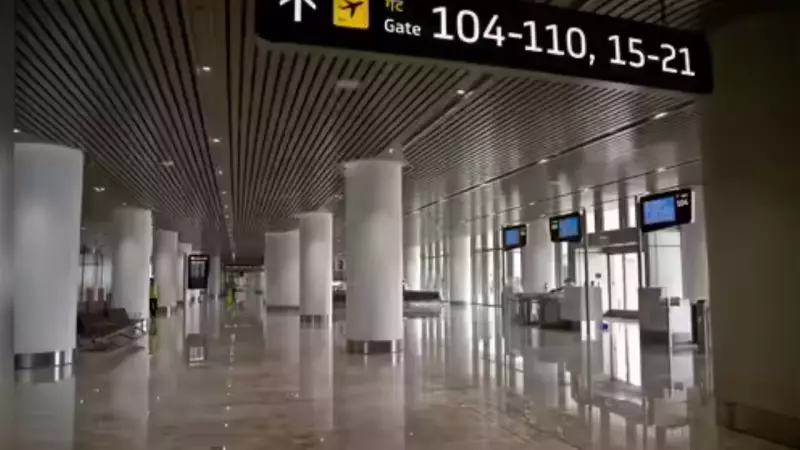
The much-anticipated Navi Mumbai International Airport (NMIA) is set to commence operations on December 25, 2024, marking a significant expansion for the Mumbai metropolitan region's aviation infrastructure. However, initial flights from the new airport will come at a premium, as it will impose a higher User Development Fee (UDF) compared to the existing Chhatrapati Shivaji Maharaj International Airport (CSMIA).
Higher Initial Costs, Unified Tariff on the Horizon
In an exclusive conversation with The Times of India, Jeet Adani, Director of Adani Airports Holdings Ltd (AAHL), confirmed the fee structure. For domestic departures, passengers flying from NMIA will pay Rs 620 as UDF, significantly more than the Rs 175 charged at Mumbai airport. The gap is wider for international travelers: departing passengers will pay Rs 1,225 at NMIA, while arrivals will be charged Rs 525.
Adani was quick to assure that this price difference is a short-term phenomenon. "On day one, Navi Mumbai will be more expensive, but we're working on aligning the tariffs for both airports to eliminate any price difference," he stated. He revealed that the Airports Economic Regulatory Authority (AERA) has agreed in principle to a unified tariff structure, with the final implementation methodology currently under review.

Flight Redistribution and Capacity Relief for Mumbai
A key operational strategy involves redistributing air traffic to alleviate the severe congestion at Mumbai's single-runway airport. Adani explained that CSMIA has been operating beyond its safe capacity for nearly a decade, often exceeding the designed limit of 44 movements per hour during peak times.
"To ease this, some flights, particularly during peak hours, will be moved from Mumbai to Navi Mumbai. We may shift one or two flights to help alleviate the peak load," Adani said. This move is expected to provide much-needed breathing room for the saturated Mumbai airport.
On its opening day, NMIA is expected to handle 48 flights, operating for 12 hours daily starting at 8 AM. By February 2025, it will transition to 24/7 operations, with international flights commencing in March. Airlines are anticipated to double their flight volumes at that time.
Phased Development and Massive Investment Plans
The development of NMIA is part of a larger, phased plan. Adani confirmed that the demolition and redevelopment of Mumbai airport's Terminal 1 will only begin once Terminal 2 at Navi Mumbai is completed, which is projected around 2030. The current phase of NMIA has already seen an investment of nearly Rs 20,000 crore.
Looking ahead, the Adani Group plans to invest a staggering Rs 1 lakh crore across its entire airport portfolio over the next five years. Beyond aviation, the group is making a major foray into hospitality, planning around 15 hotels for Navi Mumbai alone and aiming to develop over 60 hotels across its airport and real estate projects, potentially creating one of India's largest hotel portfolios.
Adani emphasized the strategic importance of NMIA: "It's high time Mumbai gets additional capacity. Navi Mumbai will not only open up the city to more regional destinations but also to greater global connectivity." This new gateway aims to finally provide the Mumbai region with the robust, dual-airport system it has long needed.






