

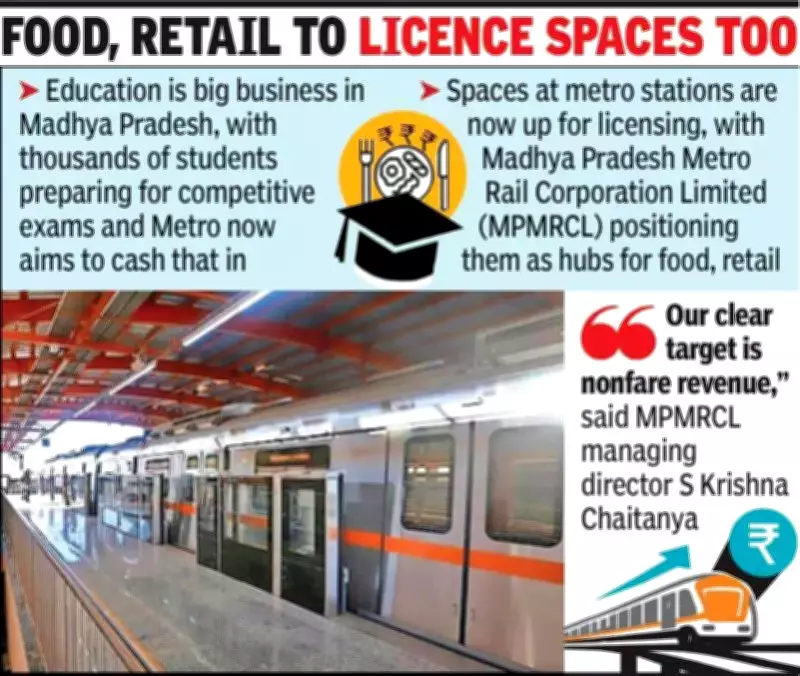
MP Metro Stations to Transform into Commercial Hubs with Coaching Centers and Retail
In a strategic move to diversify revenue streams, the Madhya Pradesh Metro Rail Corporation Limited (MPMRCL) is opening up commercial spaces at metro stations in Bhopal and Indore for licensing. These stations, which recently began operations, are being positioned as multifunctional hubs that could host coaching centers, food outlets, retail stores, and various service providers.
Beyond Transit: A Vision for Integrated Urban Spaces
The Metro system is a relatively new addition to urban life in Madhya Pradesh, with commercial operations launching in mid-2025 for Indore and in late 2024 for Bhopal. As passenger services continue to expand, MPMRCL officials are looking beyond traditional fare collection to build sustainable financial models.
"Our clear target is non-fare revenue," emphasized MPMRCL Managing Director S Krishna Chaitanya. "Coaching classes inside metro stations make perfect sense — they significantly reduce travel time for students, provide a safe and modern learning environment, and give parents added confidence."

Educational Focus Meets Commercial Opportunity
Madhya Pradesh has a thriving education sector with thousands of students preparing for competitive examinations annually. Many coaching institutes face challenges in securing safe, accessible, and modern premises. Metro stations, with their robust infrastructure and security systems, present an aspirational alternative.
The corporation envisions larger halls at busy station hubs being converted into partitioned classrooms, while smaller booths could serve as counseling offices or registration centers. This educational focus represents a departure from the commercial models adopted by other Indian metro systems.
Comprehensive Commercial Mix Planned
Beyond educational facilities, MPMRCL is actively inviting:
- Cafés and food outlets (with cooking restricted to electric reheating only)
- Salons and beauty service providers
- Convenience stores and retail shops
- ATMs and banking facilities
- Medical clinics and healthcare services
- Branded showrooms and product displays
The goal is to transform metro stations into everyday service points where commuters can access practical amenities alongside their transit needs. All licensed operations must strictly adhere to guidelines ensuring they do not obstruct passenger flow or tactile pathways designed for visually impaired individuals.
Challenges and Untested Territory
While innovative, this commercial model remains largely untested in the Indian metro context. Established systems in Delhi, Mumbai, and Bengaluru have traditionally focused on food courts, ATMs, and conventional retail rather than educational facilities.
Potential challenges include managing noise levels in educational settings and addressing concerns about transient footfall patterns. However, MPMRCL officials remain optimistic about the revenue diversification potential.
Strategic Shift Toward Sustainable Operations
For the corporation, this commercial rollout represents a fundamental shift toward financial sustainability that extends beyond ticket sales. Whether coaching centers and other proposed businesses will actually establish operations in metro stations remains to be seen, but the very possibility signals how MP Metro stations could evolve into more than mere transit points.
These spaces have the potential to become integrated urban destinations where commuters shop, dine, access services, and perhaps even pursue educational goals — all within the secure, modern environment of metro infrastructure.






