Hyderabad Metro Expansion: A New Chapter in Urban Mobility
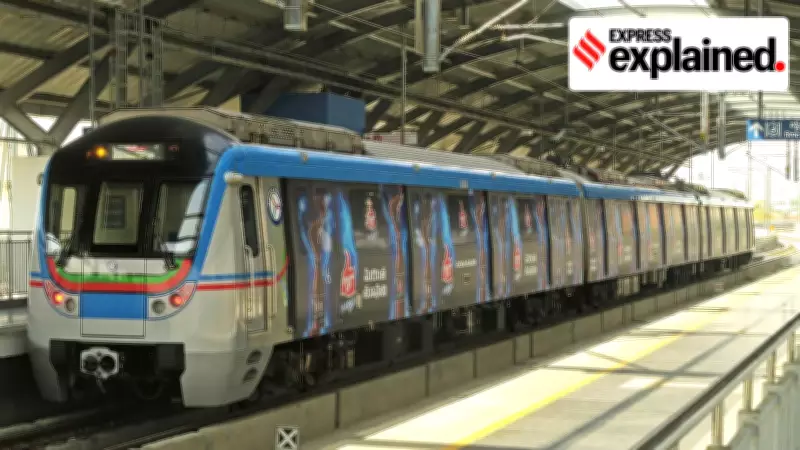
The Hyderabad Metro, once celebrated as one of India's largest metro networks, is poised for a significant transformation. With ambitious expansion plans on the horizon, the project is set to redefine urban connectivity in Telangana's capital. Originally launched as a groundbreaking Public-Private Partnership (PPP), the metro now stands at a critical juncture, awaiting sanction from the Union government for its next phase.
Historical Context and Unique Beginnings
Phase I of the Hyderabad Metro, spanning 69.2 kilometers, commenced construction in 2012 with an estimated cost of Rs 22,148 crore. This initial phase included three operational corridors: Corridor I from Miyapur to LB Nagar, Corridor II from Jubilee Bus Station to Mahatma Gandhi Bus Station, and Corridor III from Nagole to Raidurg. It became operational in 2017, marking a milestone in India's metro rail history.
What set the Hyderabad Metro apart was its status as the world's largest PPP in the metro rail sector, with Larsen and Toubro Limited (L&T) leading the project. Unlike many metro projects in India, which rely heavily on central and state government funding, this model involved L&T holding a 90% stake, with the state government retaining 10%. However, as Zarfaraz Ahmed, Managing Director of Hyderabad Metro Rail Limited (HMRL), notes, the network has since fallen from its position as the second-largest in the country to the ninth, highlighting the need for expansion and revitalization.

Phase II Expansion: Connecting Key Hubs
The proposed Phase II expansion is a comprehensive plan designed to cater to the city's growing needs. It will extend the existing red, green, and blue lines, divided into two sections: A and B. Phase II A includes several new corridors:
- Corridor IV: Nagole to Rajiv Gandhi International Airport (36.8 km)
- Corridor V: Raidurg to Kokapet Neopolis (11.6 km)
- Corridor VI: Mahatma Gandhi Bus Station to Chandrayangutta (7.5 km)
- Corridor VII: Miyapur to Patancheru (13.4 km)
- Corridor VIII: LB Nagar to Hayathnagar (7.1 km)
Phase II B introduces additional corridors, most notably Corridor IX, which will connect Rajiv Gandhi International Airport to the Bharat Future City over 39.6 kilometers. Bharat Future City, a flagship initiative by Telangana Chief Minister A. Revanth Reddy, is envisioned as a 30,000-acre greenfield smart city focused on sustainability and net-zero emissions. Other corridors in this phase include Corridor X from Jubilee Bus Station to Medchal (24.5 km) and Corridor XI from Jubilee Bus Stand to Shamirpet (22 km). In total, Phase II aims to cover 162.5 kilometers, significantly enhancing Hyderabad's metro network.
Financial Model Overhaul
The existing PPP structure, while innovative, has faced challenges. Ahmed explains that PPP models are often not viable for metro operations, citing examples like the Delhi airport and Mumbai Airport Metro lines, which were later taken over by government corporations. Currently, only the Pune Metro operates under a PPP framework in India.
To address this, a new financial proposal has been put forward. The state government plans to take over the metro from L&T, integrating the existing lines into a state-led network. Under this arrangement, the project would be funded equally by the state and central governments, with a 50-50 cost-sharing agreement. The Telangana government will assume responsibility for the Phase I debt, approximately Rs 13,000 crore, and make a one-time payment of around Rs 2,000 crore to L&T as a final settlement.
Current Status and Future Prospects
The detailed project report for Phase II has been accepted in principle, but technicalities are still being ironed out before final approval from the Union government. This expansion not only aims to improve connectivity but also supports urban development goals, such as linking to Bharat Future City, which is expected to become a hub for innovation and sustainability.
As Hyderabad continues to grow, the metro expansion represents a strategic move to keep pace with urban demands. With a practical and ambitious plan in place, the Hyderabad Metro is set to reclaim its prominence in India's metro landscape, offering enhanced mobility and supporting the city's future growth.