

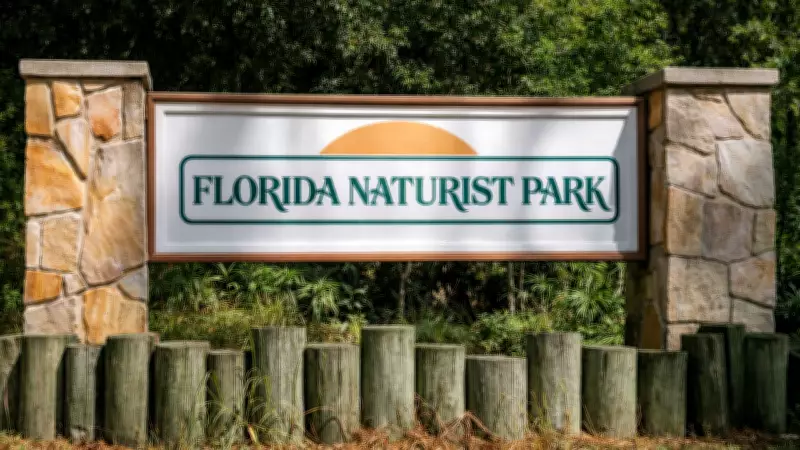
Florida Naturist Park Listed for $2.5 Million, Revealing Troubled Legacy
The Florida Naturist Park, a secluded 58-acre property nestled in the wooded areas of Pasco County, has been placed on the market with an asking price of $2.5 million. However, this real estate listing represents far more than a simple transaction; it unveils a complex history of radical social experimentation, rigid rules, and racial exclusion that continues to shape its fate today.
A Vision of Moral Purity and Mandatory Nudity
Founded in 1959 by self-styled naturist preacher Thomas Ward Gulvin, the park was conceived as a sanctuary for those seeking freedom from clothing and mainstream societal judgment. Gulvin believed that social nudity represented moral purity and required residents to practice it as a fundamental condition of belonging. Unlike typical clothing-optional nudist resorts, Florida Naturist Park enforced mandatory nudity in all communal spaces, including lakes, beaches, and clubhouses.
"A devotion to naked life was required," Gulvin famously declared during the park's early years. His commitment to this principle was so intense that he once sued a resident for refusing to undress, arguing that clothing violated the community's spirit. Although he lost the court case, the message was clear: nudism here was not recreational but a core belief system.

Brian Hoffman, author of Naked: A Cultural History of American Nudism, observed, "This wasn't casual naturism. It was an attempt to organize an entire social system around nudity as a belief, not just a leisure activity."
Explicit Racial Exclusion Written into Deeds
While nudity defined daily life within the park, race determined who was allowed to participate at all. Gulvin explicitly barred Black people from owning property, embedding these restrictions directly into land deeds. He defended this policy publicly long after segregation had ended elsewhere in the United States, arguing that integration would drive away paying members.
In 1969, Gulvin told a reporter that allowing Black residents would alienate customers. Former resident Frank Shepard recalled Gulvin's outdated worldview, stating, "He thought Black people would move in and everybody would move out. He was stuck decades behind the rest of the country." These discriminatory rules remained in place until the late 1980s, leaving a lasting shadow over the property.
Golden Years and Cultural Significance
Despite its controversial policies, Florida Naturist Park flourished during the late 1950s and 1960s, a period when American nudism was closely tied to fitness culture and postwar ideals of natural living. Membership reportedly peaked at around 2,000 people, attracting bodybuilders, models, and photographers. The Sunshine Beach Club served as the social hub, featuring nude swimming, sunbathing, and sports as daily rituals.
The park even entered popular culture with the 1963 low-budget film Naked Complex, shot on its grounds. Gulvin preached the virtues of nudism from a converted bus and later from a small church on the property, framing the park as both a physical and spiritual refuge for believers in natural living.
Decline and Fractured Community
Public attention eventually brought scrutiny and problems. The park became associated with drownings, theft complaints, police investigations, and lawsuits. One lake was the site of a fatal accident, and a missing python kept on the property sparked safety concerns and ridicule. As social attitudes shifted, isolated nudist colonies began to feel outdated, with many people preferring more relaxed, clothing-optional resorts.
Gulvin suffered a stroke in 1990 and died in 1994, passing control to his children, none of whom practiced nudism or shared his ideological commitment. Without his guiding vision, the community fractured. Roads grew overgrown, trailers aged, and disputes among residents increased as maintenance declined.
In 2003, a developer proposed buying the property to reinvent it as a Christian nudist resort, but the plan sparked fierce resistance from residents and led to lawsuits before collapsing. This left the park more divided and distrustful of outside intervention than ever before.

Current Sale Challenges and Irony
Today, the property consists of fragmented lots owned by residents who refuse to leave, with an ageing clubhouse and lakes dotting the landscape. The land is zoned exclusively for nudism, severely limiting redevelopment options. Gulvin's son Art explained the family's decision to sell, stating, "We don't have the expertise to run a nudist colony."
The timing of the sale is ironic, as Pasco County is experiencing a real estate boom with new housing developments pressing against the park's boundaries and property values climbing sharply. While the location is attractive, the zoning restrictions and troubled history present significant obstacles to potential buyers.
As the search for a buyer continues, Florida Naturist Park stands as a testament to a bygone era of American social experimentation, where ideals of freedom were paradoxically coupled with exclusionary practices that continue to complicate its legacy and marketability.





