

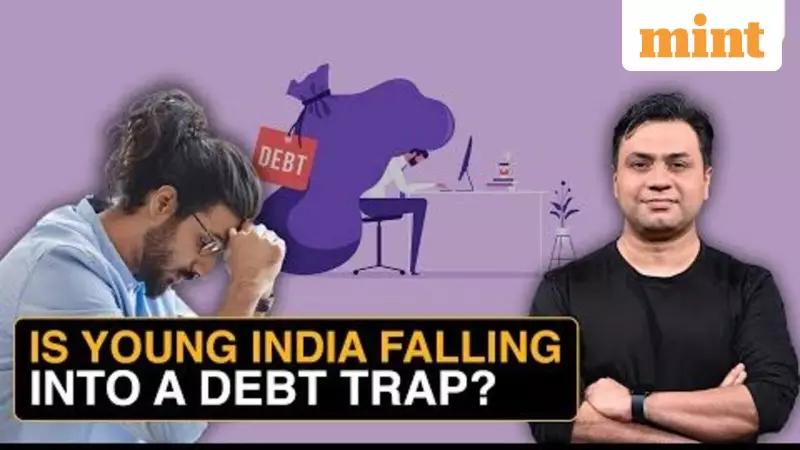
A recent analysis of financial data has raised significant concerns about the borrowing habits of Indians, particularly the younger generation. The findings indicate that the country is accumulating debt at a pace that far outstrips its ability to build assets, sparking a debate on financial sustainability.
The Alarming Numbers Behind India's Debt Story
The core of the issue lies in the stark numbers revealed by an RBI report. The average debt for an individual in India has seen a sharp increase, now standing at ₹4.8 lakh per person. This is a significant jump from just two years ago, when the average debt was ₹3.9 lakh.
This debt accumulation is part of a broader, more worrying trend. The data shows a dramatic divergence between the growth of assets and liabilities. Between 2019 and 2025, the amount of financial assets added by Indians each year grew by a substantial 48%. However, during this same period, the annual liabilities, or debt, grew by a staggering 102%. This means debt is growing more than twice as fast as assets.

Is Young India Borrowing Beyond Its Means?
The central question emerging from this data is whether Young India is borrowing more than its repayment capacity. The surge in liabilities points towards an aggressive credit culture fueled by easy access to various loan products.
Financial experts point to several factors contributing to this trend. There has been a massive rise in the uptake of auto loans, home loans, and education loans. Furthermore, newer, more accessible forms of credit like Buy Now, Pay Later (BNPL) schemes have become incredibly popular among the youth. While these instruments offer immediate gratification, they can also lead to a precarious debt trap if not managed carefully, especially for traders and young professionals starting their careers.
Navigating the Financial Crossroads
The widening gap between asset creation and debt accumulation presents a complex challenge for both individuals and policymakers. For the average citizen, it underscores the critical need for financial literacy and disciplined borrowing. Relying on credit for consumption without a parallel focus on savings and investments can undermine long-term financial security.
On a macroeconomic level, this trend is something that the government, including figures like Nirmala Sitharaman, and regulatory bodies will need to monitor closely. A population burdened by high personal debt can have ripple effects on the nation's overall economic health and consumption patterns. The updated data from November 2025 serves as a crucial indicator, prompting a necessary national conversation about responsible credit use and sustainable wealth building.






