

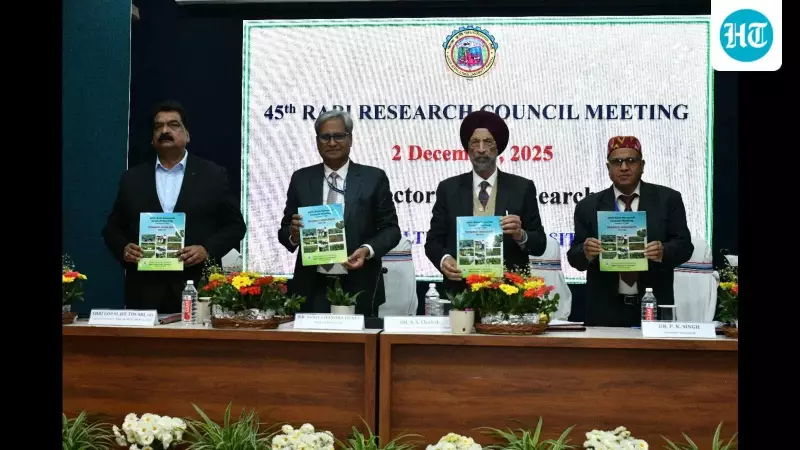
In a significant address aimed at reshaping India's agricultural research priorities, a leading scientist has called for a decisive shift towards developing crops that can withstand climate pressures while boosting nutrition.
A Call for Climate-Resilient and Nutritious Crops
The appeal was made by S S Chahal, an eminent agricultural scientist and former vice-chancellor of Maharana Pratap University of Agriculture and Technology in Udaipur. He spoke at the 45th Rabi Research Council meeting of Birsa Agricultural University (BAU) on Tuesday. Chahal urged the scientific community to direct their efforts towards creating new crop varieties that are efficient in water use, tolerant to heat stress, and biofortified with high nutritive content.
He emphasized that this focus is critical to meeting the growing challenge of nutritional security in Jharkhand and across the country. "The country has moved ahead from food security," Chahal stated, highlighting the need for the next phase of agricultural research. He advocated for concentrated work on high-quality and high-utility crops like pulses, oilseeds, vegetables, fruits, and spices. This strategic pivot, he argued, is essential not just for nutrition but also to increase the income of farmers.

The Seed Replacement Challenge in Jharkhand
During his address, Chahal pointed out a major area of concern for the state's agricultural productivity. He expressed regret over the low seed replacement rate in Jharkhand, which stands at a mere 15-20%. This figure starkly contrasts with the much higher rates of 60-70% seen in agriculturally advanced states like Punjab and Haryana.
A low seed replacement rate means farmers continue to use saved seeds from previous harvests, which often leads to a decline in genetic purity, vigor, and ultimately, yield. This gap underscores a significant hurdle in adopting newer, more resilient seed varieties that scientists develop.
Strengthening Seed Infrastructure
Echoing the need for systemic improvement, BAU vice-chancellor S C Dubey underlined the urgent requirement to strengthen the seed production infrastructure within Jharkhand. He stressed the importance of effectively implementing the Jharkhand State Seed Policy to revolutionize farming in the state.
The consensus from the meeting was clear: scientific innovation must be coupled with robust policy support and infrastructure development. For farmers to benefit from advanced research on biofortified and stress-tolerant crops, a reliable system for producing and distributing high-quality seeds is non-negotiable.
The discussions at the BAU council meeting mark a pivotal moment, steering the agenda from achieving mere food grain sufficiency to ensuring that the food produced is nutrient-dense and resilient enough to thrive in a changing climate, thereby securing both health and livelihoods.






