

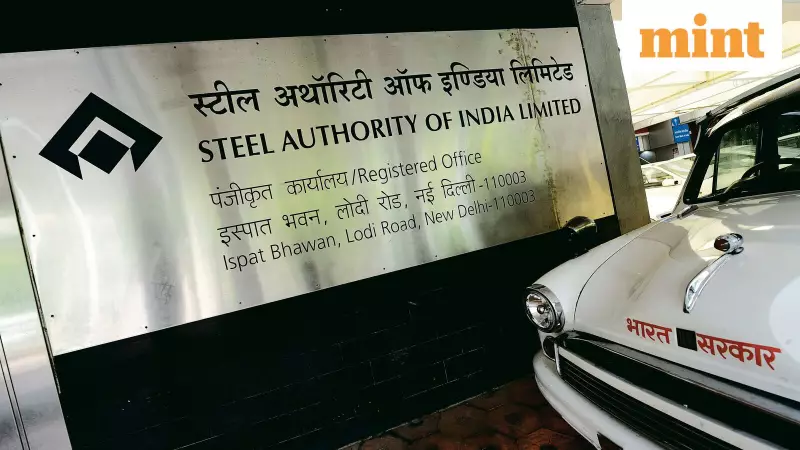
In a significant strategic shift towards securing India's mineral future, the Union Ministry of Steel has issued a clear directive to two of its largest public-sector undertakings, the Steel Authority of India Ltd (SAIL) and the National Mineral Development Corporation (NMDC). The mandate is to aggressively scout for and acquire critical mineral asset blocks overseas, moving beyond traditional offerings to include coking coal, limestone, copper, and lithium.
The move, confirmed by ministry officials and company executives, is designed to shield the Indian steel industry from geopolitical fluctuations, ensure uninterrupted raw material supplies, and substantially reduce the nation's hefty import bills for key resources. This marks the government's pivot towards a mineral security program built on direct ownership of mines and assets abroad.
The Global Hunt for Resources
The search is truly global, with geographies like Africa, the Middle East, Latin America, and Southeast Asia in the crosshairs. The companies are exploring a range of opportunities, from active and operating mines to virgin blocks with promising pre-feasibility studies. To facilitate these potentially large acquisitions, the ministry has green-lit the formation of consortia for funding or direct purchases where necessary.

NMDC's international teams have been particularly active, conducting site visits to Senegal for limestone, Chile and Argentina for lithium, gold, and silver, and Indonesia for coking coal mines. The company has also tapped into resources in Ras Al-Khaimah in the UAE for high-quality limestone.
During a May investor call, NMDC's Chairman and Managing Director, Amitava Mukherjee, outlined the company's focused strategy, stating they are actively evaluating assets for ten key minerals, with coking coal, copper, lithium, cobalt, nickel, and gold being top priorities. He emphasized that the mandate for coking coal is especially aggressive.
A Long-Term Strategic Vision
Industry experts see this as a crucial, forward-looking policy. Dhruv Goel, CEO of Big Mint, a commodities intelligence firm, explained that the government is treating these acquisitions as long-term strategic bets. The goal is to secure resources that will become increasingly critical over the next 5 to 10 years, even if the financial returns take time to materialize.
"This push is aimed at securing coking coal, limestone, copper, gold, lithium and other critical minerals," Goel said. He pointed to China's successful long-term investments in Africa and South America as a useful benchmark for India to emulate.
Simultaneously, SAIL has been instructed to explore low-silica limestone blocks and strengthen its supply options from Stevin Rock LLC in Ras Al-Khaimah. The company has also been directed to ramp up operations at its coking coal blocks in Mozambique, a project that has been slow due to SAIL's high debt, which stood at approximately ₹33,663 crore as of September 30. Expanding the Mozambique block is estimated to be at least a ₹200-crore project.
Building International Partnerships
The push for overseas assets was further solidified by Union Steel Minister HD Kumaraswamy's visit to the UAE in June and July. The discussions in Ras Al-Khaimah centered on securing long-term access to low-silica limestone and exploring collaborations in green steel. Following this, both SAIL and NMDC established their respective overseas arms in Dubai to facilitate mineral trading and asset acquisition.
NMDC's existing international footprint includes its Australian subsidiary, Legacy Iron Ore, acquired in 2012. While Legacy has commenced gold production at the Mount Celia Gold Project, its iron ore and other mineral tenements in Western Australia are still in the exploration phase. The search for lithium in the region is yet to yield results, but the company remains hopeful about Legacy's profitability in the current financial year.
This coordinated global effort by India's state-owned mining giants underscores a fundamental recalibration of the nation's resource strategy, positioning mineral security as a cornerstone of its industrial and economic ambitions for the coming decade.






