Punjab NGO Recognizes Farmers for Adopting No-Burn Agricultural Practices
In a significant move toward sustainable agriculture, the non-governmental organization Kheti Virasat Mission (KVM) organized a comprehensive dialogue on no-burn farming at Bhuttiwala village in Muktsar district. The event, held under the Mata Dharat Mahat Satkar and Bhumi Suposhan Abhiyaan initiatives, brought together farmers, agricultural experts, and environmentalists to address the critical issue of crop residue management.
Farmers Honored for Ecological Practices
The dialogue served as a platform to honor farmers from various villages who successfully adopted in-situ crop residue management during the last paddy harvesting season. By refraining from burning paddy straw, these farmers demonstrated a commitment to environmental stewardship and agricultural innovation.
During the session, participating farmers shared their firsthand experiences, highlighting multiple benefits of no-burn practices:

- Improved Soil Fertility: The decomposition of crop residue enriches the soil with organic matter.
- Enhanced Moisture Retention: Mulching helps retain soil moisture, reducing irrigation needs.
- Increased Crop Productivity: Healthier soil leads to better crop yields over time.
These outcomes were presented not as theoretical concepts but as practical results from field-level experimentation, building substantial confidence within the wider farming community about the viability of ecological farming methods.
Expert Insights on Environmental and Health Impacts
Several distinguished experts participated in the dialogue, voicing serious concerns about traditional stubble burning practices:
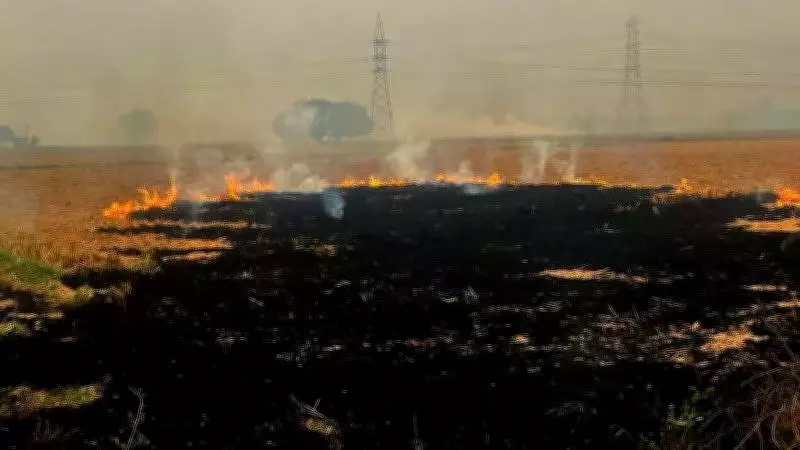
- Adarsh Pal Vig, former chairperson of the Punjab Pollution Control Board, emphasized that stubble burning destroys vital soil biology and contributes significantly to air pollution, directly affecting human health.
- Ramesh Arora, agro-ecologist and professor at Sri Guru Granth Sahib World University, discussed the long-term agricultural benefits of residue management.
- Sukhdev Kundu, environmental expert, highlighted the broader ecological consequences of burning practices.
Karanjit Singh Gill, joint director of agriculture, engaged in detailed interactions with farmers practising residue mulching and wheat sowing, providing technical guidance and support.
Soil Conservation as a Legacy for Future Generations
Umendra Dutt, executive director of Kheti Virasat Mission, delivered a powerful message about soil conservation. He emphasized that soil is a living entity, and its preservation is directly connected to the well-being of future generations. This philosophical approach underpins KVM's mission to promote sustainable agricultural practices that respect ecological balance.
Following the discussions, farmers collectively resolved to continue practising no-burn farming and to actively motivate others in their communities to adopt these methods. This resolution marks a promising step toward wider adoption of sustainable agricultural practices in Punjab's farming landscape.