Illegal Hill-Cutting Puts Historic Goa Spring in Peril
An unauthorized hill-cutting operation in a deep valley on the border between Old Goa and Bainguinim has highlighted the vulnerable state of a historic spring that was celebrated by foreign travelers in the 17th century. This development poses significant threats to the once-popular fountain and the local ecology, raising alarms among heritage enthusiasts and residents.
Heritage and Hydrological Significance
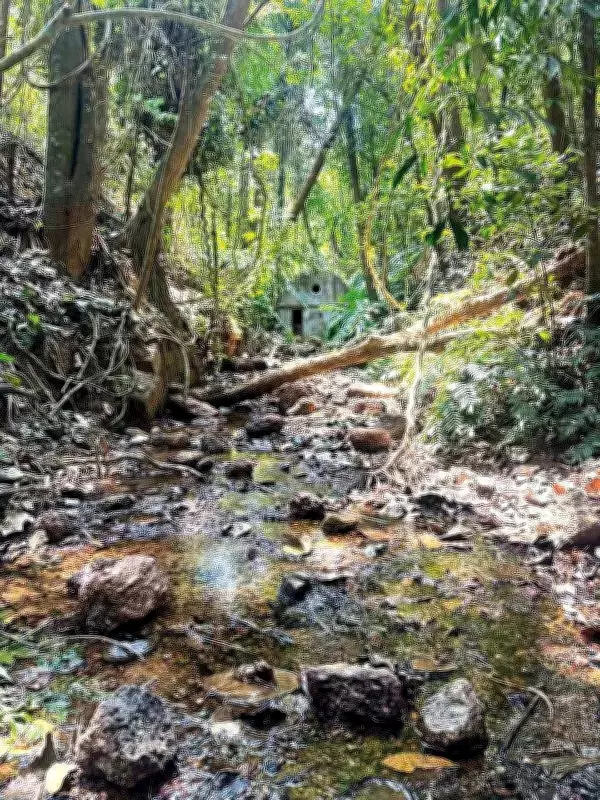
The spring, known as Fonte de Santo Antoino, was eulogized by French traveler François Pyrard de Laval as "a great fountain of pure and limpid water called Banguenim." It once supplied water to the city of Old Goa, with slaves carrying pots of water to sell in the city less than a kilometer away, each pot fetching five bazarucos, the currency of the time. Nestled in a north-south valley up the slope from the Old Goa-Ribandar road towards the Kadamba plateau, the spring now lies in a state of degradation, despite its historical importance.
Current Threats and Illegal Activities
Recent inspections by the Old Goa panchayat revealed that a project promoter illegally constructed a 105-meter retaining wall below an excavated north-eastern slope of the spring. Glean Cabral, a local activist and complainant, warned, "This project is proposed lower down on an already built-up slope. There is a possibility of landslides in the catchment area of the spring and its valley." Additionally, access to the spring has been obstructed by a stone wall about 100 meters short of the fountain, with thick overgrowth further hampering entry.

Environmental and Ecological Concerns
The stream flowing from the spring to the Mandovi River, barely one kilometer away, has been choked by large quantities of mud pushed into it after leveling the eastern slope. Nearby, a western slope identified as a private forest has also been dug up. During heavy rains, floodwater from the stream has entered residential areas, and runoff during monsoons is likely to carry sediment into the already silted river. Multi-dwelling units on slopes pose a serious pollution threat due to inadequate sewage systems, with overflow potentially seeping into groundwater that feeds the spring, as noted by geologist Hector Fernandes.
Call for Conservation and Tourism Potential
Heritage lovers argue that the spring, as a historic site and hydrological asset, could enhance Old Goa's tourism profile. Abhinav Apte, a waste management expert, stated, "It is a quiet place with lots of birds that can be developed with minimal investment for locals and tourists." He organized a clean-up drive in October 2021, noting that the spring pours like a waterfall during monsoon and maintains clean water until October. Architect Fernando Velho, a professor at CEPT University, emphasized the need for urgent mapping of watershed areas at higher resolutions and their inclusion in statutory planning maps to protect slopes.
Broader Implications for Old Goa
A study by Velho and other architects highlighted that large-scale earth movement for infrastructure and housing has altered Old Goa's watershed and hydrology, increasing water flow into core areas. While the water resources department has initiated some remedial measures, the larger threat to the spring and surrounding environment persists, underscoring the need for stronger conservation efforts to safeguard this piece of Goa's rich heritage.