Pune's Massive Underground Tunnel Project Undergoes Critical Alignment Review
The Pune Metropolitan Region Development Authority (PMRDA) has issued a significant directive to its consulting teams, mandating a comprehensive evaluation of six to seven distinct alignment options for the proposed Rs 32,000-crore underground tunnel network. This crucial assessment must be completed before the detailed project report (DPR) can be finalized, marking a pivotal phase in the ambitious infrastructure initiative.
High-Level Meeting Drives Strategic Reevaluation
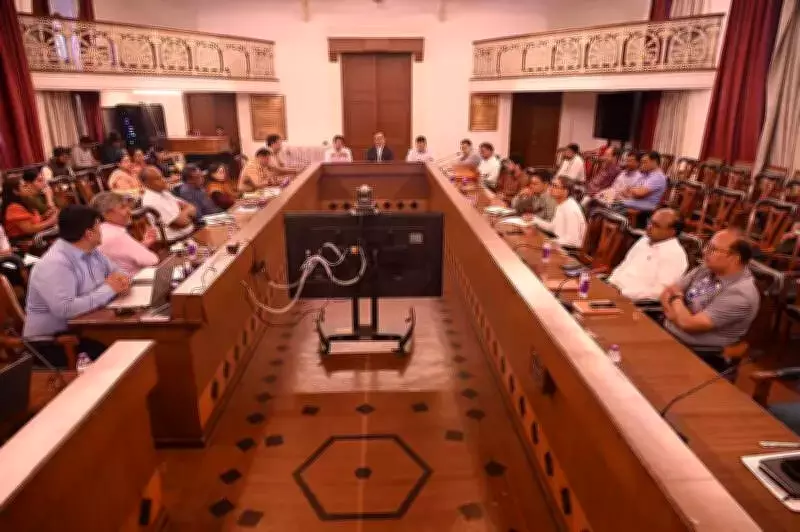
This important directive emerged during the 19th review meeting of the Pune Unified Metropolitan Transport Authority (PUMTA), which convened on Thursday under the leadership of divisional commissioner Chandrakant Pulkundwar. Originally conceptualized as a 54-kilometer north–south corridor connecting Yerwada and Katraj, the underground project is now undergoing a thorough reassessment of its fundamental parameters.
Officials have specifically instructed consultants to reexamine the proposed start and end points while exploring whether the network should incorporate additional high-congestion stretches. This includes potential east–west connectivity that could significantly enhance the project's overall impact on Pune's notorious traffic problems.

Project Leadership Emphasizes Public Benefit
"We have explicitly requested six to seven alignment options, including potential realignments to cover more congested urban areas," stated PMRDA commissioner Yogesh Mhase. "When a project carries a price tag of ₹32,000 crore, it must deliver substantial, tangible benefits for citizens. We cannot proceed with finalizing the DPR until the feasibility assessments and ratings for these various options are thoroughly clear and convincingly demonstrate public value."
This massive infrastructure undertaking has faced repeated scrutiny throughout its development. Consultants previously received instructions to strengthen the pre-feasibility report using comprehensive third-party mobility data and robust traffic projection models. Commissioner Pulkundwar emphasized that any final alignment decision must be supported by exhaustive surveys mapping detailed "origin-destination" patterns and directional traffic flow throughout the metropolitan region.
Strategic Vision and Implementation Challenges
"The fundamental objective remains achieving meaningful traffic reduction for both Pune and Pimpri Chinchwad," Pulkundwar asserted. "All infrastructure interventions must be strategically planned with the larger public interest as the paramount consideration." The "paatal lok" (underground) approach represents a key vision championed by chief minister Devendra Fadnavis, who has consistently advocated for subterranean transportation solutions as surface infrastructure reaches saturation capacity throughout the rapidly growing metropolitan area.
Chief Minister Fadnavis has urged officials to expedite the DPR preparation process, viewing these underground tunnels as the only viable long-term solution to Pune's chronic gridlock problems. During the meeting, Maha Metro managing director Shravan Hardikar—who participated via video conference—highlighted the critical importance of synchronizing tunnel alignments and exit points with the city's comprehensive parking policy to ensure efficient traffic dispersal upon vehicle emergence from the underground network.
Comprehensive Stakeholder Involvement
The review meeting featured participation from numerous key agencies including the Maharashtra State Road Development Corporation, Maharashtra Infrastructure Development Corporation, Maharashtra Industrial Development Corporation, Pune Municipal Corporation, traffic police departments, and town planning authorities. This broad representation underscores the project's complexity and the necessity for coordinated multi-agency implementation.

PMRDA officials confirmed that final project costs, detailed funding patterns, and precise execution timelines will be determined only after the revised pre-feasibility report undergoes thorough review and the optimal alignment option receives final approval. The extensive evaluation process reflects the monumental scale of this infrastructure investment and the administration's commitment to ensuring maximum public benefit from this transformative transportation initiative.