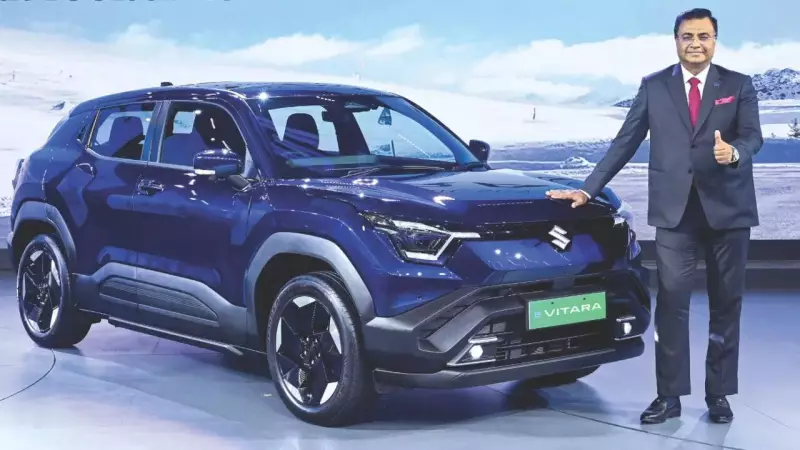
Maruti Suzuki India, the country's automotive leader, is charting a careful and strategic path into the electric vehicle (EV) space, treating it as a foundational new chapter for the brand. In a detailed conversation, Partho Banerjee, Senior Executive Officer for Marketing and Sales, outlined the company's vision, drawing a parallel between its EV foray and its original entry into the Indian market four decades ago.
A Born-Electric Start, Not a Conversion
As the launch of its first electric offering, the e-Vitara, approaches, Banerjee clarified why Maruti Suzuki opted for a dedicated EV platform from the outset. He stated that converting an existing internal combustion engine (ICE) model would have inevitably led to compromises. A purpose-built electric platform enables superior space utilization, a longer wheelbase, enhanced legroom, and a more comfortable seating posture. He emphasized that fundamental aspects like ingress and egress see significant improvement when a vehicle is conceived as an EV from the ground up.
Building Trust in a Nascent Market
Banerjee pointed to the current state of the Indian EV market, where penetration remains at a modest 4 to 4.5 percent. Despite over 27 products available, monthly sales volumes are only around 17,000 to 18,000 units. He identified key hurdles affecting consumer confidence: charging infrastructure, aftersales support, and product-related concerns.

As the market leader, Maruti Suzuki believes its role is to first "set the house in order" and establish trust before a full-scale launch. Interestingly, the electric SUV is already operational on UK roads and will soon go on sale in Japan. The model is even being manufactured at Maruti Suzuki India's (MSIL) Gujarat plant and exported. Yet, the company is deliberately not rushing its Indian debut.
Creating a Robust Ecosystem: The Charging Network Push
Central to building customer assurance is the development of a widespread charging infrastructure. Maruti Suzuki has announced an ambitious plan to establish over one lakh charging points across India by 2030, aiming to create the country's largest fast-charging network by an automaker.
The groundwork has already begun. The company has partnered with 13 charge-point operators and installed 2,000 chargers across 1,100 cities. The strategy includes a strong focus on highways and expressways, with a target of placing a charger every 5–10 km in key areas across the top 100 cities.
Banerjee concluded by reiterating Maruti Suzuki's commitment to offering a wide range of choices. The company plans to be present across segments—from hatchbacks and sedans to SUVs—and technologies, including ICE, EVs, strong hybrids, CNG, and flex-fuel, allowing customers to select what best fits their needs.