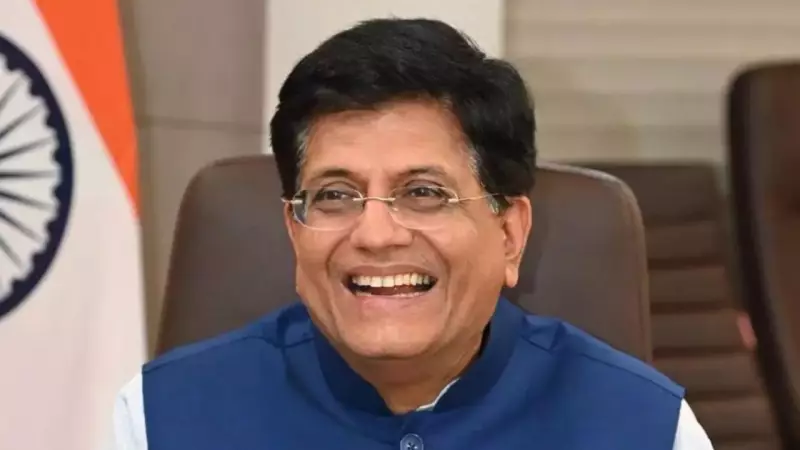
India's unparalleled national electricity grid, boasting a capacity of 500 gigawatts (GW), positions the country as a premier global destination for massive investments in data centres and artificial intelligence (AI) infrastructure. Union Minister Piyush Goyal made this assertion on Monday, underscoring a critical advantage that sets India apart from even advanced economies.
A Grid That Powers Ambition: India's Unique Advantage
Addressing a press conference on the energy sector, Goyal elaborated that India's integrated national grid is among the world's largest. "Europe does not have a national grid. Even the US does not have a national grid. But India has a national grid. So we are a preferred destination for data centres," the minister stated. He assured that sufficient power would be reliably available for all segments, including households, farmers, industry, and the burgeoning demand from data centres and Global Capability Centres (GCCs).
This declaration comes amid a flurry of announcements from technology titans. In October, Google unveiled a $15 billion investment to establish an AI infrastructure hub in Andhra Pradesh, which includes a gigawatt-scale data centre developed with the Adani Group. This project alone is anticipated to create 5,000–6,000 direct jobs and up to 30,000 jobs in total.

Global Giants Bet Big on India's Digital Future
The investment pipeline is robust and growing. Just last week, Amazon Web Services (AWS) committed $7 billion over 14 years to expand its data centre infrastructure in Telangana. Earlier this month, Microsoft announced a colossal $17.5 billion plan for India, focused on building infrastructure and sovereign capabilities for an AI-first future. These investments signal deep confidence in India's long-term digital economy and its supporting physical infrastructure.
Providing concrete data on the sector's growth, Minister of State for Power Shripad Naik informed the Rajya Sabha that data centres currently account for approximately 1GW of India's power demand. This figure is projected to skyrocket to 13.56GW by the financial year 2031-32, driven by upcoming projects. He noted that many data centres arrange captive power, which is why a centralised tracking system for their electricity consumption is not currently in place.
Balancing Growth, Affordability, and Transition
On the broader energy strategy, Minister Goyal adopted a pragmatic stance. While reaffirming India's commitment to clean energy, he emphasized the necessity of coal-based power capacity additions to ensure reliable and affordable electricity for a developing economy. "We cannot allow the people to be deprived of adequate power," he said, projecting that thermal power requirements will rise to 307GW by 2035.
He highlighted that increased domestic coal production would help curb imports and mentioned explorations into alternatives like converting coal into synthetic gas. Showcasing the sector's improved financial health, Goyal revealed that the debt of power generation companies has plummeted from Rs 1.4 lakh crore four years ago to about Rs 6,500 crore today.
"As we march towards Viksit Bharat@2047, India’s energy sector will be seen as a global case study in managing scale, speed and sustainability together," Goyal concluded, painting a vision of an energy-secure nation powering its own technological ascent and attracting the world's most capital-intensive digital projects.