Best of the Week is a meticulously curated weekly newsletter brought to you by Siddharth Sharma and Shravani Sinha. To receive such insightful updates directly in your inbox, consider subscribing to Mint's diverse range of newsletters.
India's Aviation Ambition: A Tale of Two Runways
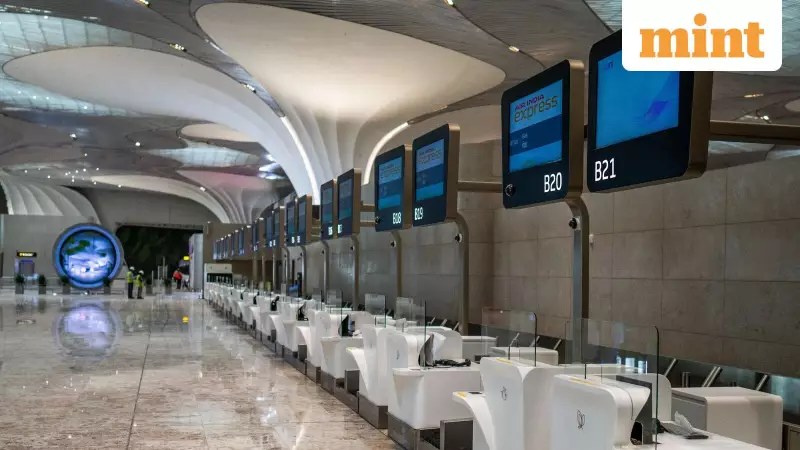
India has an undeniable passion for grand infrastructure announcements. The claim of inaugurating a new airport every 45 to 50 days paints a picture of a nation sprinting confidently into the future. Indeed, this narrative holds truth, with the country adding an impressive 89 airports over the past eleven years. However, a closer look beyond the ribbon-cutting ceremonies reveals a more complex reality. The critical question emerges: are all these newly built airports genuinely achieving liftoff, or do they remain largely grounded?
The Data Tells a Mixed Story
The statistics present a scenario of contrasting fortunes. Analysis indicates that nearly 60% of the airports that were constructed, upgraded, or connected under government initiatives since 2017 recorded fewer than 10,000 domestic passengers per month in 2025. A significant number of these facilities operated with fewer than five daily flights, their quiet terminals echoing aspirations more than bustling activity. For perspective, a standard, well-utilized Indian airport typically handles more than double that passenger volume.

Success Stories Amidst the Silence
Nevertheless, the narrative is not uniformly bleak. Certain airports defy the trend of underutilization and have become notable success stories. Hubs like Rajkot (Hirasar), Prayagraj, and the spiritually significant Ayodhya airport each registered close to a million passengers within just months of operation. These triumphs underscore a vital lesson: airports flourish when they are intrinsically linked to robust drivers such as tourism, cultural significance, religious pilgrimage, or strategic proximity to thriving economic centers.
The Challenge of Premature Infrastructure
The core issue often stems from a classic mismatch: infrastructure development outpacing genuine demand. Under the ambitious UDAN (Ude Desh ka Aam Naagrik) regional connectivity scheme, a sobering reality has unfolded. Approximately 15 airports and over 120 air routes have already been discontinued. This typically occurs after initial government subsidies conclude or when airlines withdraw services due to unsustainable operational costs and resource limitations. A poignant example is Shimla’s Jubbarhatti airport, once hailed as a beacon for regional connectivity, which now functions only sporadically.
The Road to 2047: Quality Over Quantity?
India's aviation vision remains extraordinarily bold, targeting a network of 400 airports and catering to over a billion passengers annually by 2047. However, the journey ahead may necessitate a strategic pivot. The next phase of growth might demand a greater focus on ensuring fuller flights and optimizing existing infrastructure, rather than merely adding new runways. For an in-depth exploration of this critical issue, read the detailed report by Manjul Paul.
Mint's Top Journalism This Week
Reforms Reloaded: Can India Sustain the Momentum?
When Prime Minister Narendra Modi declared that India had "boarded the reform express," the year 2025 endowed that statement with substantial weight. From a comprehensive GST overhaul and unified labour codes to a rewritten Income Tax Act and elevated FDI limits, the period marked the most assertive reform push since the landmark changes of 1991. Favorable economic conditions, including strong growth, cooling inflation, and a rare sweet spot, provided ideal timing. Yet, the pivotal question remains: can this reform train maintain its high speed?

Historical patterns suggest reforms often arrive in intense bursts before decelerating. The most challenging transformations—in land, agriculture, judicial, and education sectors—require concerted state-level cooperation, complicating execution. Coupled with an increasingly protectionist global environment, the hurdles intensify. Economists caution that the window for decisive action is narrow. To successfully navigate past the middle-income trap before demographic advantages wane, India requires a steady, well-sequenced reform agenda that revitalizes private investment, boosts consumption, and strengthens exports, moving beyond reliance solely on government expenditure.
Trump 2.0: Stress-Testing Indian Resilience
Within just a year, Donald Trump has dramatically redrawn global geopolitical and economic lines, wielding tariffs, deportations, and deal-making as his primary instruments. For India, the impact has been most acute in the realms of trade and migration. A punishing 50% tariff wall, partially linked to India's purchases of Russian oil, has adversely affected labour-intensive exporters. Interestingly, overall export shipments have displayed surprising resilience, largely due to strategic market diversification efforts.
On the energy front, ties are being quietly recalibrated; India is reducing its intake of Russian crude while increasing purchases from the United States to alleviate diplomatic tensions. The immigration landscape, however, has delivered a sharper sting. Policies involving mass deportations, costlier H-1B visas, and declining approval rates have unsettled Indian professionals and the IT sector alike.
China's Battery Move: A Jolt for India's EV Ambitions
Just as India's electric vehicle narrative was settling into a promising groove, China has introduced a subtle yet significant disruption. Beijing is systematically reducing, and eventually phasing out, export tax rebates on lithium-ion batteries—first from 9% to 6% in April, with plans for complete elimination. For Indian EV manufacturers heavily dependent on Chinese battery cells, this translates to higher input costs at an already delicate juncture.
Batteries constitute over one-third of an EV's total cost, and lithium prices have already witnessed a sharp ascent. Compounding this, the GST differential between EVs and conventional petrol vehicles is narrowing. Manufacturers now confront a difficult choice: absorb the additional cost or transfer it to consumers. Larger players with long-term supply contracts may manage to cushion the impact, but smaller manufacturers reliant on spot-market purchases appear particularly vulnerable. The critical question is whether India's upcoming domestic battery manufacturing plants can ramp up production swiftly enough to fill the gap.
The Picks-and-Shovels Strategy on Dalal Street
In every economic gold rush, the most consistent winners are often those supplying the essential tools, not those chasing the fleeting dream. This principle, exemplified by Samuel Brannan during the 1848 California Gold Rush, finds a modern parallel on India's Dalal Street. While many investors fervently pursue high-flying stocks, the true wealth-compounding engines have frequently been the market's foundational infrastructure: exchanges, depositories, and Registrar and Transfer Agents (RTAs).
A prime example is the Bombay Stock Exchange (BSE), which has emerged as one of India's fastest wealth creators in the post-Covid era. This performance rides on a surge in trading volumes, a dramatic increase in demat accounts, and robust Systematic Investment Plan (SIP) inflows. As household savings increasingly shift towards financial instruments and derivatives trading volumes explode, these asset-light "toll booths" generate revenue with every transaction, while their operational costs remain relatively stable. Does this represent a less glamorous but more durable path to wealth creation? Potentially, yes. Regulatory risks persist, and market cycles will inevitably turn, but the essential market "plumbing" remains in constant use.
The Shadow Fleet: Keeping Global Oil in Motion
Despite a landscape marked by sanctions, geopolitical invasions, and tariffs, global oil supply continues its relentless flow. The explanation lies in the rapidly expanding worldwide "shadow fleet"—a network of tankers that discreetly transports crude oil for sanctioned producers like Russia, Iran, and Venezuela. Once considered a temporary workaround, this fleet has evolved into a parallel maritime system, now accounting for nearly one-fifth of global tanker capacity.
This network operates with older vessels, opaque ownership structures, and frequently switched-off tracking systems. When one shipping route is blocked, another promptly opens. For major buyers of sanctioned oil, such as India and China, this shadow fleet has served as a crucial pressure valve, ensuring energy security. However, the geopolitical noose is tightening. India has already begun trimming its imports of Russian crude to avoid potential repercussions from the United States, even as European nations consider stricter curbs on fuels refined from Russian oil. The central dilemma remains: can global energy markets enforce rules and sanctions without severely disrupting supply chains?
FMCG Giants Chase Nimble D2C Brands
Legacy Fast-Moving Consumer Goods (FMCG) behemoths, once unchallenged market leaders, are gradually ceding ground to agile Direct-to-Consumer (D2C) brands. These startups are fundamentally reshaping how Indians shop across categories like skincare, dietary supplements, pet food, and premium snacks. Built primarily online and propelled by savvy social media marketing, these new entrants identify and capitalize on consumer trends with remarkable speed, often operating in niche, high-growth segments where traditional mass-market players are experiencing slower volume expansion.
The response from incumbents has been pragmatic: if you cannot outpace them, invest in them. Strategic acquisitions and investments, such as Hindustan Unilever's buyout of Minimalist, Marico's stakes in Beardo and Plix, and Emami's acquisition of The Man Company, reflect a broader corporate strategy to gain relevance and footholds in these rapidly evolving consumption niches. For established FMCG companies, these D2C deals offer accelerated market access, valuable consumer insights, and a strategic position in India's dynamically changing retail story.
Tiger Global Ruling: M&A Insurance Under Scrutiny
Consulting and legal firms are warning that insurers may adopt a more cautious stance towards merger and acquisition (M&A) deals following the Supreme Court's landmark verdict in the Tiger Global case. The ruling, which held the US-based investor liable for capital gains tax on its 2018 exit from Flipkart despite using a Mauritius treaty route, has significantly heightened concerns around retrospective tax risks in cross-border transactions.
Industry experts suggest that while insurers may continue to offer coverage for such deals, they are likely to do so with increased premiums, more restrictive policy terms, and stricter exclusions, particularly for structures reliant on international tax treaties. Insurance products covering tax liability and withholding tax, once commonplace in private equity transactions, could face much tougher scrutiny. Insurers are expected to reassess legacy deal structures and may await greater clarity, potentially from future government guidelines, before underwriting with previous levels of confidence.
RCB Attracts Global Institutional Interest
Global investment heavyweights Blackstone and Temasek are among the early bidders vying for control of the iconic Indian Premier League franchise, Royal Challengers Bengaluru (RCB). This development signals a potential shift in IPL ownership patterns, moving from predominantly domestic industrialists and celebrities towards sophisticated global institutional capital.
Diageo, which owns RCB through its subsidiary United Spirits, initiated the sale process in November 2024. The auction has attracted keen interest from several premier private equity firms, including Advent International, PAG, and Carlyle Group. Preliminary non-binding bids reportedly value the franchise in the range of $1.4 to $1.8 billion, a valuation far exceeding those seen in earlier IPL team transactions. RCB's long-awaited maiden IPL title win in 2024 has undoubtedly sharpened investor appetite. Domestic business leaders like Adar Poonawalla have also publicly declared their intent to bid. However, a successful acquisition by a firm like Blackstone or Temasek would represent the most significant foreign institutional investment in Indian sports to date.
UPI Credit Lines: Democratizing Digital Credit
India's retail payments authority, the National Payments Corporation of India (NPCI), is engaged in advanced discussions with banks to introduce UPI-linked credit lines starting as low as ₹5,000. This initiative aims to replicate the popular interest-free credit period feature of credit cards, thereby boosting adoption and financial inclusion.
Regulatory pathways have become clearer after internal concerns within the Reserve Bank of India (RBI) were resolved, paving the way for a broader nationwide rollout. Limited uptake thus far reflects continued caution from banks, stemming from previous losses in buy-now-pay-later (BNPL) products and the initial absence of interest-free periods. A few pioneering lenders, including Yes Bank and Suryoday Small Finance Bank, have begun offering 30 to 45 days of free credit on such lines. The next significant challenge is expanding merchant acceptance, as processing these interest-free UPI credit transactions currently attracts a merchant discount rate (MDR) fee of approximately 1.2%.
HCLTech: The IT Sector's Standout Performer
Amid a challenging four-year period for the Indian information technology sector, HCL Technologies has emerged as the solitary bright spot for investors. This resilience can be attributed to consistent leadership and an early, strategic pivot towards artificial intelligence (AI). While its major peers grappled with slowing global demand and anxieties around automation displacing traditional services, HCLTech delivered a robust return of nearly 29% since early 2022.
In stark contrast, rivals such as Tata Consultancy Services (TCS), Infosys, Wipro, and Tech Mahindra posted negative returns over the same timeframe. Market analysts highlight the long tenure of CEO C. Vijayakumar and the company's proactive transparency in reporting AI-related revenues as key differentiating factors. As the entire sector anticipates a broader demand recovery projected from 2026, HCLTech stands alone among the "Big Five" Indian IT firms in having successfully translated the promise of AI into sustained, tangible gains for its shareholders.
That concludes our selection for this week. We wish you a relaxing and pleasant weekend ahead!
If you have any feedback, wish to discuss topics like food, movies, and television shows, or have any other comments regarding our journalism, please feel free to write to me at shravani.sinha@livemint.com or simply reply to this email. You can also reach out to feedback@livemint.com.
Best regards,
Shravani Sinha
Senior Correspondent