Gurgaon Metro Spur to Railway Station Put on Hold Amid Funding and Operational Hurdles
The ambitious plan to construct a metro spur linking Gurgaon railway station to the upcoming Millennium City Centre-Cyber City corridor has been temporarily shelved. The World Bank has advised the Gurugram Metro Rail Limited (GMRL) to consider this additional line as a separate project, citing complexities in financing and operational logistics.
Background and Initial Approvals
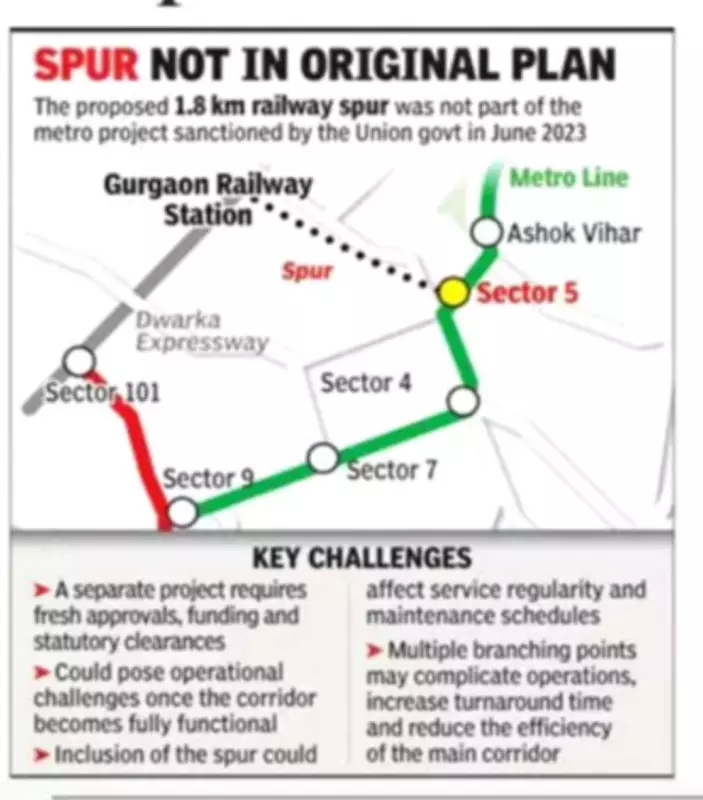
In October last year, the GMRL board approved the connectivity project, which involved a 1.8-kilometer line branching out from Sector 5 to directly connect with Gurgaon railway station. The estimated cost for this spur was set at Rs 454 crore. This decision came after the state government, in November 2024, opted to build an additional line to enhance intermodal connectivity, moving away from the original plan of using a skywalk.
Feasibility and Challenges
GMRL had assigned RITES to conduct a feasibility study for the spur. However, a GMRL official highlighted that including the railway spur would necessitate fresh approvals, funding arrangements, and statutory clearances. The 28.5-kilometer metro corridor between Millennium City Centre and Cyber City, approved in June 2023, did not originally incorporate a railway station link, meaning the spur was not part of the detailed project report cleared earlier.

Operational challenges also pose significant concerns. GMRL plans to run trains at a frequency of 2 minutes and 30 seconds during peak hours to meet high demand. Adding multiple branching points, such as the proposed spur, could complicate operations, increase turnaround time, and reduce the efficiency of the main corridor.
Statutory and Environmental Hurdles
Since the spur was not included in the initial project clearances, statutory compliances like environmental and social impact assessments were not carried out for its alignment. Any new alignment would require independent studies and public consultations before construction can commence, further delaying the project.
Impact on Last-Mile Connectivity
The spur was intended to improve last-mile connectivity and integrate the metro with the railway network, addressing gaps in urban transport. However, with the project now on the back burner, commuters may face continued reliance on existing infrastructure until a viable solution is developed under a separate framework as suggested by the World Bank.