Chilli Markets Experience Robust Trading Activity Amid Surging Fresh Arrivals
Chilli markets across key producing states in India have witnessed exceptionally brisk trade over the past week, driven by a significant surge in fresh crop arrivals and the steady movement of cold-storage stock into circulation. This heightened activity is primarily fueled by robust domestic demand, creating a dynamic trading environment for farmers, traders, and spice manufacturers alike.
Substantial New Crop Arrivals and Strong Sales Figures
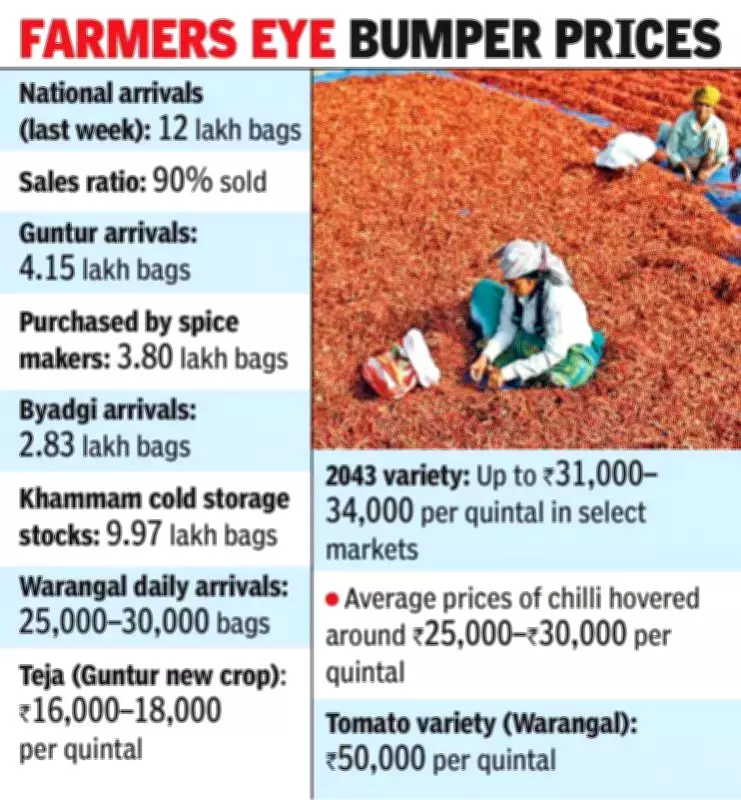
Nationwide, nearly 12 lakh bags of the new chilli crop arrived in major markets, with an impressive 90% of this volume successfully sold. Traders report that aggressive buying patterns are directly linked to an overall dip in production this season across chilli-producing states. Scattered rainfall has damaged a portion of the harvest, leading to reduced output and consequently, heightened market interest.
Farmers are optimistic about securing bumper prices due to sustained demand, with industry sources indicating this positive trend is likely to persist until at least mid-April. The decline in production has been particularly notable in parts of Andhra Pradesh and Karnataka, prompting merchants from neighboring regions to actively procure quality stock to meet demand.

Regional Market Highlights and Trading Patterns
In Guntur, a major chilli hub, the market yard was closed on Tuesday for the Holi festival, leading to expectations of a substantial flood of new stock arriving on Wednesday. Last week alone, Guntur recorded arrivals of 4.15 lakh bags, with spice manufacturers purchasing 3.8 lakh of these. Interestingly, cold-storage arrivals have declined as farmers prefer to offload their stock amid firm and favorable prices.
Reduced production in the Kurnool region, combined with steady rates since the season's commencement, has resulted in most farmers already selling their produce. Meanwhile, second-phase harvesting is actively underway in Bhadrachalam, Telangana, where approximately 75% of farmers are offloading their stocks at remunerative prices, capitalizing on the strong market conditions.
Logistics, Storage, and Inter-State Movement
Approximately 60% of arrivals in major markets are being transported to neighboring states, highlighting the widespread demand. In Khammam, nearly 10 lakh bags remain in cold storage, with an additional 1 lakh bags expected to arrive next week. Warangal is experiencing daily arrivals ranging between 25,000 and 30,000 bags, contributing to the steady supply chain.
Expert Analysis and Price Trends
Market analyst Karlapudi Venkateswara Rao emphasized that the superior quality of the new chilli crop is attracting strong demand from both spice manufacturers and exporters. With production down in certain agricultural belts, stockists are actively procuring available supplies, and prices are anticipated to remain firm, especially for premium varieties.
Observers have noted that cold-storage stocks are lower compared to last year, attributed to steady sales since January. Trading activity is expected to remain buoyant until mid-April, supported by these market dynamics. In Karnataka's Byadgi market, a significant 2.83 lakh bags arrived on Monday, with an additional 20,000 bags reported in Hubballi, Sindhanur, and Dharwad.
Prices of popular chilli varieties in Byadgi have risen sharply, increasing by 4,000 to 6,000 rupees per quintal depending on quality, reflecting the tight supply and robust demand scenario. This price surge underscores the current market vitality and the strategic importance of timely procurement for stakeholders across the chilli trade ecosystem.