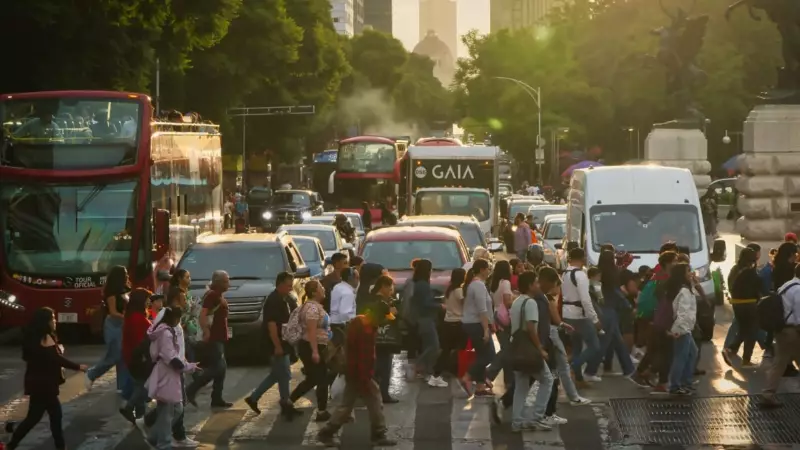
Global Traffic Crisis Worsens: Bengaluru Emerges as World's Second Most Congested City
Traffic congestion has evolved from an occasional nuisance to a daily reality for urban commuters worldwide. According to the latest TomTom Traffic Index for 2025-26, only 34 out of nearly 500 analyzed cities globally recorded faster inner-city travel times compared to the previous year. This alarming statistic underscores how traffic gridlock is no longer confined to a few megacities but has become a pervasive challenge affecting most urban centers.
India's Traffic Woes Intensify
India faces particularly severe traffic challenges, ranking as the second most congested nation in Asia during 2025, trailing only behind the Philippines. Within the country, Bengaluru's traffic situation has deteriorated significantly, earning the city the dubious distinction of being the world's second most congested urban center.
Bengaluru drivers now spend an average of 3 minutes and 37 seconds to cover just 1 kilometer, a stark contrast to the just over two minutes required under ideal conditions. This substantial gap has pushed Bengaluru's congestion score to 74.4%, representing an increase from the previous year and placing it behind only Mexico City in global rankings.

Global Congestion Hotspots
The TomTom report reveals a diverse geographical spread of traffic-choked cities:
- Mexico City tops the global congestion rankings with a score of 75.9%
- Dublin, Ireland ranks third with 72.9% congestion
- London maintains its position as Europe's slowest city center
- Barranquilla, Colombia records the world's slowest travel times at 3 minutes 40 seconds per kilometer
Indian Cities in Global Top 10
India's traffic challenges extend beyond Bengaluru, with multiple cities featuring prominently in global congestion rankings:
- Bengaluru ranks 2nd globally with 74.4% congestion
- Pune appears at 5th position with 71.1% congestion
- New Delhi emerges as India's fourth most congested city
New Delhi's congestion level increased by 3.5 percentage points compared to 2024, highlighting the growing traffic pressures in Indian metropolitan areas.
Some Cities Show Improvement
Despite the generally gloomy picture, the report identifies 125 cities worldwide where congestion levels actually improved in 2025. Notable examples include:
- Groningen, Netherlands and Kiel, Germany showing the most significant gains
- Mumbai, India among cities recording congestion reductions
- New York City achieving a modest but meaningful improvement
- Paris, Rome, and Riyadh also demonstrating better traffic flow
These improvements ranged from 23% to 5% in congestion reduction, offering hope that strategic interventions can yield positive results even in challenging urban environments.
Economic and Social Impact
The congestion crisis carries substantial economic and social consequences:
- Bengaluru commuters lose approximately 168 hours annually to rush hour delays
- Mexico City residents face the highest time loss at 184 hours per year
- Lima, Peru records the most severe annual time loss at 195 hours
- Average distances covered in 15 minutes range from just 4.2 km in Bengaluru to 6.8 km in Lublin, Poland
The TomTom Traffic Index 2025-26 serves as a crucial wake-up call for urban planners and policymakers worldwide. As cities continue to grow and vehicle numbers increase, innovative solutions for traffic management and urban mobility have become more urgent than ever. The data clearly indicates that while some cities are making progress, the overall trend points toward worsening congestion that demands immediate and sustained attention.