Carmakers Express Growing Concern Over Delayed CAFE-III Notification
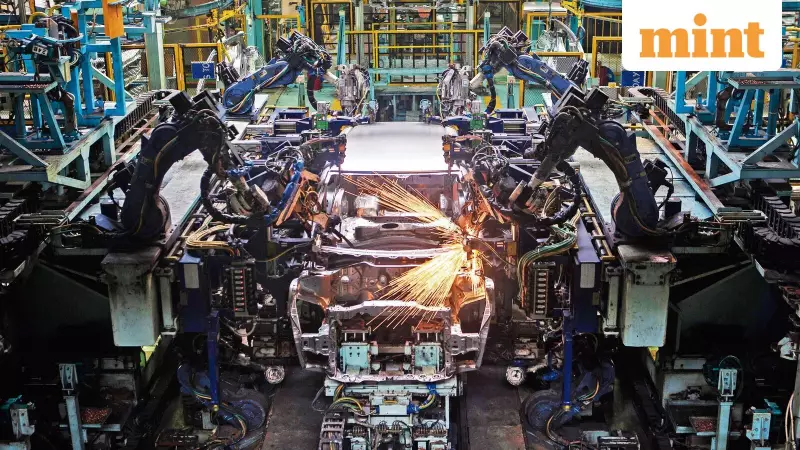
The Indian automotive industry is facing mounting pressure as the notification for the third iteration of Corporate Average Fuel Efficiency (CAFE-III) norms remains pending. With the proposed regulations scheduled to take effect from April 2027, manufacturers now have less than 15 months to prepare their fleets for what represents the most significant mandatory emissions reduction over any five-year period in India's automotive history.
Stringent Emission Targets Loom Large
Under the proposed CAFE-III framework, automakers must achieve a substantial 21% reduction in average fleet emissions, bringing them down to 88.4 grams of CO₂ per kilometer by March 2028. This represents a significant drop from the current average of 113 grams of CO₂ per kilometer. Furthermore, the regulations mandate an even more ambitious target of 71 grams of CO₂ per kilometer by March 2032, representing a 37% reduction from current levels.
Industry executives emphasize that manufacturers need to align their fleets close to the 88.4 grams target right from the beginning of the compliance cycle in April 2027 to successfully meet the annual average requirement within the stipulated timeframe.

Industry Voices Concerns Over Policy Uncertainty
"I am confident that the CAFE-III notification should come out in the near future. We are very close to 2027, and yes, it would be a concern if it were delayed any further," stated Vikram Gulati, Executive Vice-President for Corporate Affairs and Governance at Toyota Kirloskar. He added that the government appears cognizant of these industry concerns.
Ashish Gupta, Brand Director at Škoda Auto India, highlighted the critical importance of policy certainty for long-term investment planning. "These are not small investments that you make. You always make investments with a horizon of at least a decade and a half in mind. So more policy clarity, of course, is necessary and is a precondition for any investment decisions," Gupta explained.
An anonymous industry executive warned that additional delays could make the compliance window practically unfeasible, noting that while expectations pointed toward a final notification by January's end, no official clarity has emerged yet.
Enhanced Enforcement Mechanisms Add Pressure
What makes CAFE-III particularly stringent is the government's plan to empower the Bureau of Energy Efficiency (BEE) under the power ministry to directly penalize automakers for non-compliance. This represents a significant escalation from previous enforcement mechanisms.
The notification delay stems from ongoing debates within the industry, particularly regarding potential relaxations for small cars. Global think tanks have also pushed back against proposals to offer additional concessions for electric vehicles through supercredits, further complicating the regulatory landscape.
Manufacturers Face Varied Challenges
Analysts at Kotak Institutional Equities noted in a recent report that while Tata Motors and Mahindra & Mahindra possess advantages in meeting the norms due to their leadership in electric vehicle sales, Maruti Suzuki and Hyundai Motor face more significant challenges.
"Maruti Suzuki faces moderate near-term requirements, but significantly tougher 2032 obligations, owing to its higher reliance on its small-car portfolio, necessitating accelerated hybrid and BEV deployment," analysts Rishi Vora and Apurva Desai observed. "Hyundai Motor appears most exposed, with low current electric penetration and a delayed mass-market EV pipeline."
Ashim Sharma, Senior Partner and Group Head at Nomura Research Institute, advocated for a longer regulatory roadmap. "Ideally, a three-year window to prepare for norms will help in increasing competitiveness. More time to prepare for such norms will help the industry," he emphasized.
Industry Prepares Despite Uncertainty
Despite the notification delays, automakers have begun implementing clean-fuel strategies. Tata Motors Passenger Vehicle Ltd and Mahindra & Mahindra Ltd plan to achieve 30% electric vehicle penetration over the next five years, while Maruti Suzuki India Ltd and Hyundai Motor India Ltd target EV shares of 15-17% during the same period.

Sharif Qamar, Associate Director at The Energy and Resources Institute (TERI), offered a different perspective, suggesting that automakers should have prepared for the 2027 timeline regardless of notification delays. "The delay in final notification is primarily due to the negotiations and revisions," Qamar noted.
Historical Context and Future Implications
Previous CAFE norms were implemented with substantial lead times. The first CAFE norms were notified in April 2015, with targets applicable from April 2017 to March 2022, establishing an average emission limit of 130 grams of CO₂ per kilometer. The same notification outlined CAFE-II targets, providing automakers with a seven-year preparation period for regulations running from April 2022 to March 2027, which tightened maximum average emissions by 13% to 113 grams of CO₂ per kilometer.
As the automotive industry navigates this critical transition, the delayed CAFE-III notification continues to create uncertainty, potentially impacting investment decisions, product planning, and India's broader environmental objectives in the transportation sector.