Andhra Pradesh Tomato Farmers Confront Severe Financial Crisis Amid Price Collapse
Tomato cultivators across Andhra Pradesh are grappling with devastating financial losses as market prices have experienced a catastrophic crash following an unprecedented surge in production. With farm-gate prices plummeting to as low as ₹2 to ₹6 per kilogram across multiple regions, numerous growers have completely ceased harvesting operations. Instead, they are opting to plough their fields under to prevent additional economic strain, creating a dire situation for agricultural communities.
The Volatile Nature of Tomato Pricing in Telugu Households
Tomatoes, a fundamental ingredient in Telugu culinary traditions, have long been notorious for their unpredictable pricing patterns. While adverse weather conditions frequently drive prices upward, a bumper harvest can render the crop virtually worthless. During October and November of last year, cyclonic disturbances significantly reduced supply, causing prices to skyrocket to approximately ₹60 per kilogram.
Encouraged by these exceptional returns, farmers dramatically expanded cultivation beyond traditional growing belts such as Madanapalle and Anantapur. New cultivation areas emerged in districts including Krishna, Guntur, West Godavari, Alluri Sitarama Raju, Vizianagaram, and Srikakulam, setting the stage for the current oversupply crisis.

Sharp Price Decline and Farmer Distress
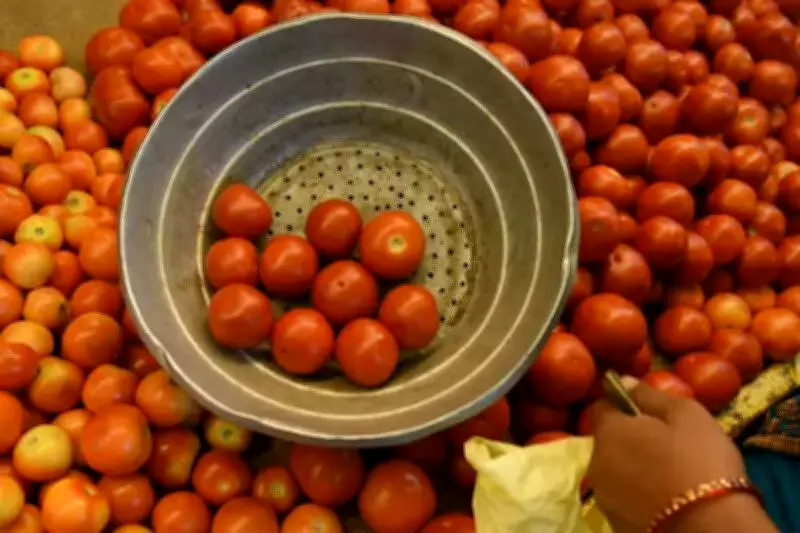
Since the second week of February, tomato prices have undergone a severe downward spiral due to excessive market arrivals coupled with weakened consumer demand. Although tomatoes are currently retailing at approximately ₹12 per kilogram in farmers' markets and up to ₹18 in urban retail outlets, growers report receiving only ₹2 to ₹4 per kilogram from wholesale traders.
Murthy Raghavendra Rao, a distressed farmer from Tiruvuru in Krishna district, revealed he invested nearly ₹2 lakh to cultivate tomatoes across four acres. "With persistent pest issues and escalating input costs, we anticipated substantially better returns this season," he explained. "Currently, harvesting alone costs nearly ₹1 per kilogram, and traders refuse to pay more than ₹4. I have no clear strategy to recover my substantial investment."
Structural Deficiencies in Agricultural Infrastructure
Farmers consistently attribute their ongoing distress to critical infrastructure deficiencies, particularly the absence of adequate cold storage facilities and processing units. "This cyclical pattern repeats annually—significant profits one season followed by complete financial devastation the next," stated P Sundar Rao of the Joint Krishna District Agricultural Association. "Without proper storage infrastructure and processing capabilities, we are compelled to sell our produce at throwaway prices regardless of market conditions."
Horticulture department officials have indicated that measures are being implemented to facilitate direct farmer-to-consumer sales channels. However, agricultural producers emphasize that immediate governmental intervention remains absolutely crucial to prevent further catastrophic losses and stabilize the tomato farming sector.
The current crisis highlights systemic vulnerabilities within agricultural supply chains and underscores the urgent need for comprehensive policy solutions to protect farmer livelihoods against market volatility and production fluctuations.