

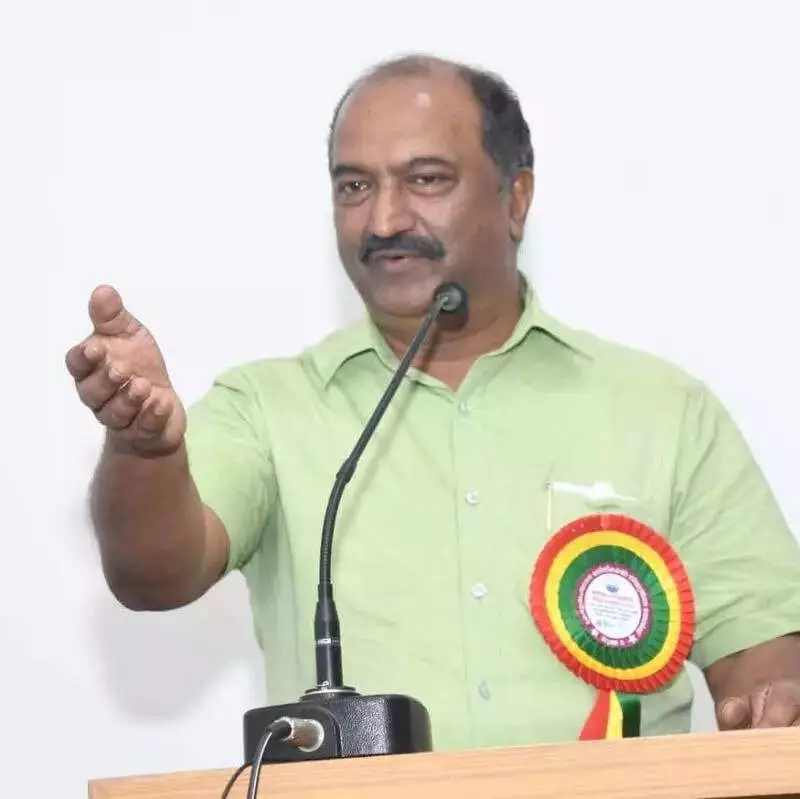
Kerala's Finance Minister, K N Balagopal, has raised a serious alarm over the central government's recent policy shift concerning the Mahatma Gandhi National Rural Employment Guarantee Scheme (MGNREGS). He stated that the changes would impose a massive additional financial burden of Rs 1,600 to Rs 2,000 crore on the state's exchequer annually.
Centre's Funding Shift Creates Fiscal Strain
Balagopal explained the core of the issue. Currently, the central government bears 90% of the expenditure for the rural job guarantee scheme. However, with the newly introduced changes, this contribution is set to be reduced to just 60%. This drastic cut forces the state government to shoulder a significantly higher share of the costs. For perspective, the Centre had provided Rs 4,838 crore for the scheme in Kerala last year.
The minister's comments came as a direct reaction to the Viksit Bharat Guarantee for Rozgar and Aajeevika Mission (Gramin) (VB-G RAM G) Bill 2025, which was introduced in the Lok Sabha and seeks to replace the existing MGNREGS framework. Balagopal was speaking at the ninth IS Gulati Memorial Lecture in Thiruvananthapuram.

Kerala's Unique Challenges and Federal Concerns
Balagopal emphasized that frequent policy alterations by the Centre in the financial domain create immense difficulties for states like Kerala in planning and progressing. He highlighted a critical disparity: while the Centre's share of total revenue averages 53% at the national level, for Kerala, it is only 25%.
The minister pointed out Kerala's unique demographic challenge of having the highest proportion of elderly citizens in India. Despite this, he alleged, the Centre continues to impose measures that financially squeeze the state. Balagopal credited Kerala's ability to sustain itself to its robust capacity for raising tax revenues.
He stressed the foundational principle that India is a union of states, where both the Centre and states should hold equal importance. "By centralising greater financial powers, the Centre is undermining the federal structure," Balagopal asserted.
Experts Echo Call for Equitable Resource Allocation
The event also featured insights from other eminent economists. D K Srivastava, Chief Policy Advisor at Ernst & Young and a former member of the 12th Finance Commission, delivered the memorial lecture. He underscored that equity in financial transfers between the Centre and states must be the top priority.
Srivastava acknowledged that while disparities in revenue and expenditure across different states remain a major challenge, there is an encouraging trend of these gaps gradually narrowing. He urged future finance commissions to address this issue proactively.
Former Kerala finance minister T M Thomas Isaac, who moderated the session, reinforced this viewpoint. He remarked that equity must be the guiding principle in resource allocation to states. Isaac observed a worrying trend of widening disparities in per capita income and private investment across Indian states.
The lecture was organized by the Gulati Institute of Finance and Taxation, bringing the issue of fiscal federalism and state burdens into sharp focus amidst the proposed overhaul of a key social welfare scheme.






