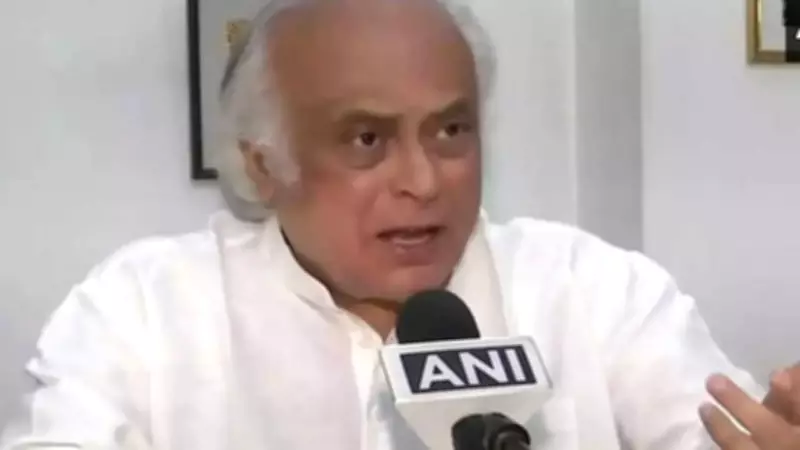
Congress Leader Jairam Ramesh Condemns PM Modi's Israel Visit Following Joint US-Israel Military Strike on Iran
Congress leader Jairam Ramesh launched a sharp critique on Saturday against Prime Minister Narendra Modi's recent diplomatic visit to Israel, which concluded just days before Israel and the United States initiated a coordinated military assault on Iran. The timing of the prime minister's trip has ignited significant political controversy and debate within India's national discourse.
Ramesh's Strong Rebuke on Social Media Platform X
In a strongly worded post on the social media platform X, Jairam Ramesh expressed his disapproval, stating, "Two days after Mr. Modi celebrated his visit to Israel, Israel and the US have begun their joint assault on Iran. This was fully expected given their military build-up in the last few months. Mr. Modi nevertheless chose to go to Israel, where he displayed the highest moral cowardice."
Ramesh further elaborated, "He declared that India stood with Israel and got himself an award for saying so. This Israel visit was shameful, and it is even more so in light of the war that has been launched by two of Mr. Modi's 'good friends'." The Congress leader's comments highlight a perceived misalignment in India's foreign policy stance during a period of escalating international tensions.

Details of the US-Israel Joint Military Operation Against Iran
Israel and the United States executed a joint military strike on Iran on Saturday, under the codename Operation Roaring Lion. The precision strikes specifically targeted Iranian military installations, missile production facilities, and areas in proximity to the office of Iran's Supreme Leader Ayatollah Ali Khamenei.
Initial reports indicate that several government ministries in southern Tehran were struck, with residents reporting powerful explosions and blasts reverberating across the city. In response to the offensive, Israel declared a nationwide state of emergency, implemented precautionary measures by moving hospital operations underground, and activated air raid sirens across the country.
The military escalation led to immediate regional disruptions, as Iran, Israel, and Iraq closed their respective airspaces and suspended all commercial and civilian flights. This closure has caused significant travel chaos and heightened security alerts throughout the Middle East.
Recap of Prime Minister Modi's Diplomatic Mission to Israel
Prime Minister Narendra Modi concluded his official state visit to Israel on Thursday, marking a significant chapter in bilateral relations between the two nations. During the high-profile visit, India and Israel agreed to elevate their diplomatic and strategic relationship to a special strategic partnership, signaling deeper cooperation across multiple sectors.
The two countries signed a total of 27 bilateral agreements encompassing diverse areas such as technological innovation, cultural exchange programs, advanced manufacturing, and artificial intelligence development. These agreements are designed to foster mutual growth and strengthen economic ties.
In meetings with Israeli Prime Minister Benjamin Netanyahu, PM Modi discussed enhanced collaboration in cutting-edge fields including artificial intelligence, quantum computing, economic partnerships, and security cooperation. The Indian prime minister also announced that India and Israel would soon finalize a mutually beneficial free trade agreement and establish a critical and emerging technology partnership, aimed at boosting technological sovereignty and innovation.
The juxtaposition of this diplomatic advancement with the subsequent military action has fueled intense political scrutiny, raising questions about the strategic timing and implications of India's foreign engagements in volatile geopolitical climates.