Budget 2026 Unveils Tax Reforms: Immunity for Minor Foreign Assets and New Income Tax Law
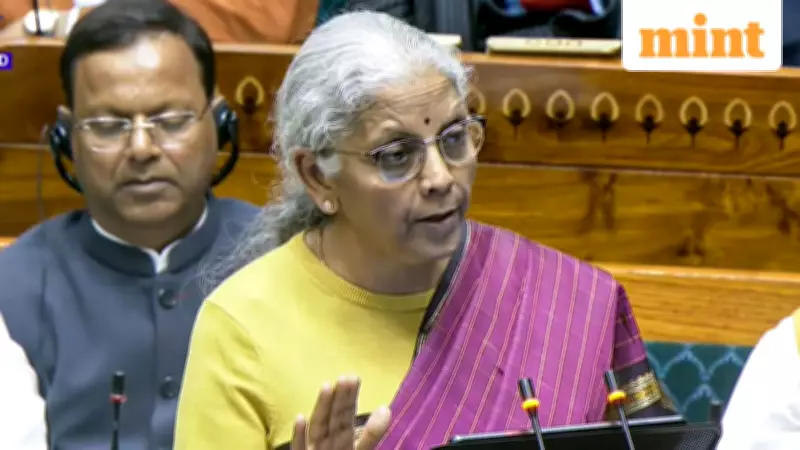
Union Finance Minister Nirmala Sitharaman, while presenting the Union Budget 2026-27 in Parliament on Sunday, announced a series of significant tax-related measures aimed at simplifying the income tax framework and providing relief to taxpayers. The budget emphasizes a taxpayer-centric approach, with specific provisions for small-scale taxpayers and the implementation of a new income tax law.
Immunity Programme for Undisclosed Small Foreign Assets
One of the key announcements in the Budget 2026 is a dedicated immunity programme for minor taxpayers regarding undisclosed small foreign assets. Sitharaman clarified that individuals who have failed to report non-immovable foreign assets with a combined value under ₹20 lakh will receive immunity from legal proceedings and prosecution. This exemption applies retrospectively from 1 October 2024, allowing holders of low-value international assets to regularize their status without facing litigation risks.
The finance minister outlined a framework for penalty and prosecution immunity in cases where underreporting extends to misreporting. Additionally, certain requirements, such as the failure to produce account books or documents and specific TDS (Tax Deducted at Source) payment obligations, have been decriminalized. This move is designed to reduce compliance burdens and foster a more supportive tax environment for everyday taxpayers.

Tax Collection at Source (TCS) Reductions and Other Measures
In a bid to streamline tax compliance, Sitharaman announced a significant cut in tax collection at source (TCS) for international expenditures. The tax collected at source for foreign tour packages has been reduced to a uniform 2%, providing relief to travelers and simplifying the process for tour operators.
Other notable measures include:
- Small taxpayers can now obtain lower or nil deduction certificates through a rule-based, automated mechanism, enhancing efficiency and reducing manual interventions.
- The window for revising tax returns has been extended from 31 December to 31 March, subject to a nominal processing fee, giving taxpayers more time to correct errors.
- For non-residents selling immovable property in India, TDS must now be handled via the resident buyer's PAN (Permanent Account Number) rather than a TAN (Tax Deduction and Collection Account Number), simplifying transactions.
- Individual Persons Resident Outside India (PROIs) are now authorized to invest in the equity of listed Indian firms via the Portfolio Investment Scheme (PIS), potentially boosting foreign investment.
Implementation of the Income Tax Act, 2025
Finance Minister Sitharaman announced that the Income Tax Act, 2025 will take effect on April 1, 2026, replacing the six-decade-old legislation. This new law incorporates various tax amendments introduced in the 2026-27 Budget and aims to transform the income tax framework into a simpler, more accessible system.
Sitharaman stated, "This (direct tax code) was completed in record time and the Income Tax Act 2025 will come into effect from first April 2026. The simplified income tax rules and forms will be notified shortly, giving adequate time to taxpayers to acquaint themselves with its requirements." The updated rules and return forms have been completely overhauled to ensure that typical citizens can fulfill their tax obligations without difficulty, marking a significant step towards enhancing the quality of life and streamlining compliance.
The annual budget focuses on providing relief to everyday taxpayers, with measures designed to reduce litigation, simplify processes, and encourage compliance. These reforms reflect the government's commitment to creating a more taxpayer-friendly environment and supporting economic growth through progressive tax policies.