Budget 2026: Tax Expert Mukesh Patel Criticizes Lack of Direct Relief for Individuals
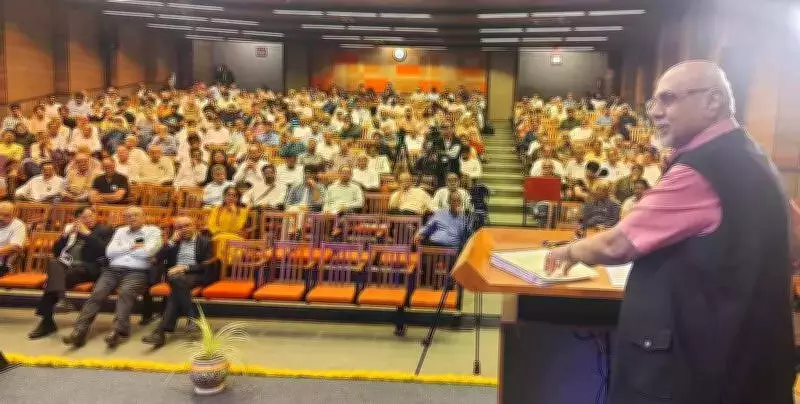
In a significant critique of the Union Budget 2026, international tax expert Mukesh Patel has described it as a "reform express for Viksit Bharat" that unfortunately turned into a "local shuttle" on the tax front. Speaking at Ahmedabad Management Association (AMA) during his 50th Union Budget analysis event titled 'Chills and Thrills of the Finance Bill, 2026', Patel highlighted that this might be the first time a Union Budget has failed to provide substantial direct tax relief to individual income taxpayers.
No Tangible Relief Despite Growing Tax Collections
Patel pointed out a concerning discrepancy in the budget figures. "The Finance Minister did not mention anything about revenue forgone or augmented at the end of her budget speech," he noted. The revised estimates for personal income tax for 2025-26 stand at Rs 13.12 lakh crore, while the budget estimates for 2026-27 project Rs 14.66 lakh crore. This indicates an expected growth of Rs 1.54 lakh crore, or 12%, in personal income tax collections compared to the previous year.
However, Patel emphasized that there is no tangible relief for individual taxpayers, not even adjustments to keep pace with inflation rates. The only monetary relief announced was the exemption of income tax on interest awarded by motor accident claims tribunals, which he considered insufficient for the broader taxpayer base.

'Ease of Compliance' Versus 'Ease of Living'
The budget listed several proposals under the heading of 'ease of living', but Patel argued that these are merely "ease of compliance" measures in reality. He explained that while there will be multiple windows for obtaining lower deduction certificates, extended time for return filing, and reduced TDS or TCS (tax deducted or collected at source), these changes do not genuinely improve ease of living. Instead, they only facilitate smoother compliance processes without addressing fundamental taxpayer burdens.
New Income-tax Act: Old Wine in a New Bottle
Patel expressed skepticism about the New Income-tax Act, likening it to "a new bottle with old wine." He warned that professionals will need to prepare for significant relearning due to changes in numbers and the reorganization of sections from the old Act into a different format in the new one. "There is old content in the new law with a mere change in language," he stated, questioning whether this represents simplification or added complication. He noted a lack of positive change in mindset and approach within the new legislation.
Numerous Amendments Before Implementation
Highlighting another concern, Patel revealed that the New Income Tax Act, set to be implemented from April 2026, already has numerous amendments. In the Finance Bill 2026 alone, there were 110 amendments, with 87 of them targeting the new Income-tax Act. "Even before the implementation of the new tax law, there are so many amendments in it," he remarked. Out of approximately 500 sections in the new law, 9 sections were substituted, 2 were omitted, and 87 were amended, raising questions about stability and clarity for taxpayers and professionals alike.
Patel's analysis underscores a critical perspective on Budget 2026, suggesting that while it may advance broader economic reforms, it falls short in providing meaningful tax relief and simplification for individual taxpayers, potentially complicating compliance rather than easing living standards.