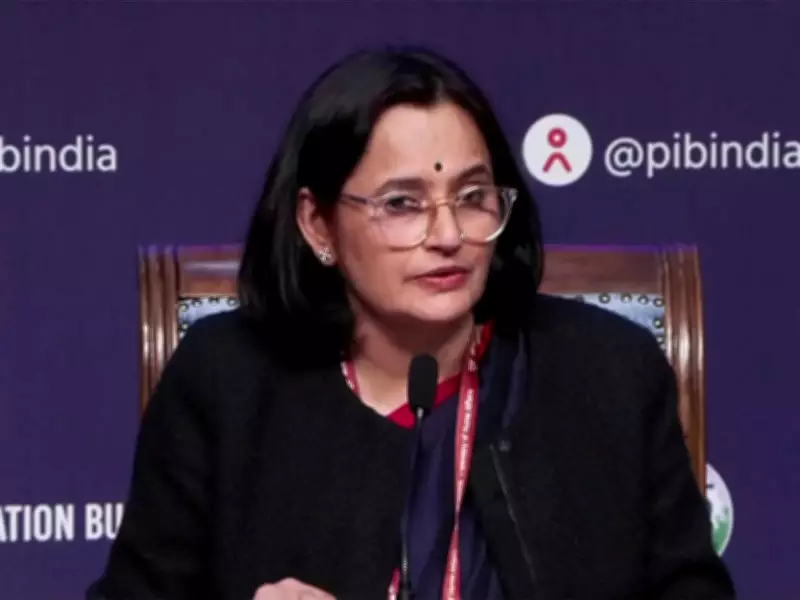
Economic Affairs Secretary Anuradha Thakur has expressed optimism that foreign capital inflows will see a significant improvement following the implementation of various measures unveiled in the recent Budget. She remains confident that India's growth momentum will be sustained, highlighting the government's stimulus-like approach through high capital expenditure and a noticeable uptick in private investment.
Growth-Inflation Dynamics in the Short Term
Addressing the challenges facing the economy, Thakur noted that core inflation is expected to stabilize. However, she emphasized the importance of preventing inflation from reaching previous highs, as it disproportionately affects the poor. She referenced RBI Governor Sanjay Malhotra's description of the current situation as a "Goldilocks moment," indicating a balanced environment where growth targets can be managed effectively.
Flexible Inflation Targeting Mechanism
When questioned about the flexible inflation targeting mechanism, Thakur stated that the current 2-6% range has proven effective for India. She explained that headline inflation, which reflects the lived experience of citizens, serves as a better anchor for monetary policy than core inflation. The government believes there is a strong case for continuing with this approach, as it has held the economy in good stead.

Improvement in Foreign Capital Inflows
Thakur made a clear distinction between foreign direct investment (FDI) and foreign portfolio investment (FPI). She acknowledged that FPI is cyclical and currently in a phase where investors are pulling out, partly due to profit repatriation after positive experiences in India. Factors such as interest rate regimes in other countries and high valuations have also contributed to this trend, though valuations are now moderating.
On the FDI front, Thakur reported that gross flows have remained stable and high. Net FDI has fluctuated throughout the year, sometimes neutral, slightly below, or even a bit higher. She expressed confidence that the Budget interventions and carefully selected sectors, such as chemicals and biopharma, will attract significantly more FDI in the coming year.
Asset Monetization and Divestment Plans
Regarding asset monetization and divestment, Thakur mentioned plans to raise Rs 80,000 crore in the next financial year, a target that includes asset monetization. She noted that this route has developed as a viable method, with sector specialists gaining confidence in monetization strategies. This year is expected to see increased activity in this area.
Thakur specifically highlighted CPSE REITs (real estate investment trusts) as a focus, explaining that the government's thinking in the Department of Economic Affairs is to monetize buildings rather than land. She pointed out that mechanisms exist to convert rental income into REITs, and after sharing insights with DIPAM and the department of public enterprises, pilot projects are hoped to unlock this significant asset chunk.